Overview
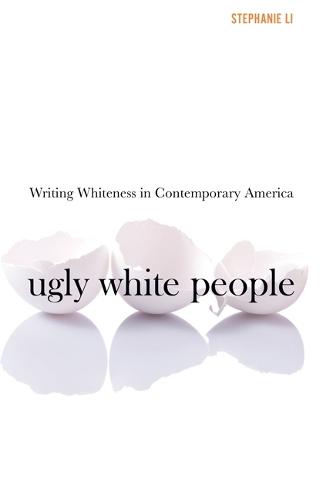
Whiteness revealed: an analysis of the destructive complacency of white self-consciousness White Americans are confronting their whiteness more than ever before, with political and social shifts ushering in a newfound racial awareness. And with white people increasingly seeing themselves as distinctly racialized (not simply as American or human), white writers are exposing a self-awareness of white racialized behavior-from staunch antiracism to virulent forms of xenophobic nationalism. Ugly White People explores representations of whiteness from twenty-first-century white American authors, revealing white recognition of the ugly forms whiteness can take. Stephanie Li argues that much of the twenty-first century has been defined by this rising consciousness of whiteness because of the imminent shift to a ""majority minority"" population and the growing diversification of America's political, social, and cultural institutions. The result is literature that more directly grapples with whiteness as its own construct rather than a wrongly assumed norm. Li contextualizes a series of literary novels as collectively influenced by changes in racial and political attitudes. Turning to works by Dave Eggers, Sarah Smarsh, J. D. Vance, Claire Messud, Ben Lerner, and others, she traces the responses to white consciousness that breed shared manifestations of ugliness. The tension between acknowledging whiteness as an identity built on domination and the failure to remedy inequalities that have proliferated from this founding injustice is often the source of the ugly whiteness portrayed through these narratives. The questions posed in Ugly White People about the nature and future of whiteness are vital to understanding contemporary race relations in America. From the election of Trump and the rise of white nationalism to Karen memes and the war against critical race theory to the pervasive pattern of behavior among largely liberal-leaning whites, Li elucidates truths about whiteness that challenge any hope of national unity and, most devastatingly, the basic humanity of others. Retail e-book files for this title are screen-reader friendly.
Full Product Details
Author: Stephanie Li
Publisher: University of Minnesota Press
Imprint: University of Minnesota Press
Dimensions:
Width: 14.00cm
, Height: 2.00cm
, Length: 21.60cm
Weight: 0.425kg
ISBN: 9781517915735
ISBN 10: 1517915732
Pages: 272
Publication Date: 10 October 2023
Audience:
General/trade
,
Professional and scholarly
,
General
,
Professional & Vocational
Format: Hardback
Publisher's Status: Active
Availability: Temporarily unavailable

The supplier advises that this item is temporarily unavailable. It will be ordered for you and placed on backorder. Once it does come back in stock, we will ship it out to you.
Reviews
"""Ugly White People is not about the 'racists,' but about the way whiteness shapes the subjectivity of all white people. Relying on an elegant and parsimonious textual analysis of the work of six contemporary authors, Stephanie Li shows how whites manage to evade while they acknowledge their whiteness, how they consume people of color through racist love, and how they accept whiteness in a way that neglects addressing racism. I highly recommend this book to readers interested in understanding contemporary whiteness.""—Eduardo Bonilla-Silva, Duke University ""The best writing critically studying whiteness today intensely engages imbrications of race with other identities, especially class, gender, nationality, and disability. No one does all of that better than Stephanie Li. Addressing literary moments with a sure grasp of history and an adventuresome readings of texts, Ugly White People speaks compellingly to the persisting strength of Trump and white nationalism and to the desire for social media celebrity as something authors both explore and share.""—David Roediger, author of The Sinking Middle Class: A Political History "
"""Ugly White People is not about the 'racists' but about the way whiteness shapes the subjectivity of all white people. Relying on an elegant and parsimonious textual analysis of the work of contemporary authors, Stephanie Li shows how whites manage to evade while they acknowledge their whiteness, how they consume people of color through racist love, and how they accept whiteness in a way that neglects addressing racism. I highly recommend this book to readers interested in understanding contemporary whiteness.""—Eduardo Bonilla-Silva, Duke University ""The best writing critically studying whiteness today intensely engages imbrications of race with other identities, especially class, gender, nationality, and disability. No one does all of that better than Stephanie Li. Addressing literary moments with a sure grasp of history and an adventuresome readings of texts, Ugly White People speaks compellingly to the persisting strength of Trump and white nationalism and to the desire for social media celebrity as something authors both explore and share.""—David Roediger, author of The Sinking Middle Class: A Political History of Debt, Misery, and the Drift to the Right "
"""Ugly White People is not about the 'racists,' but about the way whiteness shapes the subjectivity of all white people. Relying on an elegant and parsimonious textual analysis of the work of contemporary authors, Stephanie Li shows how whites manage to evade while they acknowledge their whiteness, how they consume people of color through racist love, and how they accept whiteness in a way that neglects addressing racism. I highly recommend this book to readers interested in understanding contemporary whiteness.""—Eduardo Bonilla-Silva, Duke University ""The best writing critically studying whiteness today intensely engages imbrications of race with other identities, especially class, gender, nationality, and disability. No one does all of that better than Stephanie Li. Addressing literary moments with a sure grasp of history and an adventuresome readings of texts, Ugly White People speaks compellingly to the persisting strength of Trump and white nationalism and to the desire for social media celebrity as something authors both explore and share.""—David Roediger, author of The Sinking Middle Class: A Political History "
Author Information
Stephanie Li is Lynne Cooper Harvey Distinguished Professor of English at Washington University in St. Louis. She is author of Pan-African American Literature,Playing in the White, and Signifying without Specifying.