Awards
- Winner of Northeastern Minnesota Book Award (Nonfiction) 2014
Overview
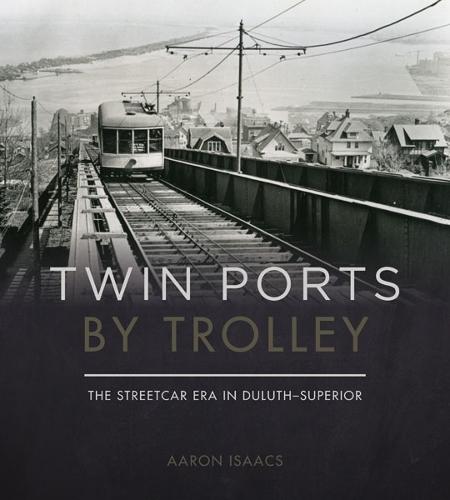
An international seaport and an industrial powerhouse, Duluth was a natural for streetcar service, but making it successful was a challenge. The city, some twenty-five miles long yet only three miles wide in most places, has the tallest and steepest hills in Minnesota and a harbor separating it from its sister city, Superior, Wisconsin. ""Twin Ports by Trolley"" charts the history of the streetcar system that met the unique difficulties posed by Duluth, from the Interstate Bridge that crossed the harbor to the Incline Railway that carried travelers more than five hundred feet above Lake Superior.Following the rails as horse-drawn cars gave way to electric trolleys, Aaron Isaacs takes us into the workings of the Duluth-Superior streetcars: politics and corporate maneuvers, engineering and maintenance, scheduling and setting routes, running and riding the trolleys. Along the way we meet motormen and conductors (including twenty-one women who stepped in during World War I) and learn what it's like to run a streetcar through obstacles ranging from heavy snowstorms to Halloween pranks to the heroism of evacuating a burning neighborhood. Then we ride the rails in a typical car, with a floor of varnished wood and seats of cushioned rattan, and a not-so-typical luxury car, outfitted to the nines with velvet curtains and a bar for lucrative ""streetcar parties."" We experience the ride, whether buying a token or braving the smokers on the rear platform when boarding, and we learn the routes as the streetcars deliver, along with passengers, mail pouches and newspapers, dogs, and, in the case of the Park Point funeral car, corpses and mourners. Isaacs traces traffic patterns and geographic features for each line and describes imaginary trips on three of the most interesting routes.The book is, finally, a tour of the Twin Ports over time, with a wealth of maps and photographs illustrating routes and landmarks and picturing the people who made the rails hum. Interviews and newspaper features, ""day-after reports"" and management memos, stories told by employees and onlookers--all contribute to a rich evocation of a fascinating historical era. The streetcars are long gone from Duluth and Superior, but remnants survive if one knows where to look--and this street-level exploration points the way.
Full Product Details
Author: Aaron Isaacs
Publisher: University of Minnesota Press
Imprint: University of Minnesota Press
Dimensions:
Width: 22.90cm
, Height: 3.80cm
, Length: 25.40cm
Weight: 1.588kg
ISBN: 9780816673087
ISBN 10: 081667308
Pages: 320
Publication Date: 25 October 2014
Audience:
General/trade
,
Professional and scholarly
,
General
,
Professional & Vocational
Format: Hardback
Publisher's Status: Active
Availability: Temporarily unavailable

The supplier advises that this item is temporarily unavailable. It will be ordered for you and placed on backorder. Once it does come back in stock, we will ship it out to you.
Reviews
Duluth is blessed with the rich history of a town built on the northern frontier by the strength of American manufacturing, heavy industry, and shipping. Twin Ports by Trolley shapes a wonderful narrative of the challenges and potential of that era through the lens of the trolley system that climbed the hills on the shores of the world's greatest lake. I love reading about Duluth's history, and this book is a real treat. --Don Ness, Mayor of Duluth
Author Information
Aaron Isaacs is the coauthor of Twin Cities by Trolley: The Streetcar Era in Minneapolis and St. Paul (Minnesota, 2007). He edits Tourist Railroads and Railway Museums magazine and is also the author of Trackside around the Twin Cities and The ComoHarriet Streetcar Line.