Overview
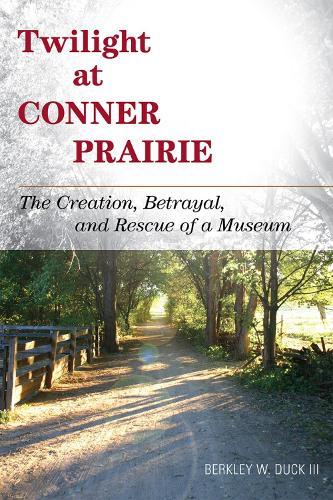
Conner Prairie, among the finest outdoor history museums in the country, recreates life in 19th-century Indiana. It also was the site of one of the most significant controversies that an American museum has faced. Twilight at Conner Prairie follows the development of the museum, the conflicts of interest created by the terms of founder Eli Lilly's gifts, and the breakdown of the relationship between the museum and its trustee, Earlham College. Author Berkley Duck, who served on Conner Prairie's independent board of directors when the board and CEO were dismissed, provides an inside look at what went wrong at Conner Prairie and how it was put to right. Twilight at Conner Prairie is essential reading for anyone concerned with the survival of museums and the ethical obligations of preserving America's past.
Full Product Details
Author: Berkley W. Duck, III
Publisher: Bloomsbury Publishing Plc
Imprint: Rowman & Littlefield
Dimensions:
Width: 16.30cm
, Height: 2.00cm
, Length: 24.10cm
Weight: 0.517kg
ISBN: 9780759120105
ISBN 10: 0759120102
Pages: 240
Publication Date: 22 April 2011
Audience:
General/trade
,
General
Format: Hardback
Publisher's Status: Active
Availability: In Print

This item will be ordered in for you from one of our suppliers. Upon receipt, we will promptly dispatch it out to you. For in store availability, please contact us.
Reviews
In a narrative firmly grounded in the written record and argued with the keenness of a lawyer's brief, Berkley Duck leads his reader patiently and persuasively through the course of this complex tale-one in which the author himself played a substantial role. Along the way, he identifies the ways whereby a charitable arrangement can incrementally drift far from its original moorings; makes a vigorous case for the moral obligations inherent in a fiduciary relationship; and demonstrates that it is possible, but far from easy, to rectify a legal relationship gone wrong. The author does not shy away from arguing on behalf of his side; nonetheless, he readily and graciously acknowledges that the compromise which resolved this dispute made for good public policy-a position that has a refreshing ring given our current polarized society. Those who plan to give charitably, as well those whose responsibility it is to manage charitable gifts, should put Twilight at Conner Prairie at the top of their reading lists. -- J. Michael Hittle For anyone who has ever been associated with museums or not-for-profits, Twilight at Conner Prairie is a must-read case study, as well as a gripping emotional saga of the fight over Conner Prairie, an outdoor history museum and treasured community asset. Berkley Duck's book, part memoir, part legal analysis, chronicles the spellbinding tale of one of the most astounding governance showdowns in the history of museums. Having lived through this period of upheaval in person, I can attest that Berkley's account is scrupulously fair and accurate -- unbelievable as it is. -- Ellen M. Rosenthal Twilight at Conner Prairie is a superb case study of competing visions for one of America's finest history museums. With the skills of a lawyer and historian and the first-hand knowledge of a participant, Berkley Duck shows how volunteer leadership battled to save a threatened cultural institution. -- James H. Madison
For anyone who has ever been associated with museums or not-for-profits, Twilight at Conner Prairie is a must-read case study, as well as a gripping emotional saga of the fight over Conner Prairie, an outdoor history museum and treasured community asset. Berkley Duck s book, part memoir, part legal analysis, chronicles the spellbinding tale of one of the most astounding governance showdowns in the history of museums. Having lived through this period of upheaval in person, I can attest that Berkley s account is scrupulously fair and accurate unbelievable as it is.--Ellen M. Rosenthal
In a narrative firmly grounded in the written record and argued with the keenness of a lawyer's brief, Berkley Duck leads his reader patiently and persuasively through the course of this complex tale-one in which the author himself played a substantial role. Along the way, he identifies the ways whereby a charitable arrangement can incrementally drift far from its original moorings; makes a vigorous case for the moral obligations inherent in a fiduciary relationship; and demonstrates that it is possible, but far from easy, to rectify a legal relationship gone wrong. The author does not shy away from arguing on behalf of his side; nonetheless, he readily and graciously acknowledges that the compromise which resolved this dispute made for good public policy-a position that has a refreshing ring given our current polarized society. Those who plan to give charitably, as well those whose responsibility it is to manage charitable gifts, should put Twilight at Conner Prairie at the top of the
Author Information
Berkley W. Duck, III serves on the Board of Directors for Conner Prairie Museum, Inc. and as Chairman of the Board for Conner Prairie Foundation, Inc. He also served as Chairman of the Board and President of Save the Prairie, Inc., a non-profit corporation organized to secure the independence of Conner Prairie from Earlham College.