Overview
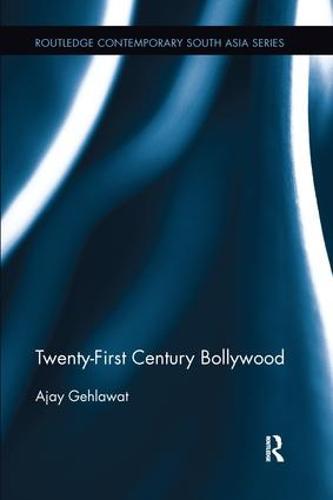
Key changes have emerged in Bollywood in the new millennium. Twenty-First Century Bollywood traces the emerging shifts in both the content and form of Bollywood cinema and examines these new tendencies in relation to the changing dynamics of Indian culture. The book historically situates these emerging trends in relation to previous norms, and develops new, innovative paradigms for conceptualizing Bollywood in the twenty-first century. The particular shifts in contemporary Bollywood cinema that the book examines include the changing nature of the song and dance sequence, the evolving representations of male and female sexuality, and the increasing presence of whiteness as a dominant trope in Bollywood cinema. It also focuses on the increasing presence of Bollywood in higher education courses in the West, as well as how Bollywood’s growing presence in such academic contexts illuminates the changing ways in which this cinema is consumed by Western audiences. Shifting the focus back on the cinematic elements of contemporary films themselves, the book analyses Bollywood films by considering the film dynamics on their own terms, and related to their narrative and aesthetic usage, rather than through an analysis of large-scale industrial practices. It will be of interest to students and scholars of South Asian Studies, Film Studies, and Cultural Studies.
Full Product Details
Author: Ajay Gehlawat (Sonoma State University, USA)
Publisher: Taylor & Francis Ltd
Imprint: Routledge
Weight: 0.232kg
ISBN: 9781138654273
ISBN 10: 1138654272
Pages: 156
Publication Date: 07 December 2016
Audience:
College/higher education
,
Tertiary & Higher Education
Format: Paperback
Publisher's Status: Active
Availability: In Print

This item will be ordered in for you from one of our suppliers. Upon receipt, we will promptly dispatch it out to you. For in store availability, please contact us.
Reviews
This interesting and original study of Bollywood cinema offers the reader a sense of where Hindi films might be headed in the 21st century, as audiences, technologies and societies become more hybrid and more interactive. With a keen eye for the special history and distinctive markers of this genre of films -such as the role of song and dance as fundamental diegetic elements, Gehlawat highlights issues of race, class and gender in a rich analysis of the global life of a major national film industry. It will be of interest to students of cinema, of India and of cultural globalization. Arjun Appadurai, Paulette Goddard Professor of Media, Culture, and Communication, New York University, US This lucidly written book...indicate[s] various new strands of research - such as the representation of the male body, new digital techniques such as graphics and compositing and their effect on the representational techniques employed by Bollywood that demands urgent critical attention. Ishita Tiwary, Studies in South Asian Film & Media
This interesting and original study of Bollywood cinema offers the reader a sense of where Hindi films might be headed in the 21st century, as audiences, technologies and societies become more hybrid and more interactive. With a keen eye for the special history and distinctive markers of this genre of films -such as the role of song and dance as fundamental diegetic elements, Gehlawat highlights issues of race, class and gender in a rich analysis of the global life of a major national film industry. It will be of interest to students of cinema, of India and of cultural globalization. </p> Arjun Appadurai, Paulette Goddard Professor of Media, Culture, and Communication, New York University, US</p>
Author Information
Ajay Gehlawat is Associate Professor of Theatre and Film at Sonoma State University