Overview
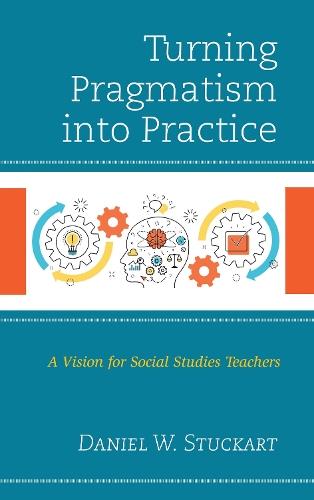
Despite the founding of the modern social studies curriculum nearly a century ago based on John Dewey’s pragmatism philosophy, the field has never achieved a significant and broad implementation of his ideas. Dewey’s instrumentalism offers social studies educators a tool for addressing vexing problems such as whether they should design classroom experiences using a traditional or a social studies approach to learning history, the role of digital technologies, the purpose and challenges of younger learners working with an expanding horizons curriculum, and many more. At the same time, Dewey’s time-tested theories describe how students use the social studies curriculum to make meaning as well as provide teachers a blueprint for implementing engaging and interactive lessons. We have neglected Dewey, which has led to confusion, student disinterest, and widespread teaching methodologies contrary to theoretical and research best practices. Revisiting Dewey provides the why and how of what we do, an ideal for creating a challenging and rigorous social studies curriculum while engaging students’ interests.
Full Product Details
Author: Daniel W. Stuckart
Publisher: Bloomsbury Publishing Plc
Imprint: Rowman & Littlefield
Dimensions:
Width: 15.80cm
, Height: 1.90cm
, Length: 24.00cm
Weight: 0.404kg
ISBN: 9781475837704
ISBN 10: 1475837704
Pages: 158
Publication Date: 19 January 2018
Audience:
Professional and scholarly
,
Professional & Vocational
Format: Hardback
Publisher's Status: Active
Availability: Manufactured on demand

We will order this item for you from a manufactured on demand supplier.
Reviews
John Dewey's pedagogical concepts are timeless and Dr. Stuckart has delivered the preeminent writing on Dewey for the social studies classroom. His book provides social studies educators with the mechanisms for using Dewey's instrumentalism philosophy to facilitate student learning towards an informed democratic populace. This should be on the bookshelf of every social studies educator!--Kenneth Carano, associate professor, Western Oregon University; executive editor, Oregon Journal of the Social Studies Daniel Stuckart's Turning Pragmatism into Practice: A Vision for Social Studies Teachers, a text aimed at pre-service and practicing teachers, provides a vision for turning the philosophic constructs of John Dewey into a vision of what a secondary social studies curriculum and classroom might look like. By providing the reader an understanding of inquiry-based learning Professor Stuckart hopes to guide educators towards the establishment of democratic norms as part of secondary social studies classroom experiences.--Richard Diem, dean emeritus, University of Texas at San Antonio; past-president of the National Council for the Social Studies In his new book, Daniel Stuckart provides a comprehensive yet accessible treatment of how Dewey's philosophy can inform social studies teachers tending the curricular-instructional gate.--Stephen J. Thornton, professor of Social Science Education, University of South Florida; author of the award-winning Teaching Social Studies That Matters: Curriculum for Active Learning In many ways, the social studies has been turning in circles for a century. In this engaging book, Daniel Stuckart revisits, revitalizes, and returns the field to the educational ideas of John Dewey that might enliven classrooms. Stuckart takes the rather dense works from Dewey's long career and makes them accessible for educators and applicable to the classroom. Pre-service to veteran social studies educators would be wise to engage with these pragmatic ideas as they prepare the next generation of citizens for democratic living.--Daniel G. Krutka, assistant professor of social studies education, University of North Texas; chair, Social Studies Research SIG of the American Educational Research Association
John Dewey's pedagogical concepts are timeless and Dr. Stuckart has delivered the preeminent writing on Dewey for the social studies classroom. His book provides social studies educators with the mechanisms for using Dewey's instrumentalism philosophy to facilitate student learning towards an informed democratic populace. This should be on the bookshelf of every social studies educator! -- Kenneth Carano, associate professor, Western Oregon University; executive editor, Oregon Journal of the Social Studies Daniel Stuckart's Turning Pragmatism into Practice: A Vision for Social Studies Teachers, a text aimed at pre-service and practicing teachers, provides a vision for turning the philosophic constructs of John Dewey into a vision of what a secondary social studies curriculum and classroom might look like. By providing the reader an understanding of inquiry-based learning Professor Stuckart hopes to guide educators towards the establishment of democratic norms as part of secondary social studies classroom experiences. -- Richard Diem, dean emeritus, University of Texas at San Antonio; past-president of the National Council for the Social Studies In his new book, Daniel Stuckart provides a comprehensive yet accessible treatment of how Dewey's philosophy can inform social studies teachers tending the curricular-instructional gate. -- Stephen J. Thornton, professor of Social Science Education, University of South Florida; author of the award-winning Teaching Social Studies That Matters: Curriculum for Active Learning
Author Information
Daniel W. Stuckart is an Associate Professor of Social Studies Education at Lehman College in the Bronx, New York with research interests in urban education, technology and student-centered practices. He is co-author of Revisiting Dewey: Best Practices for Educating the Whole Child Today (2010).