Overview
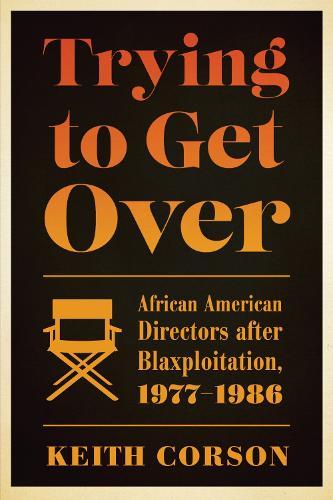
From 1972 to 1976, Hollywood made an unprecedented number of films targeted at black audiences. But following this era known as ""blaxploitation,"" the momentum suddenly reversed for black filmmakers, and a large void separates the end of blaxploitation from the black film explosion that followed the arrival of Spike Lee's She's Gotta Have It in 1986. Illuminating an overlooked era in African American film history, Trying to Get Over is the first in-depth study of black directors working during the decade between 1977 and 1986. Keith Corson provides a fresh definition of blaxploitation, lays out a concrete reason for its end, and explains the major gap in African American representation during the years that followed. He focuses primarily on the work of eight directors-Michael Schultz, Sidney Poitier, Jamaa Fanaka, Fred Williamson, Gilbert Moses, Stan Lathan, Richard Pryor, and Prince-who were the only black directors making commercially distributed films in the decade following the blaxploitation cycle. Using the careers of each director and the twenty-four films they produced during this time to tell a larger story about Hollywood and the shifting dialogue about race, power, and access, Corson shows how these directors are a key part of the continuum of African American cinema and how they have shaped popular culture over the past quarter century.
Full Product Details
Author: Keith Corson
Publisher: University of Texas Press
Imprint: University of Texas Press
Dimensions:
Width: 15.20cm
, Height: 2.30cm
, Length: 22.90cm
Weight: 0.426kg
ISBN: 9781477309087
ISBN 10: 147730908
Pages: 287
Publication Date: 22 March 2016
Audience:
Professional and scholarly
,
Professional & Vocational
Format: Paperback
Publisher's Status: Active
Availability: In Print

This item will be ordered in for you from one of our suppliers. Upon receipt, we will promptly dispatch it out to you. For in store availability, please contact us.
Reviews
Trying to Get Over is required reading for those interested in film at the intersection of racial politics, production histories, and media industries...[Corson] reminds us of the rich and dynamic history of African Americans in Hollywood persistently making films that are now considered cult classics. * Media Industries Journal * Corson provides depth to our knowledge of black filmmaking during the understudied downturn in the decade following Blaxploitation. Understanding changes in the economic and decision-making forces during this time put both the Blaxploitation era and the 1990s into a new context. * Historical Journal of Film, Radio, and Television *
Trying to Get Over is required reading for those interested in film at the intersection of racial politics, production histories, and media industries...[Corson] reminds us of the rich and dynamic history of African Americans in Hollywood persistently making films that are now considered cult classics. (Media Industries Journal) Corson provides depth to our knowledge of black filmmaking during the understudied downturn in the decade following Blaxploitation. Understanding changes in the economic and decision-making forces during this time put both the Blaxploitation era and the 1990s into a new context. (Historical Journal of Film, Radio, and Television)
Trying to Get Over is required reading for those interested in film at the intersection of racial politics, production histories, and media industries...[Corson] reminds us of the rich and dynamic history of African Americans in Hollywood persistently making films that are now considered cult classics. * Media Industries Journal * Corson provides depth to our knowledge of black filmmaking during the understudied downturn in the decade following Blaxploitation. Understanding changes in the economic and decision-making forces during this time put both the Blaxploitation era and the 1990s into a new context. * Historical Journal of Film, Radio, and Television *
Corson provides depth to our knowledge of black filmmaking during the understudied downturn in the decade following Blaxploitation. Understanding changes in the economic and decision-making forces during this time put both the Blaxploitation era and the 1990s into a new context. * Historical Journal of Film, Radio, and Television * Trying to Get Over is required reading for those interested in film at the intersection of racial politics, production histories, and media industries...[Corson] reminds us of the rich and dynamic history of African Americans in Hollywood persistently making films that are now considered cult classics. * Media Industries Journal *
Trying to Get Over is required reading for those interested in film at the intersection of racial politics, production histories, and media industries...[Corson] reminds us of the rich and dynamic history of African Americans in Hollywood persistently making films that are now considered cult classics. * Media Industries Journal *
Author Information
Keith Corson holds a PhD in Cinema Studies from New York University and has taught courses in film and media studies at Rhodes College, Memphis College of Art, University of Memphis, and NYU.