Overview
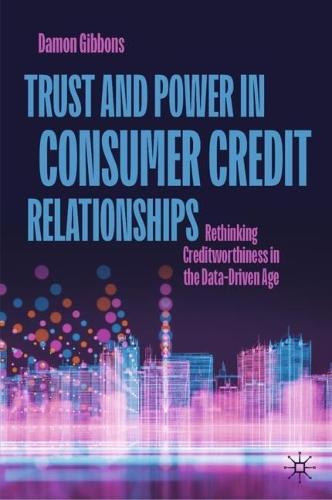
This book examines the structural asymmetries embedded in contemporary consumer credit systems. Trust—essential to economic exchange—is increasingly withheld from borrowers while demanded of them. Lenders operate with minimal visibility or accountability; borrowers must navigate opaque infrastructures, absorb unilateral judgments, and bear the consequences of exclusion. Over the past two decades, credit markets have expanded through algorithmic risk assessment and automated decision-making. Yet the cost of evaluating ‘creditworthiness’—and the entrenchment of risk-based pricing—has deepened exclusion for those experiencing financial difficulty. Surveillance-based scoring systems discipline borrower behaviour, obscure hardship, and produce reputational harm that reverberates across households and public institutions. At the centre of the book is the Trust Intelligent framework: a seven-domain model for diagnosing and redesigning trust–power configurations in credit relationships. It operationalises trust to reduce systemic risk, improve decision accuracy, and restore borrower agency. Grounded in empirical evidence, the framework supports practical reforms—integrating contextual data into credit files, rendering lender conduct visible, and establishing multistakeholder oversight of algorithmic systems. Rather than accepting the trajectory of deeper data extraction and one-sided surveillance, the book proposes a reciprocal model of information exchange—one that improves outcomes and embeds mutual accountability. It offers a blueprint for reform that is both conceptually rigorous and institutionally actionable. This is a book for those who design, regulate, and critique credit systems: lenders, credit reference agencies, financial regulators, consumer advocates, and scholars of trust, governance, and institutional design. Drawing on economics, sociology, political science, and organisational studies, it presents a multidisciplinary account of how trust can be rebuilt—within and beyond consumer credit.
Full Product Details
Author: Damon Gibbons
Publisher: Springer Nature Switzerland AG
Imprint: Palgrave Macmillan
ISBN: 9783032139566
ISBN 10: 3032139562
Pages: 175
Publication Date: 29 January 2026
Audience:
Professional and scholarly
,
Professional & Vocational
Format: Hardback
Publisher's Status: Active
Availability: Not yet available

This item is yet to be released. You can pre-order this item and we will dispatch it to you upon its release.
Author Information
Damon Gibbons is the founder and Chief Executive of the Centre for Responsible Credit, a UK charity working to reform credit markets and improve support for people in debt. He is the author of Britain’s Personal Debt Crisis (2014) and has been at the fore of national and international campaigns on credit, debt, and financial exclusion for over two decades. With more than thirty years’ experience designing and commissioning services for disadvantaged communities, Damon’s advocacy has helped secure landmark caps on payday lending (2015) and rent-to-own credit (2019). With an academic background in Economics, Politics, and Public Policy, he continues to lead research and innovation at the intersection of trust, governance, and financial justice.