Overview
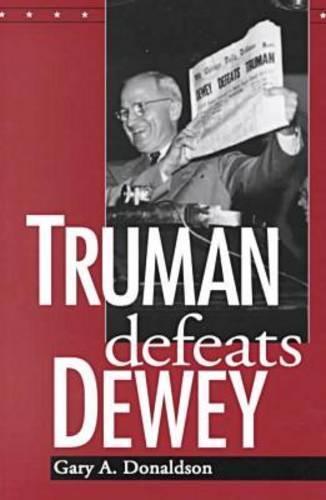
Fifty years ago Harry S. Truman pulled off the greatest upset in U.S. political history. With his party split on both the left and the right, and facing a formidable Republican opponent in New York governor Thomas E. Dewey, the Missourian was thought to have little chance of remaining in the White House. But politics in the postwar years were changing dramatically. Truman and his advisers successfully read those changes: their strategy focused on building a coalition of organized labor, African Americans in large northern cities, and traditional liberals--and ignoring protests from the conservative South. Donaldson argues that Dewey did nearly as much to lose the election as Truman did to win it. Dewey entered the campaign so overconfident that he refused to confront Truman on the issues. The Republicans, certain of a mandate from the public after the midterm elections of 1946, prepared to disassemble the New Deal. Yet they suffered from even more severe internal division than the Democrats. The 1948 presidential campaign was a watershed event in the history of American politics. It encompassed Truman's rousing ""Give 'em Hell Harry"" speeches and intriguing behind-the-scenes political maneuvering. It was the first election after Roosevelt's death and the last before the advent of television. It marked the new political prominence of African American voters and organized labor, as well as the South's declining influence over the Democratic Party.
Full Product Details
Author: Gary A. Donaldson
Publisher: The University Press of Kentucky
Imprint: The University Press of Kentucky
Edition: New edition
Dimensions:
Width: 15.60cm
, Height: 1.50cm
, Length: 23.50cm
Weight: 0.400kg
ISBN: 9780813190020
ISBN 10: 0813190029
Pages: 304
Publication Date: 06 July 2000
Audience:
College/higher education
,
Professional and scholarly
,
Undergraduate
,
Postgraduate, Research & Scholarly
Format: Paperback
Publisher's Status: Active
Availability: Out of stock

The supplier is temporarily out of stock of this item. It will be ordered for you on backorder and shipped when it becomes available.
Reviews
Makes a persuasive case that the 1948 election was a watershed event in American political history and began the modern political era. -- Wisconsin Bookwatch Should replace previously published popular works dealing with the 1948 election. Donaldson's research is comprehensive; his analysis impeccable; his thesis compelling. -- Missouri Historical Review Harry S. Truman's victory in 1948 remains one of the great events in American political history. Although the story of Truman's triumph that year is well-known, Donaldson, thanks to his wide-ranging research into a variety of fresh primary and secondary materials, provides the reader with a detailed and clear account of how and why Truman won that election. -- William C. Berman Comprehensive in its examination of major U.S. postwar political developments. -- Southern Historian Gives a clear account of the election. -- South Dakota Review Donaldson deserves substantial credit for combing far-flung manuscript collections and writing a genuine page-turner. -- South Carolina Historical Magazine An engaging narrative, which also provides a framework for making claims about the changing nature of liberalism in the postwar years. -- Reviews in American History A nitty-gritty political handbook to the issues of the election of 1948. -- Publishers Weekly Solid political history.... Strips away the mystique surrounding the 1948 campaign and compels the reader to think seriously about the critical issues at stake and about Harry Truman's role in defining the postwar political order. -- North Carolina Historical Review Donaldson takes a fresh look not only at how Truman took the 1948 race but at what Dewey did (or didn't do) that made him lose the election. -- McCormick (SC) Messenger Significantly, the author shows how the well-known split from the Democratic party of segregationalist Dixiecrats and Communist sympathizers actually contributed to Truman's victory by dislodging extremists, thereby boosting his mainstream appeal. -- Library Journal Here in painstaking, exhaustive detail are the election's competing strategies, ideological party divisions, shifting political alliances and clash of issues. -- Lexington Herald-Leader Donaldson provides persuasive analyses of postwar politics, the tactics of contending political parties that marked the breakup of the old FDR New Deal coalition after WWII.... An excellent history of a remarkable event in a tumultuous time in America. -- Kirkus Reviews Offers surveys of two areas that are often omitted from the story of 1948 -- an excellent section on the role of Americans for Democratic Action (ADA) and their abandonment of Henry Wallace for his procommunist leanings, and a strong piece on the attempt to euchre Dwight D. Eisenhower into running for president some four years before he planned on doing so. -- Journal of American History Shows that the election had less to do with folklore than with conventional political maneuverings, appeals to the normal components of the Democratic coalition assembled by Franklin D. Roosevelt, bruising battles over the shape of the post-New Deal, postwar political economy, and rising Cold War tensions. -- Indiana Magazine of History Unlike earlier studies of the 1948 election, this book examines the tactics of the Republican Party.... Argues that Dewey did nearly as much to lose the election as Truman did to win it. -- Educational Book Review Donaldson focuses on why Truman won rather than on how Dewey lost.... An excellent study. -- Choice
""A nitty-gritty political handbook to the issues of the election of 1948."" -- Publishers Weekly ""An engaging narrative, which also provides a framework for making claims about the changing nature of liberalism in the postwar years."" -- Reviews in American History ""Comprehensive in its examination of major U.S. postwar political developments."" -- Southern Historian ""Donaldson deserves substantial credit for combing far-flung manuscript collections and writing a genuine page-turner."" -- South Carolina Historical Magazine ""Donaldson focuses on why Truman won rather than on how Dewey lost.... An excellent study."" -- Choice ""Donaldson provides persuasive analyses of postwar politics, the tactics of contending political parties that marked the breakup of the old FDR New Deal coalition after WWII.... An excellent history of a remarkable event in a tumultuous time in America."" -- Kirkus Reviews ""Donaldson takes a fresh look not only at how Truman took the 1948 race but at what Dewey did (or didn't do) that made him lose the election."" -- McCormick (SC) Messenger ""Gives a clear account of the election."" -- South Dakota Review ""Harry S. Truman's victory in 1948 remains one of the great events in American political history. Although the story of Truman's triumph that year is well-known, Donaldson, thanks to his wide-ranging research into a variety of fresh primary and secondary materials, provides the reader with a detailed and clear account of how and why Truman won that election."" -- William C. Berman ""Here in painstaking, exhaustive detail are the election's competing strategies, ideological party divisions, shifting political alliances and clash of issues."" -- Lexington Herald-Leader ""Makes a persuasive case that the 1948 election was a watershed event in American political history and began the modern political era."" -- Wisconsin Bookwatch ""Offers surveys of two areas that are often omitted from the story of 1948 -- an excellent section on the role of Americans for Democratic Action (ADA) and their abandonment of Henry Wallace for his procommunist leanings, and a strong piece on the attempt to euchre Dwight D. Eisenhower into running for president some four years before he planned on doing so."" -- Journal of American History ""Should replace previously published popular works dealing with the 1948 election. Donaldson's research is comprehensive; his analysis impeccable; his thesis compelling."" -- Missouri Historical Review ""Shows that the election had less to do with folklore than with conventional political maneuverings, appeals to the normal components of the Democratic coalition assembled by Franklin D. Roosevelt, bruising battles over the shape of the post-New Deal, postwar political economy, and rising Cold War tensions."" -- Indiana Magazine of History ""Significantly, the author shows how the well-known split from the Democratic party of segregationalist Dixiecrats and Communist sympathizers actually contributed to Truman's victory by dislodging extremists, thereby boosting his mainstream appeal."" -- Library Journal ""Solid political history.... Strips away the mystique surrounding the 1948 campaign and compels the reader to think seriously about the critical issues at stake and about Harry Truman's role in defining the postwar political order."" -- North Carolina Historical Review ""Unlike earlier studies of the 1948 election, this book examines the tactics of the Republican Party.... Argues that Dewey did nearly as much to lose the election as Truman did to win it."" -- Educational Book Review
A new study of the 1948 election that has long been called the greatest upset in American political history. Donaldson, (History/Xavier Univ.) provides persuasive analyses of postwar politics, the tactics of contending political parties that marked the breakup of the old FDR New Deal coalition after WWII. To many voters, Plain Harry Truman was a drastic letdown after the charismatic and innovative FDR. Truman had little use for New Dealers and was heard to call them crackpots and the lunatic fringe . He replaced the FDR cabinet with his political cronies and old war buddies. Donaldson finds that only FDR could hold together his unlikely coalition of leftists, liberals, aggressive labor unions, conservative farmers, newly united northern African-Americans, professionals, and right-wing southern white supremacists. Truman walked a tightrope between these contending forces. In addition, Donaldson points out that Republicans drew away many old FDR voters who perceived the Yalta conference as a sellout to the Soviet Union. The GaP captured Congress in the 1946 elections as Truman's popularity declined. All polls predicted a Republican landslide in 1948. Truman found he couldn't please all factions and decided to abandon the far leftists and the extreme southern white supremacists, both of whom formed new parties led respectively by Henry Wallace and Strom Thurmond. Truman's feisty whistle stop train campaign and give them hell, Harry speeches endeared him to millions of Americans In the west and south and in large cities. He regained many lukewarm voters with no other place to go except to the newly animated Harry. Donaldson argues that the overconfident Dewey lost the election with his bland, boring campaign speeches as much as Truman won it in a close popular vote. An excellent history of a remarkable event in a tumultuous time in America. (Kirkus Reviews)
Makes a persuasive case that the 1948 election was a watershed event in American political history and began the modern political era. -- Wisconsin Bookwatch Harry S. Truman's victory in 1948 remains one of the great events in American political history. Although the story of Truman's triumph that year is well-known, Donaldson, thanks to his wide-ranging research into a variety of fresh primary and secondary materials, provides the reader with a detailed and clear account of how and why Truman won that election. -- William C. Berman Comprehensive in its examination of major U.S. postwar political developments. -- Southern Historian Gives a clear account of the election. -- South Dakota Review Donaldson deserves substantial credit for combing far-flung manuscript collections and writing a genuine page-turner. -- South Carolina Historical Magazine An engaging narrative, which also provides a framework for making claims about the changing nature of liberalism in the postwar years. -- Reviews in American History A nitty-gritty political handbook to the issues of the election of 1948. -- Publishers Weekly Solid political history.... Strips away the mystique surrounding the 1948 campaign and compels the reader to think seriously about the critical issues at stake and about Harry Truman's role in defining the postwar political order. -- North Carolina Historical Review Should replace previously published popular works dealing with the 1948 election. Donaldson's research is comprehensive; his analysis impeccable; his thesis compelling. -- Missouri Historical Review Donaldson takes a fresh look not only at how Truman took the 1948 race but at what Dewey did (or didn't do) that made him lose the election. -- McCormick (SC) Messenger Significantly, the author shows how the well-known split from the Democratic party of segregationalist Dixiecrats and Communist sympathizers actually contributed to Truman's victory by dislodging extremists, thereby boosting his mainstream appeal. -- Library Journal Here in painstaking, exhaustive detail are the election's competing strategies, ideological party divisions, shifting political alliances and clash of issues. -- Lexington Herald-Leader Donaldson provides persuasive analyses of postwar politics, the tactics of contending political parties that marked the breakup of the old FDR New Deal coalition after WWII.... An excellent history of a remarkable event in a tumultuous time in America. -- Kirkus Reviews Offers surveys of two areas that are often omitted from the story of 1948 -- an excellent section on the role of Americans for Democratic Action (ADA) and their abandonment of Henry Wallace for his procommunist leanings, and a strong piece on the attempt to euchre Dwight D. Eisenhower into running for president some four years before he planned on doing so. -- Journal of American History Unlike earlier studies of the 1948 election, this book examines the tactics of the Republican Party.... Argues that Dewey did nearly as much to lose the election as Truman did to win it. -- Educational Book Review Donaldson focuses on why Truman won rather than on how Dewey lost.... An excellent study. -- Choice Shows that the election had less to do with folklore than with conventional political maneuverings, appeals to the normal components of the Democratic coalition assembled by Franklin D. Roosevelt, bruising battles over the shape of the post-New Deal, postwar political economy, and rising Cold War tensions. -- Indiana Magazine of History
Makes a persuasive case that the 1948 election was a watershed event in American political history and began the modern political era. -- <i>Wisconsin Bookwatch</i></p>
<p> Makes a persuasive case that the 1948 election was a watershed event in American political history and began the modern political era. -- Wisconsin Bookwatch
Makes a persuasive case that the 1948 election was a watershed event in American political history and began the modern political era. -- Wisconsin Bookwatch
Author Information
Gary A. Donaldson, associate professor of history at Xavier University, is the author of Abundance and Anxiety: America 1945 to 1960 and America at War Since 1945: Foreign Policy and Politics in Korea, Vietnam and the Gulf War.