Overview
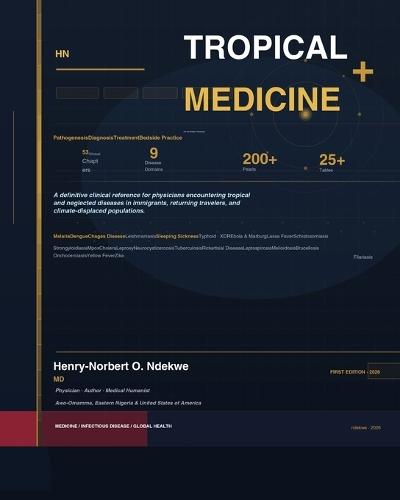
Why Western Physicians Must Know Tropical Medicine There is a persistent misconception in western medical education that tropical medicine is a subspecialty relevant only to those practicing in endemic regions or working in international health. This view is no longer defensible. The forces of globalization, international migration, military deployment, and climate change have fundamentally altered the epidemiological landscape of the high-income world, and the western physician who cannot recognize falciparum malaria, cutaneous leishmaniasis, or Strongyloides hyperinfection syndrome is poorly equipped to care for a substantial and growing proportion of the patients who will walk through their door. The Returning Traveler International travel volumes, while temporarily disrupted by the COVID-19 pandemic, have returned to and exceeded pre-pandemic levels. The United States sees approximately 100 million international departures annually, with a substantial proportion traveling to tropical destinations in Africa, Asia, and Latin America. GeoSentinel, the global network of travel and tropical medicine clinics, consistently identifies febrile illness (predominantly malaria and dengue), traveler's diarrhea, and dermatological conditions as the leading presentations in returning travelers seeking medical care. The most critical diagnosis in any febrile returning traveler is malaria, particularly Plasmodium falciparum, which can progress from first symptoms to cerebral malaria and death within 24-48 hours. The CDC estimates that between 1,500 and 2,000 cases of imported malaria are reported in the United States each year, and a disproportionate number of fatalities occur in patients whose illness was initially attributed to influenza, viral syndrome, or other self-limited febrile illnesses by clinicians who did not consider the diagnosis. Climate Change and the Expanding Geography of Tropical Disease Perhaps the most important reason for all western physicians - not merely those in major urban centers - to understand tropical medicine is the ongoing geographic expansion of tropical vector-borne diseases driven by climate change. Aedes aegypti, the primary vector of dengue, Zika, chikungunya, and yellow fever, has extended its range northward into the southern United States, southern Europe, and parts of Central Asia over the past two decades, driven by rising temperatures and altered precipitation patterns. Dengue is now endemic in Florida and Texas and has caused locally transmitted outbreaks in multiple European countries. The European Centre for Disease Prevention and Control (ECDC) reported unprecedented dengue transmission in Europe in 2023 and 2024. Anopheles mosquitoes capable of transmitting malaria persist in the southern United States, and while sustained local transmission remains rare, it has been documented in multiple states. The physician practicing in rural Georgia or southern California can no longer dismiss malaria as purely an imported disease. West Nile virus, now endemic across the continental United States, is the visible leading edge of a broader phenomenon: tropical and subtropical arboviral diseases are moving into temperate zones faster than public health infrastructure can adapt. Clinicians who understand the biology, vectors, and clinical presentations of tropical arboviral diseases are substantially better positioned to recognize these emerging threats when they appear in their practices.
Full Product Details
Author: Promise Nkwachukwu Ndekwe ,
Blessing Ngozichukwu Ndekwe ,
Chikezie Ndekwe
Publisher: Independently Published
Imprint: Independently Published
Dimensions:
Width: 20.30cm
, Height: 3.30cm
, Length: 25.40cm
Weight: 1.347kg
ISBN: 9798259096875
Pages: 494
Publication Date: 08 May 2026
Audience:
General/trade
,
General
Format: Paperback
Publisher's Status: Active
Availability: Available To Order

We have confirmation that this item is in stock with the supplier. It will be ordered in for you and dispatched immediately.