|
|
|||
|
||||
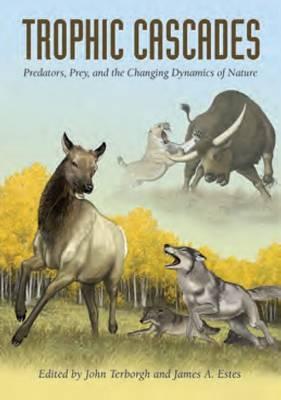
OverviewTrophic cascades—the top-down regulation of ecosystems by predators—are an essential aspect of ecosystem function and well-being. Trophic cascades are often drastically disrupted by human interventions—for example, when wolves and cougars are removed, allowing deer and beaver to become destructive—yet have only recently begun to be considered in the development of conservation and management strategies. Trophic Cascades is the first comprehensive presentation of the science on this subject. It brings together some of the world’s leading scientists and researchers to explain the importance of large animals in regulating ecosystems, and to relate that scientific knowledge to practical conservation. It is a groundbreaking work for scientists and managers involved with biodiversity conservation and protection. Full Product DetailsAuthor: John Terborgh , James A EstesPublisher: Island Press Imprint: Island Press Dimensions: Width: 17.80cm , Height: 3.30cm , Length: 25.40cm Weight: 1.021kg ISBN: 9781597264860ISBN 10: 1597264865 Pages: 488 Publication Date: 20 April 2010 Audience: General/trade , General Format: Hardback Publisher's Status: Out of Stock Indefinitely Availability: In Print Limited stock is available. It will be ordered for you and shipped pending supplier's limited stock. Table of ContentsReviews“In the first comprehensive work on trophic cascades, leading experts in terrestrial, marine, and lake food webs distill decades of evidence and lifetimes of insight to show that large carnivores, as apex predators, exert ubiquitous and powerful effects over nature. This landmark book argues, compellingly, that the ongoing worldwide loss of megacarnivores not only impoverishes Earth’s biota, but also undermines life support services needed for thriving human societies.”--Mary E. Power "Professor of Integrative Biology, University of California, Berkeley " Author InformationJohn Terborgh is James B. Duke Professor of Environmental Sciences and codirector of the Center for Tropical Conservation at Duke University. He has devoted much of the past 35 years to issues concerning the ecology and conservation of neotropical systems. After spending most of his career as a research scientist with the US Geological Survey, James A. Estes is currently a faculty member at the University of California at Santa Cruz where he holds a position of professor of ecology and evolutionary biology. Tab Content 6Author Website:Countries AvailableAll regions |
||||