Overview
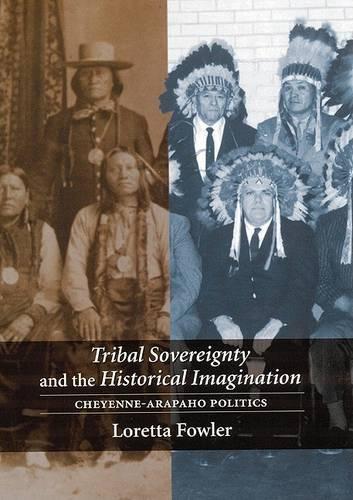
Loretta Fowler offers a new perspective on Native American politics by examining how power on multiple levels infuses the everyday lives and consciousness of the Cheyenne and Arapaho peoples of Oklahoma. Cheyennes and Arapahos today energetically pursue a variety of commercial enterprises, including gaming and developing retail businesses, and they operate a multitude of social programs. Such revitalisation and economic mobilisation, however, have not unambiguously produced greater tribal sovereignty. Tribal members challenge and often work vigorously to undermine their tribal government's efforts to strengthen the tribe as an independent political, economic, and cultural entity; at the same time, political consensus and tribal unity are continually recognised and promoted in powwows and dances. Why is there conflict in one sphere of Cheyenne-Arapaho politics and co-operation in the other? The key to the dynamics of current community life, Fowler contends, is found in the complicated relationship between the coloniser and the colonised that emerges in Fourth World or postcolonial settings. For over a century the lives of Cheyennes and Arapahos have been affected simultaneously by forces of resistance and domination. These circumstances are reflected in their constructions of history. Cheyennes and Arapahos accommodate an ideology that buttresses social forms of domination and helps mould experiences and perceptions. They also selectively recognise and resist such domination. Drawing upon a decade of fieldwork and archival research, Tribal Sovereignty and the Historical Imagination provides an insightful and provocative analysis of how Cheyenne and Arapaho constructions of history influence tribal politics today. Loretta Fowler is a professor of anthropology at the University of Oklahoma. She is the author of Arapahoe Politics, 1851-1978: Symbols in Crises of Authority (Nebraska 1982) and Shared Symbols, Contested Meanings: Gros Ventre Culture and History, 1778-1984.
Full Product Details
Author: Loretta Fowler
Publisher: University of Nebraska Press
Imprint: University of Nebraska Press
Dimensions:
Width: 15.00cm
, Height: 1.50cm
, Length: 25.00cm
Weight: 0.666kg
ISBN: 9780803220133
ISBN 10: 0803220138
Pages: 368
Publication Date: 01 May 2002
Audience:
Professional and scholarly
,
Professional & Vocational
Format: Hardback
Publisher's Status: Out of Stock Indefinitely
Availability: Out of stock

Reviews
In Fowler''s excellent work, one begins fully to understand the trials and triumphs of the Arapahos and Cheyennes and why the process of governance has been such a long and at times tortuous road to political stability. -William D. Welge, The Chronicles of Oklahoma -- William D. Welge The Chronicles of Oklahoma
[Fowler's prodigious research and careful writing will require critics to engage [her ideas directly. And so will scholars who now have before them a model 'tribal history.' --Brian Hosmer, The Western Historical Quarterly --Brian Hosmer The Western Historical Quarterly
Author Information
Loretta Fowler is a professor of anthropology at the University of Oklahoma. She is the author of Arapahoe Politics, 1851-1978: Symbols in Crises of Authority (Nebraska 1982) and Shared Symbols, Contested Meanings: Gros Ventre Culture and History, 1778-1984.