Overview
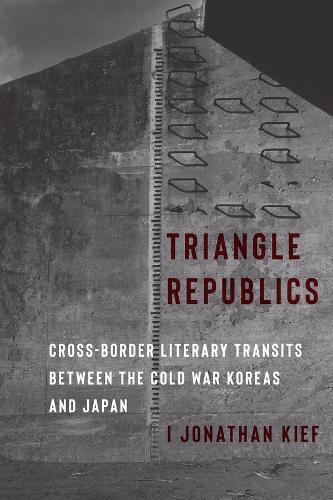
In Korea, the end of the Second World War in 1945 brought both liberation from Japanese colonial rule and the division of the nation by the triumphant Allies. The peninsula was not only decoupled from its former colonial metropole but also carved up into two halves that were subsequently incorporated into the rival blocs of the emerging Cold War order. Although the two Koreas are typically seen as isolated from each other, texts continued to circulate between them-with the assistance of Korean diasporic and other colleagues in Japan-throughout the ensuing decades. I Jonathan Kief follows the triangular flow of texts linking North Korea, South Korea, and Japan from 1945 until the 1980s, revealing overlooked paths of interaction and exchange. He highlights the creative ways in which poets, playwrights, novelists, critics, and academics crossed boundaries of language, ideology, genre, and geography to challenge the stability of the Cold War. By showing how writers in North and South Korea engaged in dialogue via the mediation of a multiethnic set of colleagues in Japan, Triangle Republics offers a new perspective on this era, emphasizing its vibrant, dynamic, and interconnected nature.
Full Product Details
Author: I Jonathan Kief
Publisher: Columbia University Press
Imprint: Columbia University Press
ISBN: 9780231219853
ISBN 10: 0231219857
Pages: 360
Publication Date: 16 September 2025
Audience:
College/higher education
,
Postgraduate, Research & Scholarly
Format: Paperback
Publisher's Status: Active
Availability: Manufactured on demand

We will order this item for you from a manufactured on demand supplier.
Reviews
Challenging the notion of closed borders, Triangle Republics offers a unique approach to understanding transnational literature, writers, and the literary cultures in North Korea, South Korea, and Japan. -- Immanuel Kim, author of <i>Laughing North Koreans: The Culture of Comedy Films</i>
Challenging the notion of closed borders, Triangle Republics offers a unique approach to understanding transnational literature, writers, and the literary cultures in North Korea, South Korea, and Japan. -- Immanuel Kim, author of <i>Laughing North Koreans: The Culture of Comedy Films</i> I Jonathan Kief’s painstaking research on print culture in Korean and Japanese demonstrates the importance of moving past the determining power of national and linguistic boundaries and points to Japan and its diasporic writers as important nodes in the formation of the literary fields on the Korean peninsula. -- Dafna Zur, Associate Professor, Korean Studies, Department of East Asian Literatures and Cultures, Stanford University Triangle Republics provides a meticulously researched exploration of the complex flow of texts, information, conversations, and political discourse across and within the contested borders of the two postcolonial Koreas and Japan. A must-read for anyone seeking to complicate the received literary histories of the Cold War. -- Christina Yi, author of <i>Colonizing Language: Cultural Production and Language Politics in Modern Japan and Korea</i>
Challenging the notion of closed borders, Triangle Republics offers a unique approach to understanding transnational literature, writers, and the literary cultures in North Korea, South Korea, and Japan. -- Immanuel Kim, author of <i>Laughing North Koreans: The Culture of Comedy Films</i> I Jonathan Kief’s painstaking research on print culture in Korean and Japanese demonstrates the importance of moving past the determining power of national and linguistic boundaries and points to Japan and its diasporic writers as important nodes in the formation of the literary fields on the Korean peninsula. -- Dafna Zur, Associate Professor, Korean Studies, Department of East Asian Literatures and Cultures, Stanford University
Author Information
I Jonathan Kief is an assistant professor of Korean studies at the University of North Carolina at Chapel Hill.