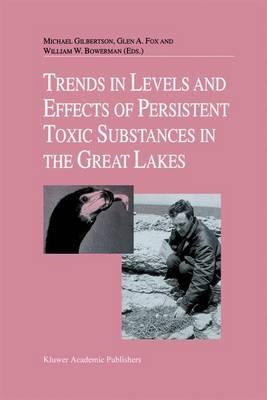
Trends in Levels and Effects of Persistent Toxic Substances in the Great Lakes

Author:   Michael Gilbertson ,  Glen A. Fox (Canadian Wildlife Service, Environment Canada, Ottawa, Ont., Canada) ,  William W. Bowerman (Gale Gleason Environmental Institute, Lake Superior State University, Sault Ste. Marie, MI, USA)
Publisher:   Kluwer Academic Publishers
ISBN:  

9780792353003


Pages:   258
Publication Date:   October 1998
Format:   Hardback
Availability:   In Print   Availability explained
This item will be ordered in for you from one of our suppliers. Upon receipt, we will promptly dispatch it out to you. For in store availability, please contact us.

Our Price $319.44 Quantity:  
Add to Cart

Share |

Trends in Levels and Effects of Persistent Toxic Substances in the Great Lakes


Overview

'Are the Great Lakes getting better or worse?' This is the question that the public, scientists and managers are asking the International Joint Commission after a quarter-century of cooperative action by the United States and Canadian governments to clean up the Great Lakes. This volume contains papers from the workshop on Environmental Results, hosted in Windsor, Ontario, by the Great Lakes Science Advisory Board of the International Joint Commission, on September 12 and 13, 1996. The Great Lakes have been through almost a century of severe pollution from the manufacture, use and disposal of chemicals. In the 1960s wildlife biologists started to investigate the outbreaks of reproductive failure in fish-eating birds and ranch mink and to link these to exposure to organochlorine compounds. Human health researchers in the 1980s and 1990s linked growth retardation, behavioral anomalies and deficits in cognitive development with maternal consumption of Great Lakes fish prior to pregnancy. The Great Lakes became the laboratory where the theory of endocrine disruptors was first formulated. Now a group of Great Lakes scientists, hosted by the International Joint Commission, has compiled the story of the trends in the concentrations and effects of persistent toxic substances on wildlife and humans. The technical papers review the suitability of various organisms as indicators, and present the results of long-term monitoring of the concentrations and of the incidence of effects. The evidence shows that there was an enormous improvement in the late 1970s, but that in the late 1990s there are still concentrations of some persistent toxic substances that have stubbornly remained at levels that continue to cause toxicological effects.

Full Product Details

Author:   Michael Gilbertson ,  Glen A. Fox (Canadian Wildlife Service, Environment Canada, Ottawa, Ont., Canada) ,  William W. Bowerman (Gale Gleason Environmental Institute, Lake Superior State University, Sault Ste. Marie, MI, USA)
Publisher:   Kluwer Academic Publishers
Imprint:   Kluwer Academic Publishers
Dimensions:   Width: 15.50cm , Height: 1.50cm , Length: 23.50cm
Weight:   0.553kg
ISBN:  

9780792353003


ISBN 10:   0792353005
Pages:   258
Publication Date:   October 1998
Audience:   College/higher education ,  Professional and scholarly ,  Undergraduate ,  Postgraduate, Research & Scholarly
Format:   Hardback
Publisher's Status:   Active
Availability:   In Print   Availability explained
This item will be ordered in for you from one of our suppliers. Upon receipt, we will promptly dispatch it out to you. For in store availability, please contact us.

Table of Contents

Reviews

Author Information

Tab Content 6

Author Website:  

Countries Available

All regions
Latest Reading Guide

NOV RG 20252


Shopping Cart
Your cart is empty
Shopping cart
Mailing List