Full Product Details
Author: Mark C. Russell (Antioch University, Washington, USA) ,
Charles R. Figley (Tulane University, Louisiana, USA)
Publisher: Taylor & Francis Ltd
Imprint: Routledge
Dimensions:
Width: 15.20cm
, Height: 2.00cm
, Length: 22.90cm
Weight: 0.430kg
ISBN: 9780415645331
ISBN 10: 0415645336
Pages: 288
Publication Date: 06 December 2012
Audience:
Professional and scholarly
,
Professional & Vocational
Format: Paperback
Publisher's Status: Active
Availability: In Print

This item will be ordered in for you from one of our suppliers. Upon receipt, we will promptly dispatch it out to you. For in store availability, please contact us.
Reviews
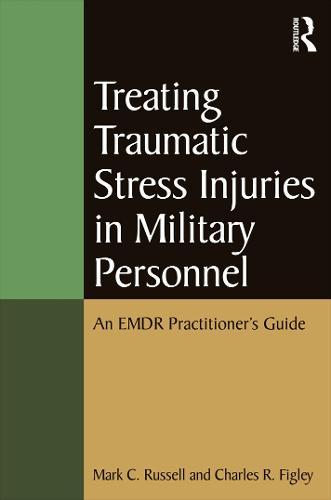
This book brings to readers the combined experience and lessons learned from trauma-studies pioneer Charles Figley and military trainer Mark Russell, both veterans and clinical psychologists who have spent decades in the mental-health trenches. Detailed scripts and actual clinical case examples help lead the therapist through the intricacies of each stage of treatment, beginning with suggestions for establishing the therapeutic alliance and overcoming the often encountered resistance, resentment and distrust of mental health professionals. The authors' comprehensive review of treatment issues pertinent to both active military and combat veterans provides invaluable guidance for clinicians of all orientations. -Francine Shapiro, PhD, senior research fellow, Mental Research Institute and founder of the EMDR Humanitarian Assistance Programs Treating Traumatic Stress Injuries in Military Personnel is a fascinating examination of why and how EDMR is valuable in treating war-related stress injuries and medically unexplained symptoms. This book is a must read for any mental-health provider who uses EDMR. -Colonel David Rabb, Combat Stress Control, United State Army Reserves and OIF/OEF Veteran In this well-written volume, Russell and Figley provide the reader with six books in one: an in-depth treatment manual for EMDR, a practical discussion of some of the most important clinical issues in psychotherapy, a comprehensive guide to contemporary military culture, an analysis of types of military traumatic stress injury, a compendium of EMDR intervention protocols for military personnel, and a detailing of rich case studies that make EMDR with military populations come vividly alive. A superb resource for those working with the military, utilizing EMDR, or focusing on trauma. -Therese A. Rando, PhD, clinical director at the Institute for the Study and Treatment of Loss Everyone interested in evidence-based treatment of traumatic stress among veterans and military personnel should own a copy of Treating Traumatic Stress Injuries in Military Personnel. Russell and Figley have made a significant contribution to the literature on treating military personnel and veterans with traumatic stress using EMDR. This is a book that EMDR clinicians will value and consult throughout their professional career, and one that will be required reading for the clinicians we train at Soldier Center. -E.C. Hurley, PhD, COL, U.S. Army (Ret.) and executive director of Soldier Center
This book brings to readers the combined experience and lessons learned from trauma studies pioneer Charles R. Figley and military trainer Mark C. Russell, both veterans and clinical psychologists who have spent decades in the mental health trenches. Detailed scripts and actual clinical case examples help lead the therapist through the intricacies of each stage of treatment, beginning with suggestions for establishing the therapeutic alliance and overcoming the often encountered resistance, resentment, and distrust of mental health professionals. The authors' comprehensive review of treatment issues pertinent to both active military and combat veterans provides invaluable guidance for clinicians of all orientations. -Francine Shapiro, PhD, senior research fellow, Mental Research Institute and founder of the EMDR Humanitarian Assistance Programs Treating Traumatic Stress Injuries in Military Personnel is a fascinating examination of why and how EMDR is valuable in treating war-related stress injuries and medically unexplained symptoms. This book is a must read for any mental health provider who uses EMDR. -Colonel David Rabb, Combat Stress Control, United States Army Reserves and OIF/OEF Veteran In this well-written volume, Russell and Figley provide the reader with six books in one: an in-depth treatment manual for EMDR, a practical discussion of some of the most important clinical issues in psychotherapy, a comprehensive guide to contemporary military culture, an analysis of types of military traumatic stress injury, a compendium of EMDR intervention protocols for military personnel, and a detailing of rich case studies that make EMDR with military populations come vividly alive. A superb resource for those working with the military, utilizing EMDR, or focusing on trauma. -Therese A. Rando, PhD, clinical director, Institute for the Study and Treatment of Loss Everyone interested in evidence-based treatment of traumatic stress among veterans and military personnel should own a copy of Treating Traumatic Stress Injuries in Military Personnel. Russell and Figley have made a significant contribution to the literature on treating military personnel and veterans with traumatic stress using EMDR. This is a book that EMDR clinicians will value and consult throughout their professional career, and one that will be required reading for the clinicians we train at Soldier Center. -E.C. Hurley, PhD, colonel, U.S. Army (Ret.) and executive director of Soldier Center
Author Information
Mark C. Russell, PhD, is a retired U.S. Navy commander and board-certified clinical psychologist with 26 years of military experience. He is the author of multiple publications on war stress injuries and recipient of the 2006 Distinguished Psychologist Award by Washington State Psychological Association. Currently, he serves as chair of the PsyD program and founding director of the Institute of War Stress Injuries and Social Justice at Antioch University in Seattle. Charles R. Figley, PhD, is the Paul Henry Kurzweg Distinguished Chair in Disaster Mental Health at Tulane University. A former Marine sergeant who served early in the Vietnam War, he went on to help pioneer the modern study and treatment of trauma and many innovations in helping the traumatized, including practitioners themselves, in his more than 200 scholarly articles, chapters, and books.