Overview
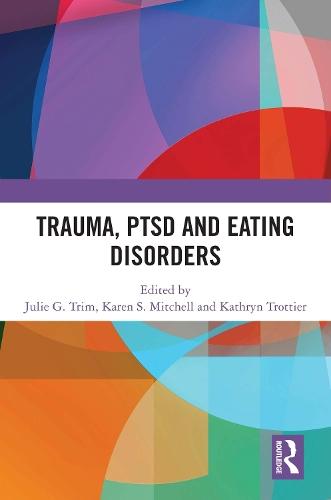
This book outlines the state of the literature on the intersection between trauma exposure, PTSD, and eating disorders, and provides several new research updates in this area. The functional relationship between these variables is discussed, and promising treatment approach are provided. It is well known that individuals with eating disorders report high rates of trauma exposure and often have co-occurring posttraumatic stress disorder (PTSD). However, most research to date has focused on the prevalence of trauma/PTSD among people with eating disorders or cross-sectional associations among these conditions. Although trauma histories and PTSD can impact eating disorder treatment and recovery, very little is known about mechanisms of these associations, which could represent important treatment targets, and few longitudinal studies have investigated these associations. Further, little research has examined trauma-focused eating disorder treatment or integrated treatment for comorbid eating disorders and PTSD. The chapters in this volume fill these critical gaps with a focus on mechanisms and treatment. They focus on new contributions to the trauma exposure/PTSD-eating disorder link, potential mediators of the association between trauma/PTSD and eating disorders, and developing effective treatments for comorbid eating disorders and PTSD. The book discusses the functional relationships between trauma, PTSD, and ED symptoms and highlights potential treatment approaches, to advance this important field of research. This book will be relevant to students, professionals, and researchers in the fields of psychology, mental health and social work. The chapters in this book were originally published as a special issue of Eating Disorders: Journal of Treatment and Prevention.
Full Product Details
Author: Julie G. Trim ,
Karen S. Mitchell ,
Kathryn Trottier
Publisher: Taylor & Francis Ltd
Imprint: Routledge
Weight: 0.453kg
ISBN: 9781003863540
ISBN 10: 100386354
Pages: 132
Publication Date: 22 June 2026
Audience:
College/higher education
,
Tertiary & Higher Education
Format: Paperback
Publisher's Status: Forthcoming
Availability: Not yet available

This item is yet to be released. You can pre-order this item and we will dispatch it to you upon its release.
Author Information
Julie G. Trim is a Clinical Psychologist who directed the Adult Eating Disorders Program at UCSD, USA. She developed and oversaw a trauma track for patients with co-occurring PTSD and eating disorders (EDs). Karen S. Mitchell is a Clinical Research Psychologist in the National Center for PTSD and Associate Professor of Psychiatry at the Boston University Chobanian & Avedisian School of Medicine, USA. Her program of research focuses on eating disorders, trauma, and PTSD as well as health disparities. Kathryn Trottier is a Clinical Psychologist and Clinical Program Lead in the Eating Disorder Program at the University Health Network, Canada, and an Assistant Professor in the Department of Psychiatry at the University of Toronto, Canada. She has focused her career on delivering, developing, and evaluating evidence-based psychotherapies for eating disorders.