Overview
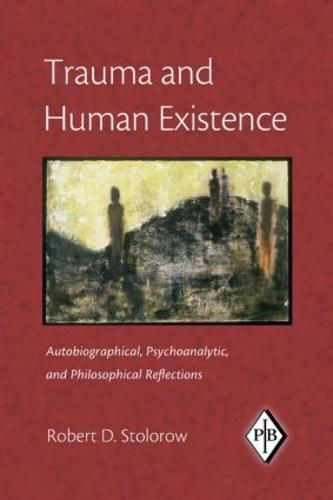
Trauma and Human Existence effectively interweaves two themes central to emotional trauma - the first pertains to the contextuality of emotional life in general, and of the experience of emotional trauma in particular, and the second pertains to the recognition that the possibility of emotional trauma is built into the basic constitution of human existence. This volume traces how both themes interconnect, largely as they crystallize in the author’s personal experience of traumatic loss. As discussed in the book's final chapter, whether or not this constitutive possibility will be brought lastingly into the foreground of our experiential world depends on the relational contexts in which we live. Taken as a whole, Trauma and Human Existence exhibits the unity of the deeply personal, the theoretical, and the philosophical in the understanding of emotional trauma and the place it occupies in human existence.
Full Product Details
Author: Robert D. Stolorow (Founding Faculty Member, Institute of Contemporary Psychoanalysis, Los Angeles, and Institute for the Psychoanalytic Study of Subjectivity, New York)
Publisher: Taylor & Francis Ltd
Imprint: Analytic Press,U.S.
Dimensions:
Width: 15.20cm
, Height: 0.50cm
, Length: 22.90cm
Weight: 0.440kg
ISBN: 9780881634679
ISBN 10: 0881634670
Pages: 74
Publication Date: 27 June 2007
Audience:
Professional and scholarly
,
Professional and scholarly
,
Professional & Vocational
,
Postgraduate, Research & Scholarly
Format: Paperback
Publisher's Status: Active
Availability: In Print

This item will be ordered in for you from one of our suppliers. Upon receipt, we will promptly dispatch it out to you. For in store availability, please contact us.
Reviews
In this book Robert Stolorow draws on philosophical reflections, primarily those of Heidegger, to further elucidate the phenomenology of emotional trauma, lending it depth and richness, and contextualizing it in the ontology of the human condition!. This is a book whose author remains steadfastly and unflinchingly present, both to the immediacy of his own pain and to the comfort he finds when such pain is understood!. [The] book is an admirable example of creative psychoanalytic writing, encompassing in a few pages almost everything one needs to understand about the principles of intersubjective psychoanalytic practice. --Dori Laub, Journal of the American Psychoanalytic Association, 58(5), 2010 This book is a remarkable integration of deep self-reflections on intimate, often painful, and sometimes tragic experience, his philosophical investigation of selfhood in living context, and psychoanalytic theorizing on time, affect, and trauma. This is an important addition to the now long line of works that constitute the corpus of Stolorow and colleagues' intersubjectivity theory. - Lewis Aron, Director, NYU Postdoctoral Program in Psychotherapy and Psychoanalysis, USA In his new book, Robert Stolorow has accomplished a minor miracle, presenting for the reader a theoretically complex, philosophically strong, and yet almost unbearably sad and humane understanding of traumatic experience. Anyone reading this book must take away from it not only a heightened appreciation for the uses of philosophical-psychoanalytic investigation and integration, but as important, a greater understanding of one's own private life in which traumatic loss surely plays its central organizing role. - Estelle Shane, President, International Association for Psychoanalytic Self Psychology Robert Stolorow has done a masterful job of integrating two central themes: one involving the context-dependence of the experience of emotional trauma and the other relating to the idea that emotional trauma is built into the basic foundation of our existence. It represents psychoanalysis at its finest -- its themes are beautifully conceptualized, richly exemplified, and profoundly relevant. - Judith Alpert, President, Division of Trauma Psychology, American Psychological Association, USA This is a fascinating, phenomenologically rich reflection on emotional trauma that shows the surprisingly powerful relevance of Heidegger for contemporary psychoanalysis. - Simon Critchley, Professor of Philosophy, New School for Social Research, USA Robert D. Stolorow's new book...is a poetic and deeply poignant study of psychological trauma. The work elegantly manages to convey a profound mastery of the nuances of trauma in a manner in which no prior work has achieved. It will be read many times over by those who first encounter it, with new wisdom to be discovered with each reading. It is succinct, yet incisive and stirring. It leaves a lasting impression. - Marilyn Jacobs, Trauma Psychology Newsletter Trauma and Human Existence is literally a slight book but with weighty themes. Stolorow has written a book based on years of theorizing and clinical practice. The simple structure of this book allows for repeated powerful statements that are based on decades of serious and creative thinking about good clinical listening. - Spyros Orfanos, PsycCRITIQUES Although a 'short' book, Stolorow presents a detailed theoretical and personal account of mood, unconscious, temporality and therapeutic change which draws upon the thought of Gadamer, intersubjective theory, and primarily the philosophical work of Heidegger. As such, it would be of interest to both practicing psychotherapists seeking to integrate philosophical insights into their work, and philosophers interested in the 'lived experience' of existentialist thought. - Laura Cook, Metapsychology Online Weaving his love affair with philosophy with his decades-long passion for positioning affect, and now, emotional trauma, within a relational, contextual field, Stolorow accomplishes a lot in a surprisingly brief treatise. Though often dense, and at times poignantly heart-wrenching, [it] is immensely readable. Unsurprisingly, he makes a valuable contribution to the psychoanalytic literature on trauma and its vicissitudes. - Nancy VanDerHeide, Psychologist-Psychoanalyst This is a little gem of a book. Through his resolute effort, relational psychoanalysis has been enriched by phenomenology. Additionally, I have no doubt in my mind that readers who have experienced a traumatic loss in their lives will find validating resonance to the emerging insights of Stolorow's description and reflective understanding of the experience and resolutuion of this type of loss. - Mufid J. Hannush, Journal of Phenomenological Psychology 39, 2008 Robert Stolorow takes the reader directly to the heart of trauma - as well as how to deal with it, including helping others who suffer such pain. - Christopher J. Mruk, The Humanistic Psychologist In this small but concentrated book, Robert Stolorow makes a most coherent case for an existential understanding of trauma, and it deserves to be read by anyone with an interest in trauma, existential philosophy, and psychotherapy. - Martin Adams, Existential Analysis I highly recommend this slim volume of expansive and robust ideas to all clinicians who seek an in-depth understanding of emotional trauma and its implications for treatment. It will be especially appreciated by those who welcome a phenomenological approach to the immeasurable impact of traumatic loss in one's own life, as well as the lives of those who come to us for understanding. - Lorraine Cates, Psychoanalytic Social Work In this book there is all the power and intensity of a human event, the turmoil of traumatic inconsolable grief, the courage of thinking that exposes and subjects itself to existence, to its reality, its flesh. - Antonio Sichera, Studies in Gestalt Therapy Trauma and Human Existence artfully captures the experience of trauma and its vicissitudes, while offering a sober rendering of how it is possible to live a life with an acute awareness of life's uncertainties. - Joan Rankin, Journal of Loss and Trauma Trauma and Human Existence is a thoughtfully written account of Robert Stolorow's understanding of trauma when seen through the eyes of Heidegger's Seinsdenken! His writing is clear and logical. He successfully uses his own experience in illustrating the phenomenon of trauma. He gives a clear account of the differences between traditional psychoanalytic theory and the assumptions used by an existential therapist. - Dominique Walmsley, Comparative and Continental Philosophy Robert Stolorow's Trauma and Human Existence is ... a good dose of medicine. At the factual level it is about personal and individual trauma, and as such, is moving and thoughtful. At the epistemological level it is concerned with erroneous conceptions, with an ecological ignorance that neglects the deep embeddedness of humans in systemic relations with others' experience and the surroundings. We are, despite this neglect, 'siblings in the same darkness,' as Stolorow says (p. 47). If we wish to take up our epistemological responsibility, this tiny book is a candle in the darkness. - Tor-Johan Ekeland, Phenomenology & Practice, Volume 4 (2010), No.1
This book is a remarkable integration of deep self-reflections on intimate, often painful, and sometimes tragic experience, his philosophical investigation of selfhood in living context, and psychoanalytic theorizing on time, affect, and trauma. This is an important addition to the now long line of works that constitute the corpus of Stolorow and colleagues' intersubjectivity theory. - Lewis Aron, Director, NYU Postdoctoral Program in Psychotherapy and Psychoanalysis, USA In his new book, Robert Stolorow has accomplished a minor miracle, presenting for the reader a theoretically complex, philosophically strong, and yet almost unbearably sad and humane understanding of traumatic experience. Anyone reading this book must take away from it not only a heightened appreciation for the uses of philosophical-psychoanalytic investigation and integration, but as important, a greater understanding of one's own private life in which traumatic loss surely plays its central organizing role. - Estelle Shane, President, International Association for Psychoanalytic Self Psychology Robert Stolorow has done a masterful job of integrating two central themes: one involving the context-dependence of the experience of emotional trauma and the other relating to the idea that emotional trauma is built into the basic foundation of our existence. It represents psychoanalysis at its finest -- its themes are beautifully conceptualized, richly exemplified, and profoundly relevant. - Judith Alpert, President, Division of Trauma Psychology, American Psychological Association, USA This is a fascinating, phenomenologically rich reflection on emotional trauma that shows the surprisingly powerful relevance of Heidegger for contemporary psychoanalysis. - Simon Critchley, Professor of Philosophy, New School for Social Research, USA Robert D. Stolorow's new book...is a poetic and deeply poignant study of psychological trauma. The work elegantly manages to convey a profound mastery of the nuances of trauma in a manner in which no prior work has achieved. It will be read many times over by those who first encounter it, with new wisdom to be discovered with each reading. It is succinct, yet incisive and stirring. It leaves a lasting impression. - Marilyn Jacobs, Trauma Psychology Newsletter Trauma and Human Existence is literally a slight book but with weighty themes. Stolorow has written a book based on years of theorizing and clinical practice. The simple structure of this book allows for repeated powerful statements that are based on decades of serious and creative thinking about good clinical listening. - Spyros Orfanos, PsycCRITIQUES Although a 'short' book, Stolorow presents a detailed theoretical and personal account of mood, unconscious, temporality and therapeutic change which draws upon the thought of Gadamer, intersubjective theory, and primarily the philosophical work of Heidegger. As such, it would be of interest to both practicing psychotherapists seeking to integrate philosophical insights into their work, and philosophers interested in the 'lived experience' of existentialist thought. - Laura Cook, Metapsychology Online Weaving his love affair with philosophy with his decades-long passion for positioning affect, and now, emotional trauma, within a relational, contextual field, Stolorow accomplishes a lot in a surprisingly brief treatise. Though often dense, and at times poignantly heart-wrenching, [it] is immensely readable. Unsurprisingly, he makes a valuable contribution to the psychoanalytic literature on trauma and its vicissitudes. - Nancy VanDerHeide, Psychologist-Psychoanalyst This is a little gem of a book. Through his resolute effort, relational psychoanalysis has been enriched by phenomenology. Additionally, I have no doubt in my mind that readers who have experienced a traumatic loss in their lives will find validating resonance to the emerging insights of Stolorow's description and reflective understanding of the experience and resolutuion of this type of loss. - Mufid J. Hannush, Journal of Phenomenological Psychology 39, 2008 Robert Stolorow takes the reader directly to the heart of trauma - as well as how to deal with it, including helping others who suffer such pain. - Christopher J. Mruk, The Humanistic Psychologist In this small but concentrated book, Robert Stolorow makes a most coherent case for an existential understanding of trauma, and it deserves to be read by anyone with an interest in trauma, existential philosophy, and psychotherapy. - Martin Adams, Existential Analysis I highly recommend this slim volume of expansive and robust ideas to all clinicians who seek an in-depth understanding of emotional trauma and its implications for treatment. It will be especially appreciated by those who welcome a phenomenological approach to the immeasurable impact of traumatic loss in one's own life, as well as the lives of those who come to us for understanding. - Lorraine Cates, Psychoanalytic Social Work In this book there is all the power and intensity of a human event, the turmoil of traumatic inconsolable grief, the courage of thinking that exposes and subjects itself to existence, to its reality, its flesh. - Antonio Sichera, Studies in Gestalt Therapy Trauma and Human Existence artfully captures the experience of trauma and its vicissitudes, while offering a sober rendering of how it is possible to live a life with an acute awareness of life's uncertainties. - Joan Rankin, Journal of Loss and Trauma Trauma and Human Existence is a thoughtfully written account of Robert Stolorow's understanding of trauma when seen through the eyes of Heidegger's Seinsdenken! His writing is clear and logical. He successfully uses his own experience in illustrating the phenomenon of trauma. He gives a clear account of the differences between traditional psychoanalytic theory and the assumptions used by an existential therapist. - Dominique Walmsley, Comparative and Continental Philosophy
Author Information
Robert D. Stolorow, Ph.D. is a Founding Faculty Member and Training and Supervising Analyst at the Institute of Contemporary Psychoanalysis, Los Angeles, a Founding Faculty Member at the Institute for the Psychoanalytic Study of Subjectivity, New York City; and a Clinical Professor of Psychiatry at the UCLA School of Medicine. He has coauthored four other books for the Analytic Press: Working Intersubjectively: Contextualism in Psychoanalytic Practice (1997), Contexts of Being: The Intersubjective Foundations of Psychological Life (1992), Psychoanalytic Treatment: An Intersubjective Approach (1987), Structures of Subjectivity: Explorations in Psychoanalytic Phenomenology (1984).