Overview
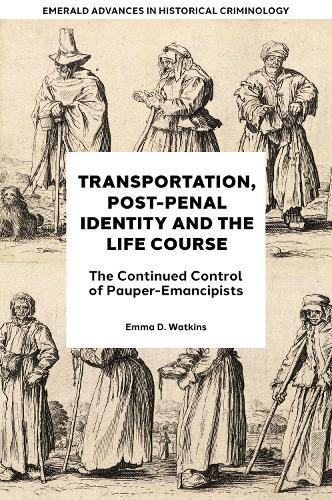
Transportation, Post-Penal Identity and the Life Course explores the life-courses of convicts who, after being transported to Van Diemen’s Land, now Tasmania, and released from servitude, died in pauper establishments. Presenting new case studies that look at the whole lives of former convicts dying in poverty to understand the long-term effects of the convict transportation system, Watkins facilitates an exploration of a broader view of the charitable institutions and its connections with the penal system. Delving into the path dependency and the criminalization of poverty the author uses criminal justice records, civil records, and newspapers for life-course analysis, along with colonial statistical returns and correspondence of officials to contextualize those life-courses. Exploring the Vandemonian charitable system within its post-penal identity and socio-economic context, this book looks at the social mobility of pauper emancipists to disrupt the enduring belief that all convicts who were transported to Australia were ‘better-off’ and that Australia was a ‘working man’s paradise’ in the context of a re-emerging glorification of empire. An interdisciplinary work exploring historical documentation and using criminological methodologies to uncover the lives of working-class people, this is insightful reading for researchers interested in the histories of charitable and criminal justice institutions, working class lives, life-course methodology, and criminalization.
Full Product Details
Author: Emma D. Watkins (University of Birmingham, UK)
Publisher: Emerald Publishing Limited
Imprint: Emerald Publishing Limited
Dimensions:
Width: 15.20cm
, Height: 1.60cm
, Length: 22.90cm
Weight: 0.404kg
ISBN: 9781804551981
ISBN 10: 1804551988
Pages: 224
Publication Date: 12 December 2025
Audience:
College/higher education
,
Postgraduate, Research & Scholarly
Format: Hardback
Publisher's Status: Active
Availability: In Print

This item will be ordered in for you from one of our suppliers. Upon receipt, we will promptly dispatch it out to you. For in store availability, please contact us.
Reviews
In a groundbreaking study, Watkins explores the post-transportation experiences and lives of people sent to Van Diemen’s Land. As a legacy of penal transportation, those labelled as ‘wasted’ and ‘unattractive’ were subject to emerging forms of institutional care. By using life-course analysis, this book successfully reveals the lives of women and men who entered and died within the walls of pauper establishments within an institutional context that severely tested their resilience. I don’t know any other book which combines this approach to examine this topic, and I greatly appreciated the depth and quality of the empirical research, as will students and researchers of this area. -- Professor Barry Godfrey, University of Liverpool, UK Transportation, Post-Penal Identity and the Life Course is a triumph, in which Watkins has meticulously drawn from the archive to chart the lives of Tasmania’s colonial poor. Her skillful historical method allows Watkins to bring the people she writes about to life. This book is a masterclass in how to do life-course research on historical subjects and contexts, offering a robust demonstration of how this type of work can enrich our understanding of where we come from and challenge us to reassess our existing conceptions of the past. -- Paul Bleakley, University of New Haven, USA
Author Information
Emma D. Watkins is Associate Professor in Criminology at the University of Birmingham, UK.