Overview
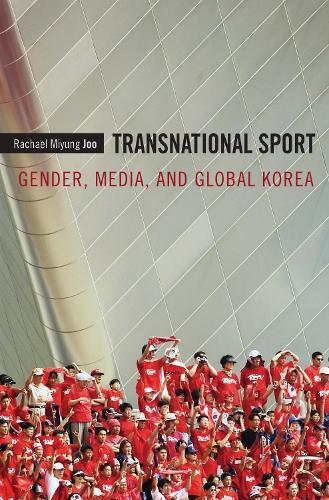
Based on ethnographic research in Seoul and Los Angeles, Transnational Sport tells how sports shape experiences of global Koreanness, and how those experiences are affected by national cultures. Rachael Miyung Joo focuses on superstar Korean athletes and sporting events produced for transnational media consumption. She explains how Korean athletes who achieve success on the world stage represent a powerful, globalized Korea for Koreans within the country and those in the diaspora. Celebrity Korean women athletes are highly visible in the Ladies Professional Golf Association. In the media, these young golfers are represented as daughters to be protected within the patriarchal Korean family and as hypersexualized Asian women with commercial appeal. Meanwhile, the hard-muscled bodies of male athletes, such as Korean baseball and soccer players, symbolize Korean masculine dominance in the global capitalist arena. Turning from particular athletes to a mega-event, Joo discusses the 2002 FIFA World Cup Korea/Japan, a watershed moment in recent Korean history. New ideas of global Koreanness coalesced around this momentous event. Women and youth assumed newly prominent roles in Korean culture, and, Joo suggests, new models of public culture emerged as thousands of individuals were joined by a shared purpose.
Full Product Details
Author: Rachael Miyung Joo
Publisher: Duke University Press
Imprint: Duke University Press
Dimensions:
Width: 15.50cm
, Height: 2.50cm
, Length: 23.60cm
Weight: 0.599kg
ISBN: 9780822348429
ISBN 10: 082234842
Pages: 352
Publication Date: 06 February 2012
Audience:
Professional and scholarly
,
Professional & Vocational
Format: Hardback
Publisher's Status: Active
Availability: In Print

This item will be ordered in for you from one of our suppliers. Upon receipt, we will promptly dispatch it out to you. For in store availability, please contact us.
Reviews
To be part of the international sports community means, in our moment, to live paradoxically: to simultaneously support from within the nation and to express that support across national boundaries in such a way as to almost invalidate the nation. Rachel Miyung Joo's Transnational Sport is a dedicated study of this dilemma (condition). Joo delineates the difficult, sometimes conflicting ways in which the national and the transnational cohabit in the Korean sport's community. Transnational Sport is a work of clarity, written with a sympathetic critical eye and passion. Transnational Sport lends a vivacity and a certain pathos to the standing of Korean athletes such as the baseballer Chan Ho Park, the golfer Se Ri Park and the Olympic gold medalist figure skater Kim Yuna. --Grant Farred, author of Long Distance Love: A Passion for Football
To be part of the international sports community means, in our moment, to live paradoxically: to simultaneously support from within the nation and to express that support across national boundaries in such a way as to almost invalidate the nation. Transnational Sport is a dedicated study of this dilemma. Rachael Miyung Joo delineates the difficult, sometimes conflicting ways in which the national and the transnational cohabit in the global Korean sports community. Written with passion and a sympathetic critical eye, Transnational Sport lends a vivacity and a certain pathos to the standing of Korean athletes, such as the baseballer Chan Ho Park, the golfer Se Ri Pak, and the Olympic gold-medalist figure skater Kim Yuna. --Grant Farred, author of Long Distance Love: A Passion for Football
In this far-reaching work, Rachael Miyung Joo convinces that through Korean/American sport into the 2000s, we can powerfully observe the making of 'global Koreanness.' From South Korean golfer Se Ri Park and baseball player Chan Ho Park; to Korean adoptee Olympic skier Toby Dawson and mixed-race Korean NFL player Hines Ward; and from the 2002 Korea-Japan World Cup to North-South Korea sporting matches, we learn not only of adoring fan bases, but more expansively of South Korean, Korean American, and transnational Korea publics, whose affinities and potentials far exceed sport. Transnational Sport beautifully demonstrates the power and pleasures of sport, as well as its enormous scholarly reach. Nancy Abelmann, author of The Intimate University: Korean American Students and the Problems of Segregation To be part of the international sports community means, in our moment, to live paradoxically: to simultaneously support from within the nation and to express that support across national boundaries in such a way as to almost invalidate the nation. Rachel Miyung Joo's Transnational Sport is a dedicated study of this dilemma (condition). Joo delineates the difficult, sometimes conflicting ways in which the national and the transnational cohabit in the Korean sport's community. Transnational Sport is a work of clarity, written with a sympathetic critical eye and passion. Transnational Sport lends a vivacity and a certain pathos to the standing of Korean athletes such as the baseballer Chan Ho Park, the golfer Se Ri Park and the Olympic gold medalist figure skater Kim Yuna. Grant Farred, author of Long Distance Love: A Passion for Football
Author Information
Rachael Miyung Joo is Assistant Professor of American Studies at Middlebury College.