Overview
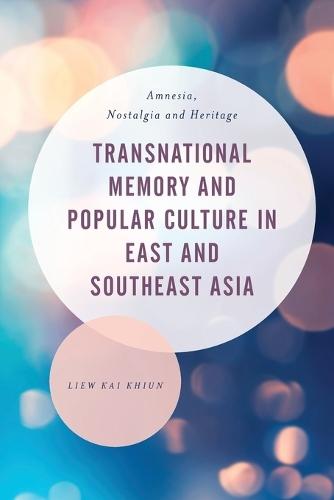
Transnational Memory and Popular Culture in East and Southeast Asia explores the significance of transnational popular culture in the formation and mediation of collective memories across the region. It looks at case studies including: the politics of cinematic remembering of Hong Kong films on Southeast Asia, the digital and holographic enshrinement of departed celebrities like Wong Kar Kui, Bruce Lee and Teresa Teng and the dredging of personal memories of the encounters with the Korean Wave in Singapore. In addition, it explores how cultural memories are used as focal points of staging cultural revival and movements in Singapore and Taiwan. Contrary to the assumptions of the importance of newness in modern popular culture productions, the continued relevance of this otherwise dated material reflects the significance of these texts in the development and strengthening of collective cultural memories. The discussion of such issues has often been grounded geo-spatially on the “national” and contemporary contexts, this volume will develop a more temporalized and transnational perspective in the shaping of otherwise local cultural identifications.
Full Product Details
Author: Liew Kai Khiun
Publisher: Bloomsbury Publishing PLC
Imprint: Rowman & Littlefield International
Dimensions:
Width: 15.10cm
, Height: 1.30cm
, Length: 22.90cm
Weight: 0.249kg
ISBN: 9781783484379
ISBN 10: 1783484373
Pages: 162
Publication Date: 26 September 2016
Audience:
Professional and scholarly
,
Professional & Vocational
Format: Paperback
Publisher's Status: Active
Availability: In Print

This item will be ordered in for you from one of our suppliers. Upon receipt, we will promptly dispatch it out to you. For in store availability, please contact us.
Reviews
Liew Kai Khiun is one of the most promising among the younger generation of scholars who are based in Asia and researching on Inter-Asia cultural studies. This book is a testament to some of his best analytical insights to date. -- Ariel Heryanto, Herb Feith Professor for the Study of Indonesia, Monash University, Australia In this brilliant study, the past is alive in the present. Memory traces are worshipped and contested among transnational K-Pop fans; holographic performance audiences; and TV medical drama viewers.Liew's compelling analysis of East and Southeast generations negotiating and refiguring memories would be useful in teaching both general courses on globalized digital culture and specific ones on inter-Asian cultural studies. -- Maud Lavin, Professor of Visual and Critical Studies and Art History, Theory, and Criticism, the School of the Art Institute of Chicago, USA Liew Kai Khiun's incisive study of popular culture and memories linking East and Southeast Asia offers an intimate look at heretofore neglected study of cultural flows across the region. Seven case studies illuminate the dynamism and unevenness of inter-Asian sentimentality and “Asian” difference under globalization. A welcome and important addition to transregional and transmedia cultural studies. -- Leo Ching, Associate Professor of Asian and African Languages and Literature, Duke University, USA Through a series of empirical instances, Liew Kai Khiun has shown how profit-driven ephemeral pop cultural products constitute a lasting and rich archive of cultural resource that can be excavated and re-used in varied modes of collective actions, for example, the resurrection of an once popular song as anthem of political struggle, eliciting solidarity among its transnational fans. -- Chua Beng Huat, Professor, National University of Singapore
Liew Kai Khiun is one of the most promising among the younger generation of scholars who are based in Asia and researching on Inter-Asia cultural studies. This book is a testament to some of his best analytical insights to date. -- Ariel Heryanto, Professor, Australian National University College of Asia and The Pacific In this brilliant study, the past is alive in the present. Memory traces are worshipped and contested among transnational K-Pop fans; holographic performance audiences; and TV medical drama viewers.Liew's compelling analysis of East and Southeast generations negotiating and refiguring memories would be useful in teaching both general courses on globalized digital culture and specific ones on inter-Asian cultural studies. -- Maud Lavin, Professor of Visual and Critical Studies and Art History, Theory, and Criticism, the School of the Art Institute of Chicago
Author Information
Liew Kai Khiun is Assistant Professor at the Wee Kim Wee School of Communication and Information in Broadcast & Cinema Studies at Nanyang Technological University.