Overview
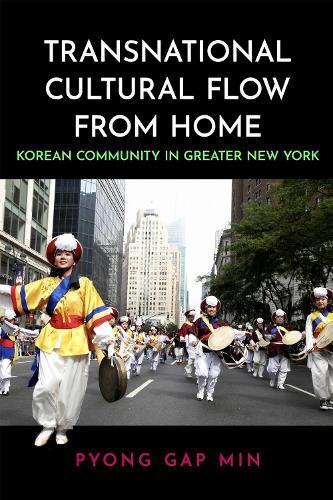
When the first wave of post-1965 Korean immigrants arrived in the New York-New Jersey area in the early 1970s, they were reliant on retail and service businesses in the minority neighborhoods where they were. This caused ongoing conflicts with customers in black neighborhoods of New York City, with white suppliers at Hunts Point Produce Market, and with city government agencies that regulated small business activities. In addition, because of the times, Korean immigrants had very little contact with their homeland. Korean immigrants in the area were highly segregated from both the mainstream New York society and South Korea. However, after the 1990 Immigration Act, Korean immigrants with professional and managerial backgrounds have found occupations in the mainstream economy. Korean community leaders also engaged in active political campaigns to get Korean candidates elected as city council members and higher levels of legislative positions in the area. The Korean community's integration into mainstream society also increasingly developed stronger transnational ties to their homeland and spurred the inclusion of ""everyday Korean life"" in the NY-NJ area. Transnational Cultural Flow from Home examines New York Korean immigrants' collective efforts to preserve their cultural traditions and cultural practices and their efforts to transmit and promote them to New Yorkers by focusing on the Korean cultural elements such as language, foods, cultural festivals, and traditional and contemporary performing arts. This publication was supported by the 2022 Korean Studies Grant Program of the Academy of Korean Studies (AKS-2022-P-009).
Full Product Details
Author: Pyong Gap Min
Publisher: Rutgers University Press
Imprint: Rutgers University Press
Dimensions:
Width: 15.60cm
, Height: 2.00cm
, Length: 23.50cm
Weight: 0.458kg
ISBN: 9781978827158
ISBN 10: 1978827156
Pages: 224
Publication Date: 09 December 2022
Recommended Age: From 18 to 99 years
Audience:
College/higher education
,
College/higher education
,
Professional and scholarly
,
Tertiary & Higher Education
,
Tertiary & Higher Education
Format: Hardback
Publisher's Status: Active
Availability: In Print

This item will be ordered in for you from one of our suppliers. Upon receipt, we will promptly dispatch it out to you. For in store availability, please contact us.
Reviews
Full of rich and fascinating material on the Korean community in the New York area, this valuable book shows that, at the same time as Korean immigrants have become increasingly incorporated into American society, they also seek to preserve and promote a wide range of homeland cultural practices and traditions. --Nancy Foner author of One Quarter of the Nation: Immigration and the Transformation of America In this innovative and rigorous investigation of Koreans' engagement with transnational cultural linkages to their homeland, Pyong Gap Min finds that migrants' participation in activities that promote Korean ethnic culture facilitates both their assimilation to host country activities and their involvement in transnational cultural linkages embedded in the country of origin. This analysis significantly advances our understanding of Korean immigrants' adaptation to the US while providing a compelling challenge to classical theories of immigrant assimilation more generally. --Steven J. Gold author of The Israeli Diaspora
Author Information
PYONG GAP MIN is a distinguished professor of sociology at Queens College and the Graduate Center of the City University of New York, as well as the director of the Research Center for Korean Community. He is the author of several books, including Korean ""Comfort Women"": Military Brothels, Brutality, and the Redress Movement (Rutgers University Press, 2021) and the award-winning Preserving Ethnicity through Religion in America: Korean Protestants and Indian Hindus across Generations (New York University Press, 2010).