Overview
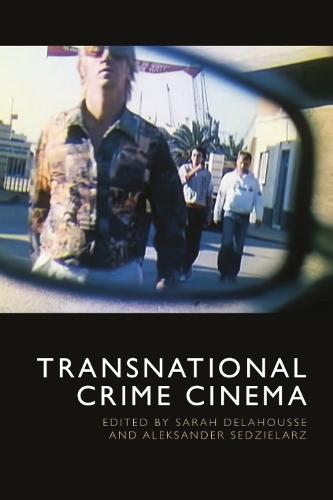
Framed by approaches in critical transnationalism, this volume examines crime as a cinematic mode moving within, between, and across national cinemas to provide rigorous accounts of the political, economic, and historical processes entangled in the production, circulation, and reception of crime films most frequently treated through the lens of genre. Filmic narratives of crime open a porous space of public discourse in which filmmakers and audiences project and reimagine relations of power. Transnational Crime Cinema studies the production and reception of films from Europe, Africa, East and South Asia, and South America present crime as a discursive site where the terms of the nation and cinema gain new definition. Considered transnationally, crime cinema is a self-reflexive modality through which cinema reflects upon cinema's own discursivity while audiences negotiate ideologies and imaginaries of nation against disruptive transnational economic and political pressures.
Full Product Details
Author: Sarah Delahousse (Adjunct Assistant Professor in Cinema Studies, York College, CUNY) ,
Aleksander Sedzielarz (Assistant Professor, Wenzhou-Kean University)
Publisher: Edinburgh University Press
Imprint: Edinburgh University Press
ISBN: 9781399505680
ISBN 10: 1399505688
Pages: 288
Publication Date: 31 August 2024
Audience:
Professional and scholarly
,
Professional & Vocational
Format: Paperback
Publisher's Status: Active
Availability: Manufactured on demand

We will order this item for you from a manufactured on demand supplier.
Reviews
Always stressing the multiple and disparate over the unified and fixed, this challenging and illuminating collection of essays constructs an original, transnationally disruptive and refreshing mobile genealogy of crime cinema. --Neil Campbell, University of Derby In this stunning collection, Delahousse and Sedzielarz do not round up the usual suspects. Instead, they compile an international police blotter written by stellar investigators tracking a globe-trotting and time-traveling crime spree spanning four continents. Revealed in film histories that cross borders and genres corruption connects nations, politics, capital and culture. From Albania to Nigeria, Iran, Italy, India, China, France and beyond, hidden bodies surface to implicate cinema itself in various crimes of the century: Stalinist show trials, fascist dictatorships, ruthless capitalist exploitation. --Paula Rabinowitz, University of Minnesota
Author Information
Sarah Delahousse is Adjunct Assistant Professor in the Department of English at York College-CUNY. She is the author of ‘Reimagining the Criminal: The Marketing of Louis Feuillade’s Fantômas (1913-14) and Les Vampires (1915) in the United States,’ published in Studies in French Cinema. Aleksander Sedzielarz is Assistant Professor in the School of English at Wenzhou-Kean University.