Overview
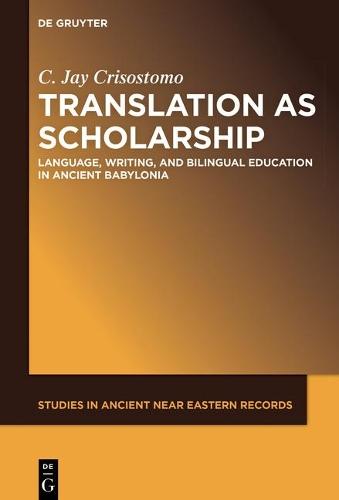
In the first half of the 2d millennium BCE, translation occasionally depicted semantically incongruous correspondences. Such cases reflect ancient scribes substantiating their virtuosity with cuneiform writing by capitalizing on phonologic, graphemic, semantic, and other resemblances in the interlingual space. These scholar–scribes employed an essential scribal practice, analogical hermeneutics, an interpretative activity grounded in analogical reasoning and empowered by the potentiality of the cuneiform script. Scribal education systematized such practices, allowing scribes to utilize these habits in copying compositions and creating translations. In scribal education, analogical hermeneutics is exemplified in the word list ""Izi"", both in its structure and in its occasional bilingualism. By examining ""Izi"" as a product of the social field of scribal education, this book argues that scribes used analogical hermeneutics to cultivate their craft and establish themselves as knowledgeable scribes. Within a linguistic epistemology of cuneiform scribal culture, translation is a tool in the hands of a knowledgeable scholar.
Full Product Details
Author: Jay Crisostomo
Publisher: De Gruyter
Imprint: De Gruyter
Volume: 22
Dimensions:
Width: 15.50cm
, Height: 2.90cm
, Length: 23.00cm
Weight: 0.873kg
ISBN: 9781501516665
ISBN 10: 1501516663
Pages: 521
Publication Date: 14 January 2019
Audience:
Professional and scholarly
,
Professional & Vocational
,
Professional & Vocational
Format: Hardback
Publisher's Status: Active
Availability: Available To Order

We have confirmation that this item is in stock with the supplier. It will be ordered in for you and dispatched immediately.
Reviews
[...] any Assyriologist dealing with issues of scribal education, translation theory, or lexical lists should consult Translation as Scholarship. Scholars dealings with Aramaic-Akkadian bilingual inscriptions, along with trilingual inscriptions, should also consult this volume. It establishes a foundation for OB scribal habitus at Nippur and its subsequent reception over two millennia. Perhaps future scholars will continue in Crisostomo's path, exploring how analogical hermeneutics changed over two millennia of Babylonian and Assyrian scholarship. William Brown in: The Biblical Review (18.02.2019), https: //thebiblicalreview.wordpress.com/2019/02/18/translation-as-scholarship-language-writing-and-bilingual-education-in-ancient-babylonia-by-c-jay-crisostomo/
[...] any Assyriologist dealing with issues of scribal education, translation theory, or lexical lists should consult Translation as Scholarship. Scholars dealings with Aramaic-Akkadian bilingual inscriptions, along with trilingual inscriptions, should also consult this volume. It establishes a foundation for OB scribal habitus at Nippur and its subsequent reception over two millennia. Perhaps future scholars will continue in Crisostomo's path, exploring how analogical hermeneutics changed over two millennia of Babylonian and Assyrian scholarship. William Brown in: The Biblical Review (18.02.2019), https: //thebiblicalreview.wordpress.com/2019/02/18/translation-as-scholarship-language-writing-and-bilingual-education-in-ancient-babylonia-by-c-jay-crisostomo/
Author Information
C. Jay Crisostomo, University of Michigan, MI, U.S.A.