|
|
|||
|
||||
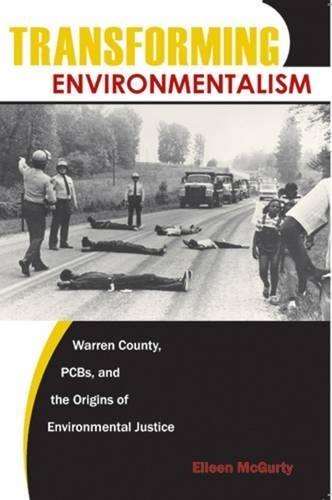
OverviewContemporary public policy circles are quick to acknowledge that environmental factors contribute to ill health and pose a particular threat to poor and minority communities. But public officials rarely examined the distribution of environmental hazards such as polluted air and contaminated water. In the 1980s, as toxic waste facilities proliferated, the environmental justice movement demanded that impoverished communities no longer be burdened by excessive environmental risks. In ""Transforming Environmentalism"", Eileen McGurty explores a moment central to the emergence of the environmental justice movement. In 1978, residents of predominantly African American Warren County, North Carolina, were horrified to learn that the state planned to build a landfill in their county to hold forty thousand cubic yards of soil that was contaminated with PCBs from illegal dumping. They responded to the state's plans with a four-year resistance, ending in a month of protests with over 500 arrests from civil disobedience and disruptive actions. McGurty traces the evolving approaches that residents took to contest ""environmental racism"" in their community and shows how activism in Warren County spurred greater political debate and became a model for communities across the nation. ""Transforming Environmentalism"" explores how the specific circumstances of the Warren County events shaped the formation of the environmental justice movement and influenced contemporary environmentalism. Full Product DetailsAuthor: Eileen McGurtyPublisher: Rutgers University Press Imprint: Rutgers University Press Dimensions: Width: 15.20cm , Height: 1.80cm , Length: 22.90cm Weight: 0.449kg ISBN: 9780813539669ISBN 10: 0813539668 Pages: 200 Publication Date: 28 November 2006 Audience: General/trade , General Format: Hardback Publisher's Status: Out of Print Availability: Awaiting stock Table of ContentsReviewsIn sharp and penetrating prose, McGurty recounts the central role of Warren County, North Carolina, in the rise of the environmental justice struggle. She lifts the discussion above the class versus race debate and exposes the movement''s progression from a fledgling local battle to a national movement that has influenced public policy.--Craig E. Colten Carl O. Sauer Professor of Geography, Louisiana State University Author InformationEileen McGurty is a senior lecturer and associate chair of the graduate program in environmental sciences at Johns Hopkins University. Tab Content 6Author Website:Countries AvailableAll regions |
||||