Overview
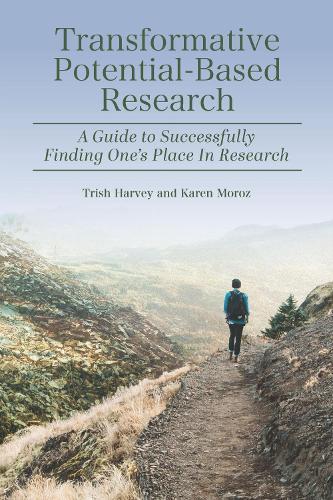
Researchers working to clearly identify a research topic and theme have difficulty deciding how to focus their work. Using a potential-based learning focus, detailed in this text, readers are challenged to consider their role as researcher, scholar, and leader to guide their reflective work. Transformative Potential Based Research: A Guide to Successfully Finding One's Place in Research provides both the theoretical support and the guiding activities to help readers decide on an area of potential-based research. The result will prove to be transformational. To guide this work, Karen Moroz and Trish Harvey have developed a suitable framework. They invite readers to review the mountain metaphor shared within the framework and to keep the visual present at all times as they progress through the book. It is addressed often and readers will be invited to use, extend, and discuss it numerous times throughout their journey. Transformative Potential Based Research supports instructors and students through all stages of research, including: identifying and embracing relevant and essential topics, crafting research questions that accurately and concisely convey the purpose(s), exploring one's own connection to the issue, developing and employing individual processes that lead to success, and determining a potential-based frame that motivates the writer and frames the work Perfect for courses such as: Dissertation; Research Methods; Educational Methods; Intro to Research Design; Academic Writing; Capstone Practicum; Educational Research; Understanding Research
Full Product Details
Author: Trish Harvey ,
Karen Moroz
Publisher: Myers Education Press
Imprint: Myers Education Press
Dimensions:
Width: 15.20cm
, Height: 1.00cm
, Length: 22.90cm
Weight: 0.277kg
ISBN: 9781975507015
ISBN 10: 1975507010
Pages: 175
Publication Date: 04 November 2024
Audience:
Professional and scholarly
,
Professional & Vocational
Format: Paperback
Publisher's Status: Active
Availability: In Print

This item will be ordered in for you from one of our suppliers. Upon receipt, we will promptly dispatch it out to you. For in store availability, please contact us.
Reviews
""An engaging and innovative approach to design and the transformative power of research, this is compelling reading for practitioners and the general public alike. The text incorporates key features of adult learning theory, using narrative to draw the reader in, situating chapters within their proper context, and demonstrating the power of scholarly narrative to engage learners in developing and strengthening their own professional voices. Each chapter includes activities that provide the reader with a vehicle for engaging with the ideas, constructing knowledge, and making explicit connections to their own research. The chapters end with reflective activities to deepen understanding of the text. I highly recommend it.""--Vivian Johnson, PhD, Professor emeritus, Hamline School of Education and Leadership ""Harvey and Moroz truly understand what it means to ""find one's place"" in the research world. By sharing their scholarly journey, the book takes the reader on a research adventure, offering a road map that empowers and instructs scholars as they learn to find their own place. In the demanding and ever-changing world of research, this book serves as an essential companion, friend, and practical guide that carries and inspires scholars.""--Dr. Jill Long, Associate Professor and Education Program Director, The College of St. Scholastica, and EdD Hamline University Graduate ""Transformational Potential-Based Research: A Guide to Successfully Finding One's Place in Research is like a strong rope guiding new researchers up a challenging climb. It offers the stability and support needed to navigate the unfamiliar landscape of academic research. Each chapter is a checkpoint, establishing the researcher's mindset in understanding positionality and encouraging a potential-based journey. Harvey and Moroz provide supportive activities, helping researchers find their balance while connecting with a supportive community. With thoughtful guidance, it leads the researcher to the peak, where they can confidently reach their potential.""--Kim Hiel, Ed.D., Superintendent, Osseo Area Schools; Adjunct Professor, Hamline University ""Transformative Potential-Based Research has the potential to become the core support for EdD students. I was absorbed with every page, and Trish and Karen did a brilliant job weaving their extended professional experiences with broader examples and research. I also like the meaningful activities they include in each chapter.""--Kristie O'Brien, Director of Learning and Teaching, Winona Public Schools (MN) & EdD graduate student, Hamline University ""Transformative Potential-Based Research: A Guide to Successfully Finding One's Place in Research provides a structured framework that encourages researchers to shift their mindset from deficit-based thinking to one focused on opportunities. The Potential-Based Research Framework allows researchers to explore new possibilities and innovative ideas by incorporating critical thinking, positionality, and community expertise. In a time when public conversations around education tend to emphasize problems, this book brings a refreshing and hopeful perspective to educational research.""--Sara B. Ewell, Northeastern University ""In Transformative Potential-Based Research: A Guide to Successfully Finding One's Place in Research, Harvey and Moroz provide educators whose research identities are just being formed a way to frame their work in notions of potential instead of traditional 'problems of practice.' They guide the reader in situating their potential research in their passions and own positionality while also providing a challenge to examine our own epistemologies and reflexivity in purposeful communities of support. Incredibly useful are the reflective exercises that conclude each chapter. They begin by moving the reader from a desire to find the 'perfect topic' to ideas that 'puzzle us' and end with reflective prompts that help the reader to ultimately tell the story of their research findings.""--Katie Pekel, Ed.D., Executive Director of Educational Leadership, University of Minnesota
Author Information
Trish Harvey is an associate professor in Hamline University's School of Education with an emphasis in Advanced Learning Technologies at Hamline University. Trish's background includes over 21 years of K-16 experience, including teaching social studies, facilitating graduate students in their pursuit of advanced degrees and serving as a district digital learning administrator. Her technology-related experiences include a 1-1 iPad implementation roll-out; the development of online and hybrid courses; district-wide professional development around technology goals; and a Bring-Your-Own-Device district initiative. Focus areas of scholarship and research include the use of digital tools for learning and assessment; fostering quality online learning experiences and relationships between students and instructors; and educational transformation via policy and technology. In her higher education experience, she has advised over 300 capstone students and dissertation students to completion. Additionally, Dr. Harvey serves as the Program Director for the EdD and MAEd programs where she teaches all research courses. Karen Moroz taught seventh grade for 15 years and then served as a secondary-level literacy coach. She is now an Associate Professor in and the Program Director for Hamline University's Masters in the Arts of Literacy Education and Reading License programs. She also teaches within the doctoral program. Dr. Moroz's key areas of scholarship include effective online teaching; engaged learning; formative assessment; technology enhanced instruction; and facilitating relevant and authentic dialogue with learners. In her role as an instructor within a graduate school, Karen has advised over 200 capstone and dissertation students, providing her with a wealth of understanding of the processes and nuances researchers experience throughout their journey.