Overview
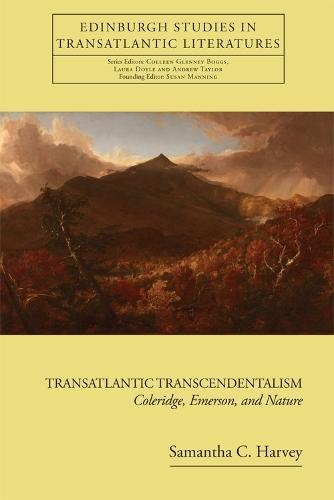
The first book devoted to Coleridge's influence on Emerson and the development of American TranscendentalismAs Samantha Harvey demonstrates, Samuel Taylor Coleridge's thought galvanized Emerson at a pivotal moment in his intellectual development in the years 1826-1836, giving him new ways to harmonize the Romantic triad of nature, spirit and humanity. Emerson did not think about Coleridge: he thought with Coleridge, resulting in a unique case of assimilative influence. In addition to examining his specific literary, philosophical, and theological influences on Emerson, this book reveals Coleridge's centrality for Boston Transcendentalism and Vermont Transcendentalism, a movement which profoundly affected the development of modern higher education, the national press, and the emergence of Pragmatism. Key Features *Illuminates how the emerging field of transatlantic studies has opened new circulatory spaces to reconsider the relationship between Coleridge and Emerson*Asserts Coleridge as the single most important influence on Emerson's early essays*Examines the centrality of nature in the dynamic context of Transatlantic Romanticism*Highlights the essential but overlooked legacy of Coleridge's dynamic principles of method for Emerson and for Boston and Vermont Transcendentalism
Full Product Details
Author: Samantha C. Harvey (Associate Professor, Boise State University)
Publisher: Edinburgh University Press
Imprint: Edinburgh University Press
Dimensions:
Width: 15.60cm
, Height: 1.50cm
, Length: 23.40cm
Weight: 0.505kg
ISBN: 9780748681365
ISBN 10: 0748681361
Pages: 232
Publication Date: 11 June 2013
Audience:
General/trade
,
General
Format: Hardback
Publisher's Status: Active
Availability: Temporarily unavailable

The supplier advises that this item is temporarily unavailable. It will be ordered for you and placed on backorder. Once it does come back in stock, we will ship it out to you.
Reviews
We can be grateful to Harvey for her detailing of how a young Emerson absorbed and developed ideas from across the Pond and, in the process, became a great American thinker. -- The New England Quarterly...this is a remarkable book: a richly-informed and luminously intelligent study of a complex but crucial subject. Thorough yet concise, dense yet lucid, it reflects an impressive knowledge of the primary and secondary texts, yet relentlessly focuses on what the author designates the Romantic triad. -- Review 19
We can be grateful to Harvey for her detailing of how a young Emerson absorbed and developed ideas from across the Pond and, in the process, became a great American thinker. -- The New England Quarterly ...this is a remarkable book: a richly-informed and luminously intelligent study of a complex but crucial subject. Thorough yet concise, dense yet lucid, it reflects an impressive knowledge of the primary and secondary texts, yet relentlessly focuses on what the author designates the Romantic triad. -- Review 19 We can be grateful to Harvey for her detailing of how a young Emerson absorbed and developed ideas from across the Pond and, in the process, became a great American thinker. -- The New England Quarterly ...this is a remarkable book: a richly-informed and luminously intelligent study of a complex but crucial subject. Thorough yet concise, dense yet lucid, it reflects an impressive knowledge of the primary and secondary texts, yet relentlessly focuses on what the author designates the Romantic triad. -- Review 19
We can be grateful to Harvey for her detailing of how a young Emerson absorbed and developed ideas from across the Pond and, in the process, became a great American thinker. -- The New England Quarterly...this is a remarkable book: a richly-informed and luminously intelligent study of a complex but crucial subject. Thorough yet concise, dense yet lucid, it reflects an impressive knowledge of the primary and secondary texts, yet relentlessly focuses on what the author designates the Romantic triad. -- Review 19 We can be grateful to Harvey for her detailing of how a young Emerson absorbed and developed ideas from across the Pond and, in the process, became a great American thinker. -- The New England Quarterly...this is a remarkable book: a richly-informed and luminously intelligent study of a complex but crucial subject. Thorough yet concise, dense yet lucid, it reflects an impressive knowledge of the primary and secondary texts, yet relentlessly focuses on what the author designates the Romantic triad. -- Review 19
Author Information
Samantha Harvey is an assistant professor of English Literature at Boise State University. She is the editor of Coleridge’s Responses: Coleridge on Nature and Vision (London: Continuum, 2008).