Overview
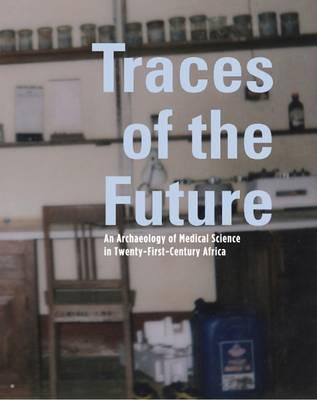
This book presents a close look at the vestiges of twentieth-century medical work at five key sites in Africa: Senegal, Nigeria, Cameroon, Kenya, and Tanzania. The authors aim to understand the afterlife of scientific institutions and practices and the “aftertime” of scientific modernity and its attendant visions of progress and transformation. Straightforward scholarly work is juxtaposed here with altogether more experimental approaches to fieldwork and analysis, including interview fragments; brief, reflective essays; and a rich photographic archive. The result is an unprecedented view of the lingering traces of medical science from Africa’s past.
Full Product Details
Author: Paul Wenzel Geissler ,
Guillaume Lachenal ,
John Manton ,
Noémi Tousignant
Publisher: Intellect
Imprint: Intellect Books
Dimensions:
Width: 17.80cm
, Height: 3.00cm
, Length: 22.90cm
Weight: 1.279kg
ISBN: 9781783207251
ISBN 10: 1783207256
Pages: 256
Publication Date: 05 September 2016
Audience:
Professional and scholarly
,
Professional & Vocational
Format: Paperback
Publisher's Status: Active
Availability: Out of stock

The supplier is temporarily out of stock of this item. It will be ordered for you on backorder and shipped when it becomes available.
Reviews
In an astonishing series of reports, engagements, and reflections, this book offers a powerful and often brilliant evocation of the sites and populations of a group of ruined, abandoned, or transient scientific and medical establishments in west and east Africa. Layout and imagery, as well as intelligent analysis and story-telling, build up a compelling picture of modern ambitions and their fates. Without ever lapsing into nostalgia or condescension, Traces of the Future is a pathbreaking and exemplary project to help the objects and subjects of African scientific and medical worlds follow their own novel pathways. --Simon Schaffer University of Cambridge, author of Leviathan and the Air Pump: Hobbes, Boyle & the Experimental Life
There is, of course, a long history of anthropological writing on the subject of the future, but recently the discipline has witnessed a renewed interest inall kinds of futures distant, near, and very often also irretrievably past.It is the latter kind, that of futures past, thatis investigated in this wonderful book. Well informed and researched, and never dull, thisedited volumeexplores various medical research stations and health centers across Africa, thereby offering a delicate contemplation of former ideas of future-oriented colonial science and medicine, and the ways in which theyunderpinned the ideologies of colonialist modernity and of progress that shaped these places and restructured the worlds around them. Combining various voices and modes of writing with original visual ethnographic explorations, this book reflects upon memory, nostalgia, and the passing of time, and as such itoffers a delicate and often poetic and intimate but always insightful analysis of how the various times of thecolonial past convert into the space of the now. A must read! --Filip de Boek author of Urban Now: City Life in Congo and Kinshasa: Tales of the Invisible City
Author Information
Paul Wenzel Geissler is a professor in the Department of Social Anthropology at the University of Oslo. Guillaume Lachenal is a lecturer at the Universite Paris Diderot, junior fellow of the Institut Universitaire de France. John Manton is Associate Professor in History at the London School of Hygiene and Tropical Medicine, specialising in the history, heritage and memory of medical research, disease control, and health systems in Africa and Southeast Asia. He has worked at Oxford, Cambridge, Ulster and in London, writing on leprosy and mycobacterial disease control in Nigeria and Cameroon. Noémi Tousignant is affiliate member of the Department of Social Studies of Medicine at McGill, and guest researcher in History at the Université de Montréal. Her work focuses on scientific infrastructure, value, service, and dreaming in Africa. Her book on toxicological capacity and unprotection in Senegal is forthcoming with Duke University Press.