Overview
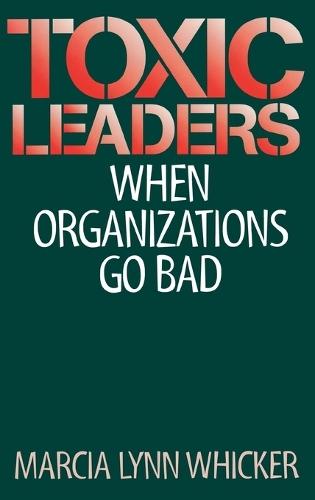
Drawing on her extensive experience and research in various types of organizations—business, political, even religious organizations—Dr. Whicker looks closely at three distinct types of leaders which she categorizes as trustworthy, transitional, and toxic leaders. In a clear and readable style she describes leadership subtypes for transitional and toxic types: the absentee leaders, the busybodies, controllers, enforcers, streetfighters, and the bullies, all of whom are dangerous to their organizations and are directly responsible in many cases for an organization's decline. Whicker makes clear, however, that there are ways to protect oneself from such leaders, and shows exactly what these strategies are. A compelling, anecdotal, authoritative analysis for anyone in any organization who has ever wondered why did the boss do that — and why to me? As Dr. Whicker sees it, trustworthy leaders are good, moral, green light leaders. They can trusted to put the goals of the organization and the well-being of their followers first. Organizations with trustworthy leaders at the helm have a green light to advance in productivity, growth, and progress. Three types of trustworthy leaders are consensus builders, team leaders, and commanders. Transitional leaders are self-absorbed, egotistical, yellow light leaders. They are focused on the approval of others and concerned with their personal role as leaders. Organizations headed by transitional leaders have a cautionary yellow light to growth, and lurch along at the mercy of the ebb and flow of external currents and trends. Three types of transitional leaders are absentee leaders, busybodies, and controllers. Toxic leaders are maladjusted, malcontent, and often malevolent and malicious. They succeed by tearing others down. They glory in turf protection, fighting, and controlling others rather than uplifting followers. They are red light leaders who destroy productivity and apply brakes to organizational progress. They have a deep-seated but well-disguised sense of personal inadequacy, selfish values, and cleverness at concealing deceit. Three types of toxic leaders are enforcers, streetfighters, and bullies. This book gives the reader strategies for surviving transitional and toxic leaders and for restoring organizational health.
Full Product Details
Author: Marcia L. Whicker
Publisher: Bloomsbury Publishing Plc
Imprint: Praeger Publishers Inc
Dimensions:
Width: 15.60cm
, Height: 1.30cm
, Length: 23.50cm
Weight: 0.595kg
ISBN: 9780899309989
ISBN 10: 0899309984
Pages: 200
Publication Date: 16 April 1996
Recommended Age: From 7 to 17 years
Audience:
College/higher education
,
Undergraduate
,
Postgraduate, Research & Scholarly
Format: Hardback
Publisher's Status: Active
Availability: Manufactured on demand

We will order this item for you from a manufactured on demand supplier.
Author Information
MARCIA LYNN WHICKER is Chair and Professor in the Graduate Department of Public Administration, Rutgers University. Dr. Whicker has taught at Virginia Commonwealth University, University of South Carolina, Temple University, and Wayne State University, and has also worked for various government agencies. She has published 14 books and numerous scholarly articles in the fields of leadership, public administration, public policy, and American national politics.