Overview
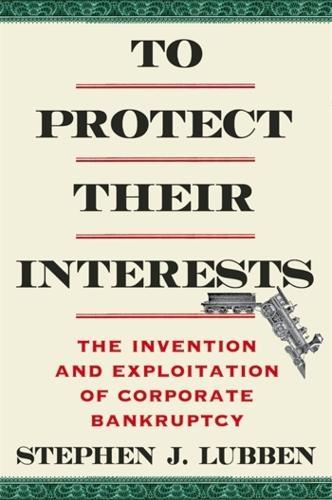
Chapter 11 corporate bankruptcy proceedings are commonly thought of as a tool to protect the broader economy from the failure of large firms, even though the biggest players reap the greatest rewards. In the conventional telling, modern corporate reorganization began in the 1890s, with J. P. Morgan leading a noble effort to protect bondholders from the depredations of corporate insiders. What does this story leave out, and how do the true origins of bankruptcy law shed light on its present-day uses and abuses? To Protect Their Interests is a groundbreaking historical account of how corporate bankruptcy became what it is today-a forum for battles between well-heeled insiders. Stephen J. Lubben strips away the myths surrounding the history of corporate restructuring, showing that it emerged a decade before Morgan, when the robber baron Jay Gould strove to keep control of his railroad by working out a compromise with a handful of wealthy investors. The 1885 restructuring of Texas and Pacific Railway set the pattern for future corporate reorganizations: insider dealing, elite manipulation of the legal system, and judicial deference. Lubben traces the evolution of the bankruptcy system through a series of major cases involving companies such as W. T. Grant and Toys ""R"" Us, demonstrating that it has always been a way for the powerful to maintain power. Revealing the sordid origins of bankruptcy law, this book also considers the limited prospects for reform.
Full Product Details
Author: Stephen J. Lubben
Publisher: Columbia University Press
Imprint: Columbia University Press
ISBN: 9780231213110
ISBN 10: 0231213115
Pages: 408
Publication Date: 20 January 2026
Audience:
Professional and scholarly
,
Professional & Vocational
Format: Paperback
Publisher's Status: Forthcoming
Availability: Awaiting stock

Reviews
To Protect Their Interests argues that the history of US bankruptcy law is the history of the most powerful insiders of the day adapting US bankruptcy law to further their aims and objectives: from Jay Gould and the railway barons; to the banks involved in W..T. Grant; to today’s private equity sponsors. Through his lively historical narrative, Lubben provides insights into the inherent malleability of corporate bankruptcy law and the implications of that adaptive capacity for the present-day reform agenda. -- Sarah Paterson, author of <i>Corporate Reorganization Law and Forces of Change</i>
To Protect Their Interests argues that the history of US bankruptcy law is the history of the most powerful insiders of the day adapting US bankruptcy law to further their aims and objectives: from Jay Gould and the railway barons; to the banks involved in W..T. Grant; to today’s private equity sponsors. Through his lively historical narrative, Lubben provides insights into the inherent malleability of corporate bankruptcy law and the implications of that adaptive capacity for the present-day reform agenda. -- Sarah Paterson, author of <i>Corporate Reorganization Law and Forces of Change</i> This important new book on large scale corporate reorganization in America marries the sophistication of Harvard Business School style case studies of key early railroad receiverships with deeply researched and often captivating historical narrative. J.P. Morgan and the Wall Street banks who perfected the practice weren’t heroes, Lubben contends, nor are the insiders who dominate Chapter 11 today. They use corporate restructuring to gild their own nests at the expense of those who are not powerful enough to withstand them. -- David Skeel, author of <i> Debt’s Dominion: A History of Bankruptcy Law in America </i>
Author Information
Stephen J. Lubben holds the Harvey Washington Wiley Chair in Corporate Governance and Business Ethics at Seton Hall University School of Law. He is the author of The Law of Failure: A Tour Through the Wilds of American Business Insolvency Law (2018). Lubben previously practiced bankruptcy law with a major global firm and wrote a column for the New York Times’ webpage.