Overview
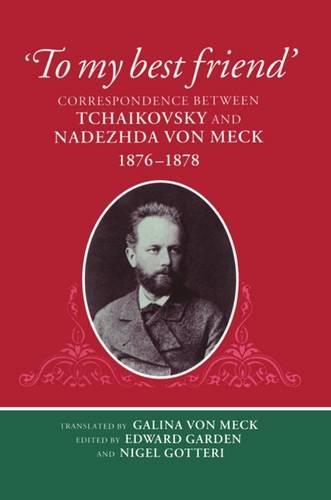
Tchaikovsky dedicated his original and emotionally vibrant Fourth Symphony to his newly found correspondent Nadezhda von Meck in this way: `To my best friend'. This correspondence started at the end of 1876, when Tchaikovsky was in need of funds. On the recommendation of Nikolai Rubinstein, Director of the Moscow Conservatoire where Tchaikovsky was a professor, Nadezhda von Meck generously commissioned Tchaikovsky to arrange some of his smaller pieces for violin and piano. In this way started their extraordinary pen-relationship in which each seemed to bare the soul before the other, Nadezhda von Meck sincerely and increasingly gushingly, Tchaikovsky less sincerely to begin with, but much more so before the elapse of many months. Each was determined never to meet the other in the flesh for fear of destroying their very special relationship.The years covered by the present book are by far the most important in the correspondence. They cover the period of Tchaikovsky's tempestuously abortive marriage, about which he is surprisingly candid; in addition to the Fourth Symphony, for which he gives a detailed programme in a very revealing letter to her, the compositions of the period include his finest and most sensitive opera, Eugene Onegin, and the ever-popular Violin Concerto, as well as numerous other smaller works. Their views on many musical, literary, philosophical, and other matters are stated frankly and, though they are often in accord, they are not afraid to agree to differ either. For Tchaikovsky, his correspondence with Nadezhda von Meck was therapeutic; he often wrote to her when he was depressed - sometimes in despair - and the very act of putting pen to paper in the knowledge that she would be supportive was enough to alleviate his condition, not to mention the fact that she eventually granted him a monthly allowance which gave him artistic `freedom', as he wrote joyously when he had resigned from the Conservatoire.Not only giving a unique insight into Tchaikovsky the composer, these letters are perhaps as fascinating as any ever printed. Many are published in English for the first time. The translations, by a native-born Russian who lived the latter part of her life in England, and edited by a music scholar who reads Russian and a Slavist who is qualified in music, are as close to the letter and spirit of the original as it is possible to get. The correspondence will be of interest both to musicians and music lovers, and to all who are interested in the arts and culture of the nineteenth century.
Full Product Details
Author: Edward Garden (Professor of Music, Professor of Music, University of Sheffield) ,
Nigel Gotteri (Lecturer in Russian and Slavonic Studies, Lecturer in Russian and Slavonic Studies, University of Sheffield) ,
Galina von Meck ,
Peter Ilich Tchaikovsky
Publisher: Oxford University Press
Imprint: Clarendon Press
Dimensions:
Width: 16.10cm
, Height: 3.50cm
, Length: 24.20cm
Weight: 0.950kg
ISBN: 9780198161585
ISBN 10: 0198161581
Pages: 510
Publication Date: 28 January 1993
Audience:
Professional and scholarly
,
Professional & Vocational
Format: Hardback
Publisher's Status: Active
Availability: To order

Stock availability from the supplier is unknown. We will order it for you and ship this item to you once it is received by us.
Reviews
culture. --Choice<br> This translation of letters between [Tchaikovsky] and his benefactress, Nadezha von Meck, could hardly be more welcome....Edward Garden's Introduction provides an impressive, scholarly framework within which the reader may appreciate the succeeding correspondence....The end product reads not at all like a translation, but like the living interchange -- building, in its own peculiar way, into the intense relationship between two people -- that these letters represent. --The Musical Times<br>
'Many of these letters appear here in English for the first time. To anyone who loves Tchaikovsky's music they make fascinating reading' Charles Osborne, Daily Telegraph 'elegantly presented' Classic CD 'In this, the centenary of Tchaikovsky's death ... this translation of letters between him and his benefactress, Nadezhda von Meck, could not be more welcome ... Edward Garden's Introduction provides an impressive, scholarly framework within which the reader may appreciate the succeeding correspondence ... the end product reads not at all like a translation, but like the living interchange - building, in its own peculiar way, into the intense relationship between two people - that these letters represent.' Musical Times 'Her [Galina von Meck's] collection of letters, from the significant years between 1876 and 1978, has been published before but not in such exemplary form: with tis excellent notes and introduction and synopsis of the letters this is a model of how to present correspondence and I congratulate all involved on their achievements ... Tchaikovsky ... is very revealing in these letters ... guilt, self-justification and remorse are to read between the anguished lines ... I have found many a clue within these pages and, no matter what the rest of Tchaikovsky year brings, I doubt if any single publication will surpass this collection of letters.' Classical Music 'This is only the first volume, but these letters are the most interesting of the series ... Galina von Meck's manuscript needed some tidying up, and the book is very well edited and presented so as to make it easy to use as well as to read. But the translations are essentially hers. She had a fluent, even racy command of English, and her sympathy with her two forebears help her to catch their contrasting tones of voice. All Tchaikovsky's biographers ... depend on these letters which can now be widely read and enjoyed for their extraordinary human story as well as for scholarly purposes.' BBC Music Magazine 'In this, the centenary of Tchaikovsky's death ... this translation of letters between him and his benefactress, Nadezha von Meck, could hardly be more welcome ... Edward Garden's Introduction provides an impressive, scholarly framework within which the reader may appreciate the succeeding correspondence ... the end product reads not at all like a translation, but like the living interchange - building, in its own peculiar way, into the intense relationship between two people - that these letters represent.' Henry Zajaczkowski, The Musical Times, April 1993 'a document with its own interest: the romantic dialogue of a melancholic composer and a passionate lady ... The restriction of this volume to the first two years of that dialogue makes for a satisfying shape.' Times Literary Supplement 'Many of these letters appear here in English for the first time. To anyone who loves Tchaikovsky's music they make fascinating reading' Daily Telegraph 'Highly recommended for musicians and general readers alike, indeed to all who are interested in 19th century arts and culture.' M. Meckna, Texas Christian University, Choice, Dec '93 'admirably prepared anthology ... everything they ever said to each other is here ... The translations in general read very well, the letters (or sections of letters) which have been excised are clearly summarized, and Professor Garden has provided a fund of introductory material, not only describing the background to the whole correspondence and commenting pointedly on many matters of detail but also providing a handy preliminary synopsis of all the letters.' David Brown, Music and Letters, Vol. 75, No. 1, Feb '94
culture. --Choice This translation of letters between [Tchaikovsky] and his benefactress, Nadezha von Meck, could hardly be more welcome....Edward Garden's Introduction provides an impressive, scholarly framework within which the reader may appreciate the succeeding correspondence....The end product reads not at all like a translation, but like the living interchange -- building, in its own peculiar way, into the intense relationship between two people -- that these letters represent. --The Musical Times
`Many of these letters appear here in English for the first time. To anyone who loves Tchaikovsky's music they make fascinating reading' Charles Osborne, Daily Telegraph `elegantly presented' Classic CD `In this, the centenary of Tchaikovsky's death ... this translation of letters between him and his benefactress, Nadezhda von Meck, could not be more welcome ... Edward Garden's Introduction provides an impressive, scholarly framework within which the reader may appreciate the succeeding correspondence ... the end product reads not at all like a translation, but like the living interchange - building, in its own peculiar way, into the intense relationship between two people - that these letters represent.' Musical Times `Her [Galina von Meck's] collection of letters, from the significant years between 1876 and 1978, has been published before but not in such exemplary form: with tis excellent notes and introduction and synopsis of the letters this is a model of how to present correspondence and I congratulate all involved on their achievements ... Tchaikovsky ... is very revealing in these letters ... guilt, self-justification and remorse are to read between the anguished lines ... I have found many a clue within these pages and, no matter what the rest of Tchaikovsky year brings, I doubt if any single publication will surpass this collection of letters.' Classical Music `This is only the first volume, but these letters are the most interesting of the series ... Galina von Meck's manuscript needed some tidying up, and the book is very well edited and presented so as to make it easy to use as well as to read. But the translations are essentially hers. She had a fluent, even racy command of English, and her sympathy with her two forebears help her to catch their contrasting tones of voice. All Tchaikovsky's biographers ... depend on these letters which can now be widely read and enjoyed for their extraordinary human story as well as for scholarly purposes.' BBC Music Magazine 'In this, the centenary of Tchaikovsky's death ... this translation of letters between him and his benefactress, Nadezha von Meck, could hardly be more welcome ... Edward Garden's Introduction provides an impressive, scholarly framework within which the reader may appreciate the succeeding correspondence ... the end product reads not at all like a translation, but like the living interchange - building, in its own peculiar way, into the intense relationship between two people - that these letters represent.' Henry Zajaczkowski, The Musical Times, April 1993 'a document with its own interest: the romantic dialogue of a melancholic composer and a passionate lady ... The restriction of this volume to the first two years of that dialogue makes for a satisfying shape.' Times Literary Supplement `Many of these letters appear here in English for the first time. To anyone who loves Tchaikovsky's music they make fascinating reading' Daily Telegraph 'Highly recommended for musicians and general readers alike, indeed to all who are interested in 19th century arts and culture.' M. Meckna, Texas Christian University, Choice, Dec '93 'admirably prepared anthology ... everything they ever said to each other is here ... The translations in general read very well, the letters (or sections of letters) which have been excised are clearly summarized, and Professor Garden has provided a fund of introductory material, not only describing the background to the whole correspondence and commenting pointedly on many matters of detail but also providing a handy preliminary synopsis of all the letters.' David Brown, Music and Letters, Vol. 75, No. 1, Feb '94