|
|
|||
|
||||
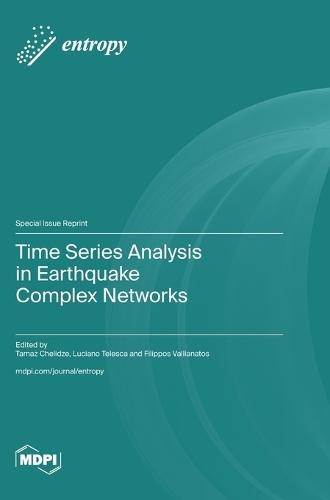
OverviewEarthquake time series are complex due to the variety of forces affecting earthquake generation, the complexity of the Earth's crust and mantle structure, where the earthquake source develops, and the complexity of the earthquake development process in space (generation of elementary cracks, their multiplication and coalescence, leading to main fault formation and final rupture) and time (kinetics of the different stages of the fracturing process). The early stages of the process developing in the deep layers of the Earth's crust cannot be studied in detail experimentally; at present, the only mechanism through which to model these initial stages of earthquake source development is experimental and theoretical modelling. New physical/mathematical methods of data analysis, such as nonlinear dynamics, artificial intelligence/machine learning/deep learning, non-extensive statistical analysis, natural time analysis, and complex network approaches, enable us to obtain mathematical regularities underlying physical/geophysical processes using only the time series of experimental observations. The aim of this Special Issue is to examine the progress in the analysis of complex systems' time series during the fracture process using new approaches to understanding the complexity of earthquake time series. Full Product DetailsAuthor: Tamaz Chelidze , Luciano Telesca , Filippos VallianatosPublisher: Mdpi AG Imprint: Mdpi AG Dimensions: Width: 17.00cm , Height: 1.80cm , Length: 24.40cm Weight: 0.630kg ISBN: 9783725865000ISBN 10: 3725865000 Pages: 198 Publication Date: 09 February 2026 Audience: General/trade , General Format: Hardback Publisher's Status: Active Availability: Available To Order We have confirmation that this item is in stock with the supplier. It will be ordered in for you and dispatched immediately. Table of ContentsReviewsAuthor InformationTab Content 6Author Website:Countries AvailableAll regions |
||||