Overview
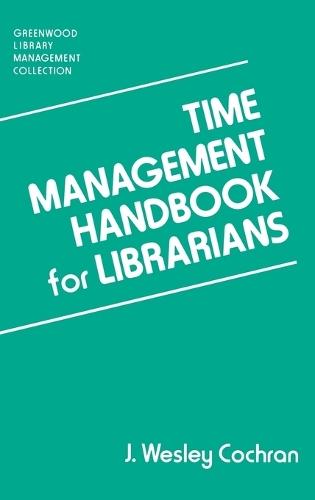
The techniques of time management explained in this handbook provide a framework from which professional librarians in academic, public and special libraries can benefit. Included are time management techniques for one's personal work habits, techniques for work routines involving other staff members, and techniques for library administrators. Cochran, a law library administrator focuses on effectiveness (doing the right job) rather than efficiency (doing a job right). The major topics include setting goals and objectives for one's personal and professional life that support one's values, planning and scheduling work each day, fighting procrastination, limiting interruptions, planning effective meetings, delegating effectively, building morale and cultivating creativity. Other chapters cover time management techniques for special situations including travel and lunch time, balancing a career and personal life, and implementing a time management training program in a library. Appendices include worksheet forms.
Full Product Details
Author: J Wesley Cochran
Publisher: Bloomsbury Publishing Plc
Imprint: Libraries Unlimited Inc
Dimensions:
Width: 15.60cm
, Height: 1.60cm
, Length: 23.50cm
Weight: 0.397kg
ISBN: 9780313278426
ISBN 10: 0313278423
Pages: 160
Publication Date: 08 November 1991
Recommended Age: From 7 to 17 years
Audience:
College/higher education
,
Undergraduate
,
Postgraduate, Research & Scholarly
Format: Hardback
Publisher's Status: Active
Availability: In Print

This item will be ordered in for you from one of our suppliers. Upon receipt, we will promptly dispatch it out to you. For in store availability, please contact us.
Reviews
The latest title in the Greenwood Library Management Collection could not have come at a better time than during this age of retrenchment. Rather than promising to solve all your hassles and then offering no help, Cochran admits that the belief that time can be managed is a myth, then says that people manage themselves and their activities in relation to time and offers concrete methods for taking control of time in various library settings. These methods involve facing some harsh realities: we tend to avoid unpleasant work and decision making in difficult situations; also, we turn the process of anticipating problems (which professionals are paid to do) into time-consuming worry. Besides the methodical advice, Cochran provides intelligent operational tips (e.g., instead of having a switchboard operator or secretary ask who is calling and proceed to interrupt during busy periods, have them say, He/she is in a meeting. Do you want me to interrupt? thereby making the caller take responsibility for the interruption). Unfortunately, Cochran also includes some pro forma long-winded discussions of goals and balance in one's life, but you can always skip those chapters. Booklist Of course, you don't have time to read this book. But making time to spend with Cochran's competent primer will help the busy information professional squeeze a bit more productivity and satisfaction out of the workday. Cochran, a law library director, reiterates reports on the expansion of work hours in the United States. He points out the conundrum particular to librarians: we equate service to users with availability and generosity. Hence the ASAP requests, the meetings, the chirping phones that chip awayat time and mental energy. Cochran's prescription for the harried librarian starts with identifying one's values and then setting goals for a personal and professional life that supports those values. He tells how to fight procrastination, limit interruptions, and hold only necessary meetings (remaining unseated!). Some recommendations require an infrastructure (a dictaphone, a secretary) not available to all. Cochran's book will be most useful for beginning librarians and those coming into the profession from less-structured settings, such as the arts. Recommended. -Library Journal This work offers librarians practical advice on using their valuable working time efficiently and maintaining a healthy personal life. This time-saving book offers diverse thoughtful suggestions. It is recommended for any basic collection of library science or management. -The Journal of Academic Librarianship. This book delivers what it promises, and does so in a style that is not only entertaining and enlightening, but that makes you carefully scrutinize your own approach to time management. Cochran takes the reader through job-situation scenarios that not only ring true, but often create a mental image of staff (including oneself) who fit the picture closely. . . . Enthusiastically recommended. -Bulletin of the Medical Library Association ?This work offers librarians practical advice on using their valuable working time efficiently and maintaining a healthy personal life. This time-saving book offers diverse thoughtful suggestions. It is recommended for any basic collection of library science or management. ?-The Journal of Academic Librarianship. ?This book delivers what it promises, and does so in a style that is not only entertaining and enlightening, but that makes you carefully scrutinize your own approach to time management. Cochran takes the reader through job-situation scenarios that not only ring true, but often create a mental image of staff (including oneself) who fit the picture closely. . . . Enthusiastically recommended.?-Bulletin of the Medical Library Association ?The latest title in the Greenwood Library Management Collection could not have come at a better time than during this age of retrenchment. Rather than promising to solve all your hassles and then offering no help, Cochran admits that the belief that time can be managed is a myth, then says that people manage themselves and their activities in relation to time and offers concrete methods for taking control of time in various library settings. These methods involve facing some harsh realities: we tend to avoid unpleasant work and decision making in difficult situations; also, we turn the process of anticipating problems (which professionals are paid to do) into time-consuming worry. Besides the methodical advice, Cochran provides intelligent operational tips (e.g., instead of having a switchboard operator or secretary ask who is calling and proceed to interrupt during busy periods, have them say, He/she is in a meeting. Do you want me to interrupt? thereby making the caller take responsibility for the interruption). Unfortunately, Cochran also includes some pro forma long-winded discussions of goals and balance in one's life, but you can always skip those chapters. Booklist Of course, you don't have time to read this book. But making time to spend with Cochran's competent primer will help the busy information professional squeeze a bit more productivity and satisfaction out of the workday. Cochran, a law library director, reiterates reports on the expansion of work hours in the United States. He points out the conundrum particular to librarians: we equate service to users with availability and generosity. Hence the ASAP requests, the meetings, the chirping phones that chip awayat time and mental energy. Cochran's prescription for the harried librarian starts with identifying one's values and then setting goals for a personal and professional life that supports those values. He tells how to fight procrastination, limit interruptions, and hold only necessary meetings (remaining unseated!). Some recommendations require an infrastructure (a dictaphone, a secretary) not available to all. Cochran's book will be most useful for beginning librarians and those coming into the profession from less-structured settings, such as the arts. Recommended.?-Library Journal
?The latest title in the Greenwood Library Management Collection could not have come at a better time than during this age of retrenchment. Rather than promising to solve all your hassles and then offering no help, Cochran admits that the belief that time can be managed is a myth, then says that people manage themselves and their activities in relation to time and offers concrete methods for taking control of time in various library settings. These methods involve facing some harsh realities: we tend to avoid unpleasant work and decision making in difficult situations; also, we turn the process of anticipating problems (which professionals are paid to do) into time-consuming worry. Besides the methodical advice, Cochran provides intelligent operational tips (e.g., instead of having a switchboard operator or secretary ask who is calling and proceed to interrupt during busy periods, have them say, He/she is in a meeting. Do you want me to interrupt? thereby making the caller take responsibility for the interruption). Unfortunately, Cochran also includes some pro forma long-winded discussions of goals and balance in one's life, but you can always skip those chapters. Booklist Of course, you don't have time to read this book. But making time to spend with Cochran's competent primer will help the busy information professional squeeze a bit more productivity and satisfaction out of the workday. Cochran, a law library director, reiterates reports on the expansion of work hours in the United States. He points out the conundrum particular to librarians: we equate service to users with availability and generosity. Hence the ASAP requests, the meetings, the chirping phones that chip awayat time and mental energy. Cochran's prescription for the harried librarian starts with identifying one's values and then setting goals for a personal and professional life that supports those values. He tells how to fight procrastination, limit interruptions, and hold only necessary meetings (remaining unseated!). Some recommendations require an infrastructure (a dictaphone, a secretary) not available to all. Cochran's book will be most useful for beginning librarians and those coming into the profession from less-structured settings, such as the arts. Recommended.?-Library Journal
?The latest title in the Greenwood Library Management Collection could not have come at a better time than during this age of retrenchment. Rather than promising to solve all your hassles and then offering no help, Cochran admits that the belief that time can be managed is a myth, then says that people manage themselves and their activities in relation to time and offers concrete methods for taking control of time in various library settings. These methods involve facing some harsh realities: we tend to avoid unpleasant work and decision making in difficult situations; also, we turn the process of anticipating problems (which professionals are paid to do) into time-consuming worry. Besides the methodical advice, Cochran provides intelligent operational tips (e.g., instead of having a switchboard operator or secretary ask who is calling and proceed to interrupt during busy periods, have them say, He/she is in a meeting. Do you want me to interrupt? thereby making the caller take responsibility for the interruption). Unfortunately, Cochran also includes some pro forma long-winded discussions of goals and balance in one's life, but you can always skip those chapters. Booklist Of course, you don't have time to read this book. But making time to spend with Cochran's competent primer will help the busy information professional squeeze a bit more productivity and satisfaction out of the workday. Cochran, a law library director, reiterates reports on the expansion of work hours in the United States. He points out the conundrum particular to librarians: we equate service to users with availability and generosity. Hence the ASAP requests, the meetings, the chirping phones that chip awayat time and mental energy. Cochran's prescription for the harried librarian starts with identifying one's values and then setting goals for a personal and professional life that supports those values. He tells how to fight procrastination, limit interruptions, and hold only necessary meetings (remaining unseated!). Some recommendations require an infrastructure (a dictaphone, a secretary) not available to all. Cochran's book will be most useful for beginning librarians and those coming into the profession from less-structured settings, such as the arts. Recommended.?-Library Journal ?This book delivers what it promises, and does so in a style that is not only entertaining and enlightening, but that makes you carefully scrutinize your own approach to time management. Cochran takes the reader through job-situation scenarios that not only ring true, but often create a mental image of staff (including oneself) who fit the picture closely. . . . Enthusiastically recommended.?-Bulletin of the Medical Library Association ?This work offers librarians practical advice on using their valuable working time efficiently and maintaining a healthy personal life. This time-saving book offers diverse thoughtful suggestions. It is recommended for any basic collection of library science or management. ?-The Journal of Academic Librarianship. This book delivers what it promises, and does so in a style that is not only entertaining and enlightening, but that makes you carefully scrutinize your own approach to time management. Cochran takes the reader through job-situation scenarios that not only ring true, but often create a mental image of staff (including oneself) who fit the picture closely. . . . Enthusiastically recommended. -Bulletin of the Medical Library Association This work offers librarians practical advice on using their valuable working time efficiently and maintaining a healthy personal life. This time-saving book offers diverse thoughtful suggestions. It is recommended for any basic collection of library science or management. -The Journal of Academic Librarianship. The latest title in the Greenwood Library Management Collection could not have come at a better time than during this age of retrenchment. Rather than promising to solve all your hassles and then offering no help, Cochran admits that the belief that time can be managed is a myth, then says that people manage themselves and their activities in relation to time and offers concrete methods for taking control of time in various library settings. These methods involve facing some harsh realities: we tend to avoid unpleasant work and decision making in difficult situations; also, we turn the process of anticipating problems (which professionals are paid to do) into time-consuming worry. Besides the methodical advice, Cochran provides intelligent operational tips (e.g., instead of having a switchboard operator or secretary ask who is calling and proceed to interrupt during busy periods, have them say, He/she is in a meeting. Do you want me to interrupt? thereby making the caller take responsibility for the interruption). Unfortunately, Cochran also includes some pro forma long-winded discussions of goals and balance in one's life, but you can always skip those chapters. Booklist Of course, you don't have time to read this book. But making time to spend with Cochran's competent primer will help the busy information professional squeeze a bit more productivity and satisfaction out of the workday. Cochran, a law library director, reiterates reports on the expansion of work hours in the United States. He points out the conundrum particular to librarians: we equate service to users with availability and generosity. Hence the ASAP requests, the meetings, the chirping phones that chip awayat time and mental energy. Cochran's prescription for the harried librarian starts with identifying one's values and then setting goals for a personal and professional life that supports those values. He tells how to fight procrastination, limit interruptions, and hold only necessary meetings (remaining unseated!). Some recommendations require an infrastructure (a dictaphone, a secretary) not available to all. Cochran's book will be most useful for beginning librarians and those coming into the profession from less-structured settings, such as the arts. Recommended. -Library Journal
Author Information
J. WESLEY COCHRAN is the Law Library Director and Associate Professor of Law at Texas Tech University. His articles have appeared in several professional journals.