|
|
|||
|
||||
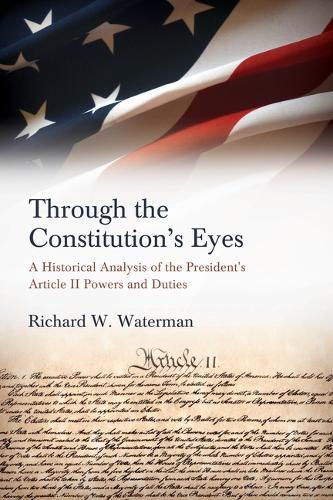
OverviewA timely examination of the president's Article II powers and duties at a moment in history when an autocratic presidency is a very real possibility. Today we confront a potential constitutional crisis, with the presidency dominating the other branches of government. A basic question is how has the presidency become so powerful and does the Constitution present any limits on presidential power? While the Constitution's words have not changed since they were written in 1787, today's presidents, based on the Unitary Executive Theory, find a vast degree of power in clauses that originally provided limits on presidential authority. In Through the Constitution's Eyes Richard W. Waterman examines the historical transition of each of the president's powers and duties to demonstrate how each has been transformed across American history. Making reference to a range of writings from the Constitutional Convention to the present day, much of it unseen by scholars for more than a century, Waterman uncovers insights relevant to our own turbulent times and provides us with a new way of thinking about presidential power. Specifically he presents chapters on the oath of office, the executive vesting, take care, commander-in-chief, appointment, and treaty and receive ambassadors clauses. In each case presidential power has expanded far beyond the Framers' intent, creating the potential for the very tyranny the Framers sought to prevent. Full Product DetailsAuthor: Richard W. Waterman (University of Kentucky)Publisher: State University of New York Press Imprint: State University of New York Press Dimensions: Width: 15.20cm , Height: 1.80cm , Length: 22.90cm Weight: 0.372kg ISBN: 9798855804843Pages: 262 Publication Date: 02 July 2026 Audience: College/higher education , Postgraduate, Research & Scholarly Format: Paperback Publisher's Status: Forthcoming Availability: Not yet available This item is yet to be released. You can pre-order this item and we will dispatch it to you upon its release. Table of Contents1. A Constitutional Approach to the Study of Presidential Power 2. The Oath of Office and the Executive Vesting Clause 3. The Take Care Clause 4. Presidential Appointments: From a Burden to a Power 5. The Constitution's Silences and the Removal Power 6. The Commander in Chief: An Undefined Power 7. The Treaty-Making Power 8. Receiving Ambassadors and the Recognition Power 9. The President Who Would Be King? Notes References IndexReviews""Waterman reminds us of the importance of examining the presidency from a constitutional perspective and raises interesting and challenging questions for citizens and political leaders alike. The book is ideal for an advanced undergraduate or graduate-level seminar on the presidency. Its coverage is wide-ranging, with an organization that allows for easy course organization and syllabus construction."" — David Crockett, Trinity University Author InformationRichard W. Waterman is Professor of Political Science at the University of Kentucky. He is author of Constitutional Ambiguity and the Interpretation of Presidential Power, also published by SUNY Press. Tab Content 6Author Website:Countries AvailableAll regions |
||||