Overview
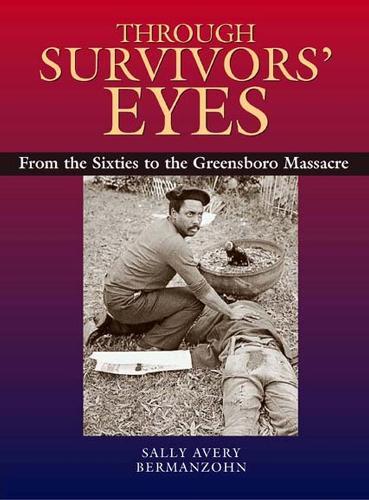
On the morning of November 3, 1979, a group of black and white demonstrators were preparing to march against the Ku Klux Klan through the streets of Greensboro, North Carolina, when a caravan of Klansmen and Nazis opened fire on them. Eighty-eight seconds later, five demonstrators lay dead and ten others were wounded. Four TV stations recorded their deaths by Klan gunfire. Yet, after two criminal trials, not a single gunman spent a day in prison. Despite this outrage, the survivors won an unprecedented civil-court victory in 1985 when a North Carolina jury held the Greensboro police jointly liable with the KKK for wrongful death. In passionate first-person accounts, Through Survivors' Eyes tells the story of six remarkable people who set out to change the world. The survivors came of age as the ""protest generation,"" joining the social movements of the 1960s and 1970s. They marched for civil rights, against war, for textile and healthcare workers, and for black power and women's liberation. As the mass mobilizations waned in the mid-1970s, they searched for a way to continue their activism, studied Marxism, and became communists. Nelson Johnson, who grew up on a farm in eastern North Carolina in a family proud of its African American heritage, settled in Greensboro in the 1960s and became a leader of the Black Liberation Movement and a decade later the founder of the Faith Community Church. Willena Cannon, the daughter of black sharecroppers, witnessed a KKK murder as a child and was spurred to a life of activism. Her son, Kwame Cannon, was only ten when he saw the Greensboro killings. Marty Nathan, who grew up the daughter of a Midwestern union organizer and came to the South to attend medical school, lost her husband to the Klan/Nazi gunfire. Paul Bermanzohn, the son of Jewish Holocaust survivors, was permanently injured during the shootings. Sally Avery Bermanzohn, a child of the New York suburbs who came south to join the Civil Rights Movement, watched in horror as her friends were killed and her husband was wounded. Through Survivors' Eyes is the story of people who abandoned conventional lives to become civil rights activists and then revolutionaries. It is about blacks and whites who united against Klan/Nazi terror, and then had to overcome unbearable hardship, and persist in seeking justice. It is also a story of one divided southern community, from the protests of black college students of the late 1960s to the convening this January of a Truth and Community Reconciliation Project (on the South African model) intended to reassess the Massacre.
Full Product Details
Author: Sally Avery Bermanzohn
Publisher: Vanderbilt University Press
Imprint: Vanderbilt University Press
Dimensions:
Width: 17.80cm
, Height: 2.50cm
, Length: 24.40cm
Weight: 0.811kg
ISBN: 9780826514394
ISBN 10: 0826514391
Pages: 400
Publication Date: 01 September 2003
Audience:
College/higher education
,
Professional and scholarly
,
Undergraduate
,
Postgraduate, Research & Scholarly
Format: Paperback
Publisher's Status: Active
Availability: Out of stock

The supplier is temporarily out of stock of this item. It will be ordered for you on backorder and shipped when it becomes available.
Reviews
Through Survivors' Eyes is an incredible portrait of a social movement, a generation, a traumatic experience and its aftermath, through firsthand narratives of six participants as well as corroborating documents. It is woven together so well, it reads like a novel. That Sally Bermanzohn had the foresight to include stories of love, child rearing, break ups and make ups, family tensions and moments of humor, really distinguish this book from all other movement histories.... This remarkable book left me emotionally drained, but in a good way; once I started reading it, putting it down was impossible at times, necessary at other times. This is a riveting saga of political activism and the bonds of friendship that begins with the lunch counter sit-ins, Freedom Rides, and black nationalism of the 1960s, deepens during the labor organizing and party-building of the 1970s, and persists even through more recent efforts to stem the rise of the Right. Its cautionary message about the horrifying consequences of police repression could not be more timely. --Barbara Ellen Smith Not only sheds light on what survivors call the Greensboro Massacre, but also illuminates how 88 seconds of gunfire that shook a housing project 24 years ago echo to this day. --The Philadelphia Inquirer
This is a riveting saga of political activism and the bonds of friendship that begins with the lunch counter sit-ins, Freedom Rides, and black nationalism of the 1960s, deepens during the labor organizing and party-building of the 1970s, and persists even through more recent efforts to stem the rise of the Right. Its cautionary message about the horrifying consequences of police repression could not be more timely. <br>Barbara Ellen Smith
Author Information
Sally Avery Bermanzohn is associate professor of politics at Brooklyn College, CUNY, where she teaches courses on politics, race, gender, and class. She is a co-editor (along with Kenton Worcester and Mark Ungar) of Violence and Politics: Globalization's Paradox.