|
|
|||
|
||||
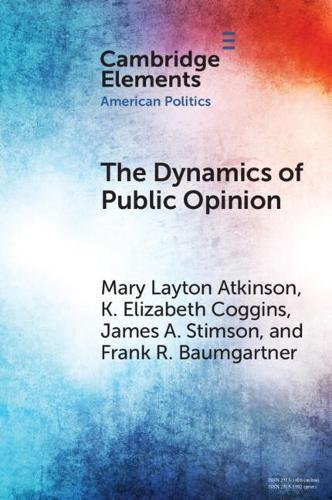
OverviewA central question in political representation is whether government responds to the people. To understand that, we need to know what the government is doing, and what the people think of it. We seek to understand a key question necessary to answer those bigger questions: How does American public opinion move over time? We posit three patterns of change over time in public opinion, depending on the type of issue. Issues on which the two parties regularly disagree provide clear partisan cues to the public. For these party-cue issues we present a slight variation on the thermostatic theory from (Soroka and Wlezien (2010); Wlezien (1995)); our “implied thermostatic model.” A smaller number of issues divide the public along lines unrelated to partisanship, and so partisan control of government provides no relevant clue. Finally, we note a small but important class of issues which capture response to cultural shifts. Full Product DetailsAuthor: Mary Layton Atkinson (University of North Carolina, Charlotte) , K. Elizabeth Coggins (Colorado College) , James A. Stimson (University of North Carolina, Chapel Hill) , Frank R. Baumgartner (University of North Carolina, Chapel Hill)Publisher: Cambridge University Press Imprint: Cambridge University Press Edition: New edition Dimensions: Width: 15.20cm , Height: 0.50cm , Length: 22.70cm Weight: 0.134kg ISBN: 9781108819114ISBN 10: 1108819117 Pages: 84 Publication Date: 11 November 2021 Audience: General/trade , General Format: Paperback Publisher's Status: Active Availability: Manufactured on demand We will order this item for you from a manufactured on demand supplier. Table of Contents1. Introduction; 2. Implied Thermostatic Response; 3. Absolute Opinion Change; 4. Conclusion; Appendix: Comparing the Survey Research Agenda to the Congressional Agenda.ReviewsAuthor InformationTab Content 6Author Website:Countries AvailableAll regions |
||||