Overview
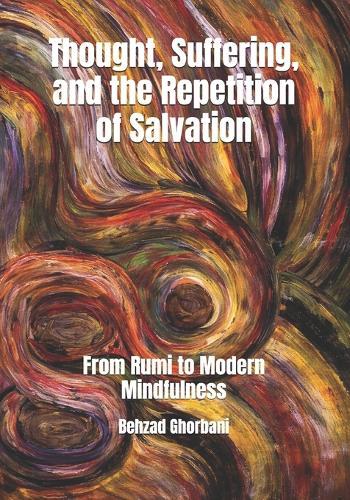
Thought, Suffering, and the Repetition of Salvation: From Rumi to Modern Mindfulness examines a recurring pattern in human attempts to understand psychological suffering and relief. Across centuries, poets, philosophers, psychologists, and contemporary spiritual teachers have returned to a similar claim: that thought itself lies at the root of human distress, and that freedom emerges through quieting or transcending mental activity. This book does not dismiss these traditions; instead, it asks why such ideas repeatedly arise, why they feel compelling, and why they continue to reappear in new forms despite historical continuity. Beginning with ordinary experience, the book explores how suffering often intensifies through mental amplification. Pain becomes extended through anticipation, memory, and interpretation, creating the impression that thinking itself is the problem. Moments of relief, when internal narration subsides, can feel transformative and are frequently interpreted as discoveries about reality rather than as temporary regulatory shifts. These experiences form the foundation of personal insight narratives, which then spread culturally as teachings promising liberation from psychological struggle. The historical sections trace how this pattern appears long before modern psychology. In the poetry of Rumi and other mystical traditions, thought is portrayed as separation and silence as unity. Stoic philosophy reframes suffering as the result of judgement rather than events themselves, introducing early forms of cognitive interpretation. With the emergence of modern psychology, figures such as Freud and Karen Horney shift attention toward internal conflict and personality structure, understanding distress as arising from competing needs rather than faulty thinking alone. Later experiential movements, particularly in the twentieth century, return to the critique of thought but increasingly simplify complex psychological dynamics into accessible doctrines centred on presence or awareness. The book argues that this repetition is neither accidental nor deceptive. It reflects fundamental features of human cognition. Recursive self-reflection enables learning and planning but also produces rumination and overextension. When these loops are interrupted, relief follows, and the mind interprets this relief as insight. Cultural transmission then transforms personal regulation into universal explanation, allowing similar narratives of salvation to recur across generations. Economic and social factors further stabilise these teachings, favouring simple and repeatable messages over nuanced accounts of psychological complexity. In its final movement, the book moves beyond critique toward integration. Thought is reconsidered not as an enemy but as a functional process that, when balanced with awareness, supports adaptation and meaning. Psychological maturity is described as flexibility rather than permanent calm, involving tolerance for uncertainty, acceptance of incompleteness, and the ability to engage thought without being dominated by it. Suffering is reframed as signal rather than failure, and relief as adjustment rather than final awakening. Ultimately, the work proposes that human life is not a problem to be solved once and for all, but an ongoing negotiation between thinking, feeling, and experience. By understanding the cycle through which salvation narratives arise, readers are invited to retain the value of insight while relinquishing the expectation of final rescue, allowing understanding to remain open, adaptive, and grounded in lived reality.
Full Product Details
Author: Behzad Ghorbani
Publisher: Independently Published
Imprint: Independently Published
Dimensions:
Width: 17.80cm
, Height: 2.00cm
, Length: 25.40cm
Weight: 0.644kg
ISBN: 9798248850839
Pages: 372
Publication Date: 18 February 2026
Audience:
General/trade
,
General
Format: Paperback
Publisher's Status: Active
Availability: Available To Order

We have confirmation that this item is in stock with the supplier. It will be ordered in for you and dispatched immediately.