Overview
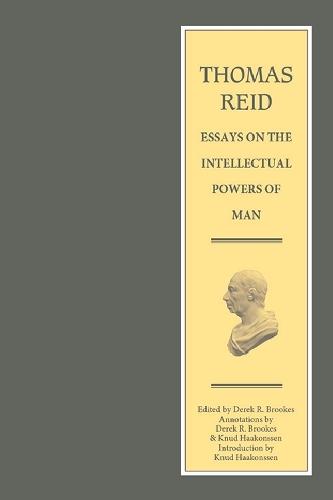
This is Thomas Reid's greatest work. It covers far more philosophical ground than the earlier, more popular Inquiry. The Intellectual Powers and its companion volume, Essays on the Active Powers of Man, constitute the fullest, most original presentation of the philosophy of Common Sense. In the process, Reid provides acutely critical discussions of an impressivearray of thinkers but especially of David Hume. In Reid's eyes, Hume had driven a deep tendency in modern philosophy to its ultimate conclusions by creating a phantom-world of so-called 'ideas' that sprang from objects of observation; the self was a conglomeration of perceived ideas; and the will as the source of action was nothing but the balance of passionate impulses.Reid's Common Sense philosophy answers these problems by suggesting that sceptics, such as Hume, unavoidably affirm what they purport to deny, namely the existence of a stable external world, of other minds, of the continuity of their own minds, and of their own and other people's ability to ascribe and accept responsibility for actions. We can understand all of this by proper empirical observation and philosophical analysis of the activity of the mind. Reid's major positive contribution to philosophy is a detailed account of the various innate powers of the mind. While particularly influential in the first half of the nineteenth century,Reid's work has retained a significant role in philosophy, not least in recent years. At the same time, his role in the Scottish Enlightenment is becoming much better understood.This is the only properly established text. It is accompanied by manuscript lectures on the nature and immortality of the soul, as well as helpful editorial annotation and introduction, making it useful to a wide variety of readers.Features * Accurate, reliable and critically established text * The Introduction explains the work's genesis and its place in Reid's system* Annotations provide an
Full Product Details
Author: Thomas Reid ,
Derek Brookes (Research Fellow) ,
Knud Haakonssen (Professor, University of St Andrews)
Publisher: Edinburgh University Press
Imprint: Edinburgh University Press
Dimensions:
Width: 15.60cm
, Height: 1.70cm
, Length: 23.40cm
Weight: 0.260kg
ISBN: 9780748611898
ISBN 10: 0748611894
Pages: 656
Publication Date: 17 July 2002
Audience:
College/higher education
,
Professional and scholarly
,
Undergraduate
,
Postgraduate, Research & Scholarly
Format: Hardback
Publisher's Status: Active
Availability: Temporarily unavailable

The supplier advises that this item is temporarily unavailable. It will be ordered for you and placed on backorder. Once it does come back in stock, we will ship it out to you.
Author Information
Derek R. Brookes is the editor of Thomas Reid's An Inquiry into the Human Mind on the Principles of Common Sense (Edinburgh University Press, 1997). He has a PhD in philosophy from the Australian National University. Knud Haakonssen is Professor of Intellectual History at the University of St Andrews and a Long-term Fellow at the Max Weber Center for Advanced Cultural and Social Studies, University of Erfurt. His books include The Science of a Legislator (Cambridge University Press, 1981), Natural Law and Moral Philosophy (Cambridge University Press, 1996), and editions of Hume, Hutcheson, Reid and Smith. He is General Editor of the Edinburgh Edition of Thomas Reid.