Overview
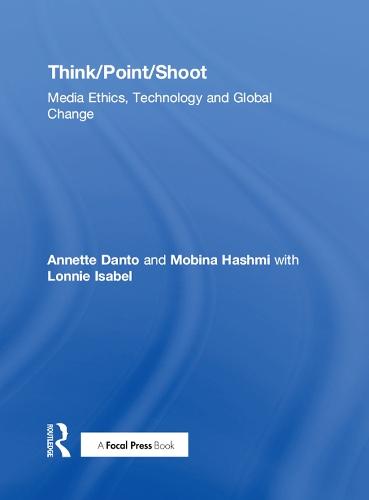
Think/Point/Shoot gives students a thorough overview of the role of ethics in modern media creation. Case studies emphasize the critical issues in global media ethics today in all stages of media creation from preproduction research and development, to production and post production. This volume features practicing filmmakers, journalists, and media creators who provide insight into dealing with real-world ethical dilemmas. For this era, digital imagery, sounds, and web communication have opened doors to sharing thoughts and ideas instantaneously to potentially vast audiences. This presents exciting opportunities, but also serious ethical, legal, and social challenges. The cases and exercises found in this book are applicable to the current media field while still remaining grounded in strong ethical theory. Think/Point/Shoot explains the challenge of communicating a story to a worldwide audience while maintaining ethical standards. A companion website provides additional resources for students and instructors: media ethics game chapter summaries and case studies important forms Instructors will also find: classroom exercises PowerPoints video from the ""Global Media Ethics"" Conference from March 2013
Full Product Details
Author: Annette Danto (Brooklyn College, CUNY, USA) ,
Mobina Hashmi (Brooklyn College, CUNY, USA) ,
Lonnie Isabel (Columbia University Graduate School of Journalism, USA)
Publisher: Taylor & Francis Ltd
Imprint: Routledge
Weight: 0.730kg
ISBN: 9781138847958
ISBN 10: 113884795
Pages: 310
Publication Date: 06 October 2016
Audience:
College/higher education
,
Undergraduate
,
Postgraduate, Research & Scholarly
Format: Hardback
Publisher's Status: Active
Availability: In Print

This item will be ordered in for you from one of our suppliers. Upon receipt, we will promptly dispatch it out to you. For in store availability, please contact us.
Reviews
"Documentaries have ethical, moral, and social implications. What we shoot, how we shoot it, can lead to painful or dangerous consequences. As makers, we focus on our aims and are apt to miss what is unseen or unimagined, especially when working under pressure. But audiences and participants see our work from a multiplicity of perspectives, and quickly spot our lapses. Think/Point/Shoot is the collective experience of filmmaking, journalism, and academic professionals. It offers a lifetime of hard-won knowledge. So, if you work in actuality filmmaking, or want to, make use of the book and prepare for the pitfalls and creative possibilities of the media currently in use. Michael Rabiger, author of Directing the Documentary ""...manages to provide some clarity to a subject shrouded in the murkiness of competing political agendas...The liberal use of case studies and real-life examples throughout the book is particularly effective. Each chapter ends with a summary of ""Take-Home Points"" and extensive bibliographies for additional reading. The real-life example on the final page is about the personal ramifications of ""Twitter Shaming."" This one lesson would qualify Think Point Shoot as recommended reading for teachers and parents dealing with all those thousands of kids running around with smartphones in their hands, making media."" Cynthia Close in Documentary Magazine Documentaries have ethical, moral, and social implications. What we shoot, how we shoot it, can lead to painful or dangerous consequences. As makers, we focus on our aims and are apt to miss what is unseen or unimagined, especially when working under pressure. But audiences and participants see our work from a multiplicity of perspectives, and quickly spot our lapses. Think/Point/Shoot is the collective experience of filmmaking, journalism, and academic professionals. It offers a lifetime of hard-won knowledge. So, if you work in actuality filmmaking, or want to, make use of the book and prepare for the pitfalls and creative possibilities of the media currently in use. Michael Rabiger, author of Directing the Documentary ""...manages to provide some clarity to a subject shrouded in the murkiness of competing political agendas...The liberal use of case studies and real-life examples throughout the book is particularly effective. Each chapter ends with a summary of ""Take-Home Points"" and extensive bibliographies for additional reading. The real-life example on the final page is about the personal ramifications of ""Twitter Shaming."" This one lesson would qualify Think Point Shoot as recommended reading for teachers and parents dealing with all those thousands of kids running around with smartphones in their hands, making media."" Cynthia Close in Documentary Magazine"
Documentaries have ethical, moral, and social implications. What we shoot, how we shoot it, can lead to painful or dangerous consequences. As makers, we focus on our aims and are apt to miss what is unseen or unimagined, especially when working under pressure. But audiences and participants see our work from a multiplicity of perspectives, and quickly spot our lapses. Think/Point/Shoot is the collective experience of filmmaking, journalism, and academic professionals. It offers a lifetime of hard-won knowledge. So, if you work in actuality filmmaking, or want to, make use of the book and prepare for the pitfalls and creative possibilities of the media currently in use.ã Michael Rabiger, author of Directing the Documentary ...manages to provide some clarity to a subject shrouded in the murkiness of competing political agendas...The liberal use of case studies and real-life examples throughout the book is particularly effective. Each chapter ends with a summary of Take-Home Points and extensive bibliographies for additional reading. The real-life example on the final page is about the personal ramifications of Twitter Shaming. This one lesson would qualify Think Point Shoot as recommended reading for teachers and parents dealing with all those thousands of kids running around with smartphones in their hands, making media. Cynthia Close in Documentary Magazine
Documentaries have ethical, moral, and social implications. What we shoot, how we shoot it, can lead to painful or dangerous consequences. As makers, we focus on our aims and are apt to miss what is unseen or unimagined, especially when working under pressure. But audiences and participants see our work from a multiplicity of perspectives, and quickly spot our lapses. Think/Point/Shoot is the collective experience of filmmaking, journalism, and academic professionals. It offers a lifetime of hard-won knowledge. So, if you work in actuality filmmaking, or want to, make use of the book and prepare for the pitfalls and creative possibilities of the media currently in use. Michael Rabiger, author of Directing the Documentary ""...manages to provide some clarity to a subject shrouded in the murkiness of competing political agendas...The liberal use of case studies and real-life examples throughout the book is particularly effective. Each chapter ends with a summary of ""Take-Home Points"" and extensive bibliographies for additional reading. The real-life example on the final page is about the personal ramifications of ""Twitter Shaming."" This one lesson would qualify Think Point Shoot as recommended reading for teachers and parents dealing with all those thousands of kids running around with smartphones in their hands, making media."" Cynthia Close in Documentary Magazine Documentaries have ethical, moral, and social implications. What we shoot, how we shoot it, can lead to painful or dangerous consequences. As makers, we focus on our aims and are apt to miss what is unseen or unimagined, especially when working under pressure. But audiences and participants see our work from a multiplicity of perspectives, and quickly spot our lapses. Think/Point/Shoot is the collective experience of filmmaking, journalism, and academic professionals. It offers a lifetime of hard-won knowledge. So, if you work in actuality filmmaking, or want to, make use of the book and prepare for the pitfalls and creative possibilities of the media currently in use. Michael Rabiger, author of Directing the Documentary ""...manages to provide some clarity to a subject shrouded in the murkiness of competing political agendas...The liberal use of case studies and real-life examples throughout the book is particularly effective. Each chapter ends with a summary of ""Take-Home Points"" and extensive bibliographies for additional reading. The real-life example on the final page is about the personal ramifications of ""Twitter Shaming."" This one lesson would qualify Think Point Shoot as recommended reading for teachers and parents dealing with all those thousands of kids running around with smartphones in their hands, making media."" Cynthia Close in Documentary Magazine
Author Information
Annette Danto is a filmmaker and Professor in the Department of Film at Brooklyn College. A three time awarded Fulbright Scholar in Filmmaking, Danto holds degrees from McGill University, Columbia University and New York University’s Tisch School of the Arts Maurice Kanbar Institute of Film, Television and New Media. Mobina Hashmi is an Assistant Professor in the Department of Television and Radio at Brooklyn College, and the Director of the Center for Global Television. She has a BA from Dartmouth College, and a PhD in media and cultural studies from the University of Wisconsin at Madison. Her work has been published in Economic and Political Weekly and in South Asian History and Culture. Lonnie Isabel is a reporter and Former Deputy Managing Editor of Newsday and Newsday-Laventhol Visiting Professor at Columbia University’s Graduate School of Journalism. Isabel is a 30-year veteran of the newspaper business and has worked as a political reporter, investigative reporter and editor for Newsday, Boston Globe, Boston Herald and Oakland Tribune. Isabel joined the newly-created CUNY Graduate School of Journalism in 2005.