Overview
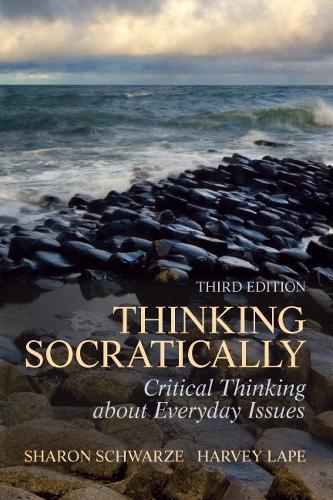
ALERT: Before you purchase, check with your instructor or review your course syllabus to ensure that you select the correct ISBN. Several versions of Pearson's MyLab & Mastering products exist for each title, including customized versions for individual schools, and registrations are not transferable. In addition, you may need a CourseID, provided by your instructor, to register for and use Pearson's MyLab & Mastering products. Packages Access codes for Pearson's MyLab & Mastering products may not be included when purchasing or renting from companies other than Pearson; check with the seller before completing your purchase. Used or rental books If you rent or purchase a used book with an access code, the access code may have been redeemed previously and you may have to purchase a new access code. Access codes Access codes that are purchased from sellers other than Pearson carry a higher risk of being either the wrong ISBN or a previously redeemed code. Check with the seller prior to purchase. -- Critical Thinking Skills in Everyday Context – The Socrates Model Thinking Socratically is a treatment of critical thinking, rather than an informal logic textbook. It emphasizes a philosophical reflection on real issues from everyday life, in order to teach students the skills of critical thinking in a commonplace context that is easy to understand and certain to be remembered. Teaching and Learning Experience Improve Critical Thinking - Thinking Socratically contextualizes the presentation of critical thinking topics through easy-to-understand information, and shows, rather than just tells, students how to be critical thinkers by encouraging them to follow Socrates as a model. Engage Students – Thinking Socratically exposes students to a variety of readings listed after expository material, Venn diagrams, chapter-end summaries, etc. – in order to outline important concepts and learning tools needed for useful reasoning. Support Instructors - Teaching your course just got easier! You can create a Customized Text or use our Instructor’s Manual, or PowerPoint Presentation Slides. Plus, Thinking Socratically is organized around topics for ease of assignments, and uses standard terminology to eliminate student confusion.
Full Product Details
Author: Sharon Schwarze , Harvey Lape , Harvey Lape , Harvey Lape
Publisher: Pearson Education (US)
Imprint: Pearson
Edition: 3rd edition
Dimensions:
Width: 15.50cm
, Height: 2.00cm
, Length: 23.00cm
Weight: 0.439kg
ISBN: 9780205098019
ISBN 10: 0205098010
Pages: 336
Publication Date: 06 March 2012
Audience:
Adult education
,
Further / Higher Education
Format: Paperback
Publisher's Status: Active
Availability: Awaiting stock 
The supplier is currently out of stock of this item. It will be ordered for you and placed on backorder. Once it does come back in stock, we will ship it out for you.
Table of Contents
Found in this Section: 1. Brief Table of Contents 2. Full Table of Contents 1. BRIEF TABLE OF CONTENTS Preface Acknowledgments Part I Connections Chapter 1 Why be a Critical Thinker? Chapter 2 Language Chapter 3 Knowledge and Certainty Chapter 4 Arguments and Explanations Part II Deductive Reasoning Chapter 5 Deductive Links Chapter 6 Deductive Argument Forms Part III Inductive Reasoning Chapter 7 Supporting Our Claims Chapter 8 Standards of Inductive Reasoning Chapter 9 Fallacies Chapter 10 Scientific Reasoning Chapter 11 Pseudoscience Part IV Reasoning About Values Chapter 12 The Nature of Morality Chapter 13 Reasoning about Good and Bad Chapter 14 Moral Dialogue Chapter 15 Reason and Commitment Index 2. FULL TABLE OF CONTENTS Preface Acknowledgments Part I Connections Chapter 1: Why be a Critical Thinker? Critical Thinking and the Importance of Open Dialogue What Is Critical Thinking? Euthyphro Plato Study Questions Reason and Culture Why the Geese Shrieked Isaac Bashevis Singer The Shaman and the Dying Scientist: A Brazilian Tale Alan Riding Study Questions The Limits of Reason Summary Exercises Chapter 2: Language The Priority of Language Language and the World The Corner of the Eye Lewis Thomas Eight Little Piggies Stephen Jay Gould Study Questions Words, Statements, and Beliefs Warranted Statements Making of Americans Gertrude Stein Study Questions Factual Statements Web of Belief 9/11 Rumors That Harden into Conventional Wisdom Michael Slackman Cookies Douglas Adams Study Questions Summary Exercises Chapter 3: Knowledge and Certainty Belief and Knowledge Knowledge and Certainty Meditations on First Philosophy in Which the Existence of God and the Distinction of the Soul from the Body Are Demonstrated René Descartes A Brief History of Time Stephen Hawking Study Questions Consensus and the Web of Belief Ideas & Trends; For Air Crash Detectives, Seeing Isn’t Believing Matthew L. Wald President Tom’s Cabin Jill Lepore Study Questions Summary Exercises Chapter 4: Arguments and Explanations Arguments: Premises and Conclusions Implicit Premises and Conclusions Arguments: Standard Form Logical Warranting Deductive Reasoning Inductive Reasoning Factual Warranting The Decameron: Michele Scalza Giovanni Boccaccio The Decameron: Melchizedek Giovanni Boccaccio Study Questions Explanations The Day-Care Deaths: A Mystery Linda Herskowitz Study Questions Summary Exercises Part II Deductive Reasoning Chapter 5: Deductive Links Reasoning with Necessity Dissenting Opinion in Gregg v. Georgia Thurgood Marshall Study Questions Analyzing a Deductive Argument Validity and Logical Implication Summary Exercises Chapter 6: Deductive Argument Forms Logic Some Common Valid Argument Forms Anselm’s Ontological Argument Norman Malcolm Study Questions Anselm’s Ontological Argument Summary Exercises Part III Inductive Reasoning Chapter 7: Supporting Our Claims Evidence: Traces and Patterns Report on Yale Murder Outlines Suspicions James Barron And Alison Leigh Cowan Trial By Fire: Did Texas Execute an Innocent Man? David Grann Study Questions Confirmation and Proof: Webs of Belief The William Bradfield Case: Murder on the Main Line Mike Mallowe Coded Bradfield Note: ‘My Danger Conspiracy’ Emilie Lounsberry The Jury: Convinced or Confused? Emilie Lounsberry and Henry Goldman Bradfield, on Stand, Denies Any Role Emilie Lounsberry Bradfield and Women Henry Goldman Study Questions Summary Exercises Chapter 8: Standards of Inductive Reasoning Three Basic Forms Generalizations The Literary Digest Predicts Victory by Landon, 1936 “Digest” Poll Machinery Speeding Up Landon 1,293,669; Roosevelt, 972,897 What Went Wrong with the Polls? Study Questions Analogies Troublemakers: What Pitt Bulls Can Teach Us about Profiling Malcolm Gladwell Study Questions Causal Claims So, Smoking Causes Cancer: This Is News? Denise Grady Renewing Philosophy Hilary Putnam Study Questions Summary Exercises Chapter 9: Fallacies The Nature of Fallacies Fallacies of Irrelevance Lost Genius Russell Baker Study Questions Fallacies of Faulty Generalization Fallacies of Emotional Manipulation Bachmann Finds an Issue With HPV Debate Trip Gabriel Study Questions Summary Exercises Chapter 10: Scientific Reasoning Science and Good Reasoning Copernicus and Kepler The Sex Life of the Whiptail Lizard Harry Collins and Trevor Pinch Study Questions Hypothetical-Deductive Reasoning Summary Exercises Chapter 11: Pseudoscience Distinguishing Science from Pseudoscience Fliess, Freud, and Biorhythm Martin Gardner Study Questions Summary Exercises Part IV Reasoning About Values Chapter 12: The Nature of Morality Supporting Moral Claims Chapter I: Of the Principle of Utility Jeremy Bentham Study Questions Objectivism and Subjectivism The Brothers Karamazov Fyodor Dostoevsky Study Questions Morality and Reasoning Summary Exercises Chapter 13: Reasoning about Good and Bad Making Moral Decisions Reasonable Objectivism and Reasonable Subjectivism Grounding for the Metaphysics of Morals Immanuel Kant Existentialism is a Humanism Jean-Paul Sartre Study Questions Kant Sartre Summary Exercises Chapter 14: Moral Dialogue Dogmatism and Relativism Euthyphro as Dogmatist Plato Classroom Scene Study Questions Moderation as Key Summary Exercises Chapter 15: Reason and Commitment Open Rational Dialogue Keynote Speech May 18 at Simpson College’s 1996 Commencement Jane Smiley Study Questions Index
Reviews
Author Information
Dear Colleagues, When we first started teaching critical thinking over twenty-five years ago the available textbooks fell into two camps: some were simplified ""introduction to logic"" texts, while others were little more than rhetoric handbooks fortified with a section on informal fallacies. The first group offered models for critical thinking but provided no material to think critically about. The second analyzed devious ways of persuasion used in everything from advertising to politics. We soon began constructing our own materials for critical thinking, using the stories, news events, and issues that our students encountered in their daily lives. We believed then, and we believe now, that students need to learn critical thinking skills in a variety of contexts and from actual instances, not from concocted textbook examples. Our approach to critical thinking also has a strong philosophical underpinning. This helps students understand how their own beliefs are formed and how they fit together into webs of belief and ultimately into a view of the world which is shaped by their experience and which shapes their experience. Having this philosophical understanding helps them to monitor their own critical thinking in a new way, and it helps them to understand why we sometimes have arguments with each other. All of this points to our definition of critical thinking which is open rational dialogue with our friends – and with ourselves. We include the usual topics found in critical thinking texts such as deductive and inductive reasoning and the fallacies, but we also present critical thinking as anchored in a much broader philosophical context. Thus we include excerpts from Plato, Descartes, and Kant, among others. Moreover, we show how critical thinking applies in such diverse disciplines as history and science. Finally, we conclude Thinking Socratically with a whole section on ethics because, like Socrates, we think critical thinking can help people be better people, not just better critical thinkers. We have found that students at every level enjoy and benefit from Thinking Socratically. It has been used around the country by students from the undergraduate to the graduate level. Even teachers in K-12 programs have used earlier editions to teach themselves how to teach critical thinking to their pre-college students. We hope that you will consider using this text if you are not using it already. Please do not hesitate to contact us at Cabrini College with your comments, questions, and suggestions. We began this text with the desire to make our students better critical thinkers and that is still our goal – to make students everywhere more able to use critical thinking skills in their everyday lives. Our email addresses are sschwarze@cabrini.eud and hlape3@hotmail.com. Sincerely, Sharon Schwarze and Harvey Lape Cabrini College
Tab Content 6
Author Website:
Countries Available
All regions
|