Overview
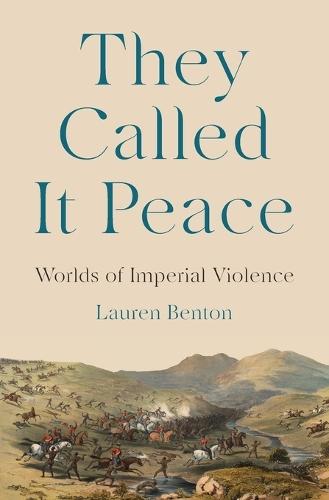
Imperial conquest and colonisation depended on pervasive raiding, slaving, and plunder. European empires amassed global power by asserting a right to use unilateral force at their discretion. They Called It Peace is a panoramic history of how these routines of violence remapped the contours of empire and reordered the world from the fifteenth to the twentieth centuries. In an account spanning from Asia to the Americas, Lauren Benton shows how imperial violence redefined the very nature of war and peace. Instead of preparing lasting peace, fragile truces ensured an easy return to war. Serial conflicts and armed interventions projected a de facto state of perpetual war across the globe. Benton describes how seemingly limited war sparked atrocities, from sudden massacres to long campaigns of dispossession and extermination. She brings vividly to life a world in which warmongers portrayed themselves as peacemakers and Europeans imagined 'small' violence as essential to imperial rule and global order. Holding vital lessons for us today, They Called It Peace reveals how the imperial violence of the past has made perpetual war and the threat of atrocity endemic features of the international order.
Full Product Details
Author: Lauren Benton
Publisher: Princeton University Press
Imprint: Princeton University Press
ISBN: 9780691249797
ISBN 10: 0691249792
Pages: 304
Publication Date: 21 April 2026
Audience:
College/higher education
,
Postgraduate, Research & Scholarly
Format: Paperback
Publisher's Status: Active
Availability: Not yet available

This item is yet to be released. You can pre-order this item and we will dispatch it to you upon its release.
Reviews
""Winner of the Gustav Ranis International Book Prize, Macmillan Center, Yale University"" ""A New Yorker Best Book We've Read This Year"" ""Shortlisted for the Cundill History Prize, McGill University"" ""Finalist for the PROSE Award in World History, Association of American Publishers"" ""A radical and important book.""---Christopher Kissane, Irish Times ""A nimble and provocative history.""---Michael Ledger-Lomas, Jacobin ""Benton...uses harrowing case studies from around the world, and contextualizes events within the work of contemporary intellectuals."" * New Yorker * ""The book offers a strikingly original account not only of the significance of the proliferation of small wars across the globe; but of how what came to be called 'international law' was deployed by European powers . . . a remarkable achievement.""---Anthony Pagden, Journal of Early Modern History ""They Called It Peace . . . shouts a chilling reminder that humankind possesses a regrettably high tolerance for violence between war and peace. . . . A worthy read for historians, social scientists, scholars, politicians, and practitioners of war alike.""---Lieutenant Colonel Terry Nail, USAF, Air & Space Power Journal ""A thoughtful short history of imperial violence. . . . Recommended."" * Choice Reviews * ""The book spans centuries of history, delving into accounts of imperialist violence from Asia to South America, often focusing on lesser-known victims of imperialist violence.""---Sophie Squire, Socialist Worker ""Highly original.""---David Lorimer, Paradigm Explorer ""No one has been more articulate than Benton in showing how ‘the regime of armed peace mapped clear pathways from lawful interventions with modest objectives to brutal campaigns of dispossession and extermination. . . a move from treating individuals as criminals to defining whole communities as natural enemies.’""---Ron Slate, On the Seawall ""An encouraging turning point in the revision of the whole history of European imperialism . . . ground-breaking.""---Leonardo Clausi, The Political Quarterly ""A wonderful survey of the interplay of legal ideas and violence in European empires from the early modern era to the present.""---William Smiley, Legal History JOTWELL ""Thought-provoking. . . . By throwing light on the continuities between imperial and modern violence, Benton shows that the fiction of peace continues to license the reality of war. The book is an essential read for anyone interested in the history of international law, global empires and international relations.""---Syed Hammaad Mehraj, LSE Review of Books ""Lauren Benton offers a heuristic framework to understand imperial ’small wars’, which she defines as both sustained colonial military campaigns and brief acts of violence motivated by plunder, reprisal, or punishment.""---Jeremy Martens, Australian Book Review ""Breathtakingly ambitious.""---Boyd van Dijk, Law and History Review
""Winner of the Gustav Ranis International Book Prize, Macmillan Center, Yale University"" ""A New Yorker Best Book We've Read This Year"" ""Shortlisted for the Cundill History Prize, McGill University"" ""Finalist for the PROSE Award in World History, Association of American Publishers"" ""A radical and important book.""---Christopher Kissane, Irish Times ""A nimble and provocative history.""---Michael Ledger-Lomas, Jacobin ""Benton...uses harrowing case studies from around the world, and contextualizes events within the work of contemporary intellectuals."" * New Yorker * ""The book offers a strikingly original account not only of the significance of the proliferation of small wars across the globe; but of how what came to be called 'international law' was deployed by European powers . . . a remarkable achievement.""---Anthony Pagden, Journal of Early Modern History ""They Called It Peace . . . shouts a chilling reminder that humankind possesses a regrettably high tolerance for violence between war and peace. . . . A worthy read for historians, social scientists, scholars, politicians, and practitioners of war alike.""---Lieutenant Colonel Terry Nail, USAF, Air & Space Power Journal ""A thoughtful short history of imperial violence. . . . Recommended."" * Choice Reviews * ""The book spans centuries of history, delving into accounts of imperialist violence from Asia to South America, often focusing on lesser-known victims of imperialist violence.""---Sophie Squire, Socialist Worker ""Highly original.""---David Lorimer, Paradigm Explorer ""No one has been more articulate than Benton in showing how ‘the regime of armed peace mapped clear pathways from lawful interventions with modest objectives to brutal campaigns of dispossession and extermination. . . a move from treating individuals as criminals to defining whole communities as natural enemies.’""---Ron Slate, On the Seawall ""An encouraging turning point in the revision of the whole history of European imperialism . . . ground-breaking.""---Leonardo Clausi, The Political Quarterly ""A wonderful survey of the interplay of legal ideas and violence in European empires from the early modern era to the present.""---William Smiley, Legal History JOTWELL ""Thought-provoking. . . . By throwing light on the continuities between imperial and modern violence, Benton shows that the fiction of peace continues to license the reality of war. The book is an essential read for anyone interested in the history of international law, global empires and international relations.""---Syed Hammaad Mehraj, LSE Review of Books ""Lauren Benton offers a heuristic framework to understand imperial ’small wars’, which she defines as both sustained colonial military campaigns and brief acts of violence motivated by plunder, reprisal, or punishment.""---Jeremy Martens, Australian Book Review ""Breathtakingly ambitious.""---Boyd van Dijk, Law and History Review ""This book is a triumph of historical legal scholarship. They Called It Peace will undoubtedly raise debates amongst international lawyers, jurists, and historians, and should be on the syllabus of anyone teaching international law.""---Joseph Bienko, Journal of Imperial and Commonwealth History
Author Information
Lauren Benton is the Barton M. Biggs Professor of History at Yale University and recipient of the Toynbee Prize for significant contributions to global history. Her books include A Search for Sovereignty: Law and Geography in European Empires, 1400-1900 and (with Lisa Ford) Rage for Order: The British Empire and the Origins of International Law, 18001850.