|
|
|||
|
||||
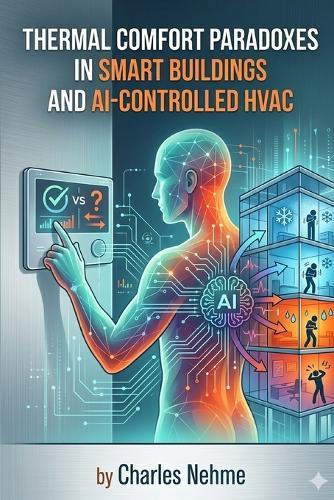
OverviewThe modern building is no longer a passive shell responding to climate. It has become an active, sensing, learning, and continuously adjusting organism. Heating, ventilation, and air conditioning systems-once designed around fixed assumptions and steady-state calculations-are now governed by algorithms that learn from occupancy patterns, predict thermal loads, and optimize energy consumption in real time. Yet, despite this technological evolution, one persistent contradiction remains: occupants still feel too hot, too cold, or simply uncomfortable in buildings that are technically operating ""within design parameters."" This is the central paradox explored in this book. As HVAC systems become more intelligent through AI, machine learning, and advanced Building Management Systems (BMS), the definition of comfort is increasingly treated as a data problem rather than a human experience. Temperature, humidity, CO₂ levels, and airflow are measured with precision. Optimization targets are achieved. Energy consumption is reduced. And still, complaints persist. Why? Because thermal comfort is not purely physical-it is psychological, contextual, and deeply individual. AI-driven HVAC systems optimize for averages, patterns, and efficiency curves, while humans experience comfort through variability, expectation, adaptation, and perception. This book is written for engineers, designers, facility managers, and decision-makers who are facing this disconnect firsthand. It does not reject AI in HVAC systems; rather, it questions how it is being applied, and whether current optimization strategies are truly aligned with human-centric design. The goal is not to simplify the problem, but to expose its layers: technical, behavioral, and organizational. By understanding where intelligent systems succeed and where they fail in interpreting human comfort, we can move toward a more balanced and realistic approach to smart building design. Ultimately, this book argues that the future of HVAC is not just smarter control-but better judgment. And judgment requires more than data. Full Product DetailsAuthor: Charles NehmePublisher: Independently Published Imprint: Independently Published Dimensions: Width: 15.20cm , Height: 1.10cm , Length: 22.90cm Weight: 0.272kg ISBN: 9798197423900Pages: 198 Publication Date: 18 May 2026 Audience: General/trade , General Format: Paperback Publisher's Status: Active Availability: Available To Order We have confirmation that this item is in stock with the supplier. It will be ordered in for you and dispatched immediately. Table of ContentsReviewsAuthor InformationTab Content 6Author Website:Countries AvailableAll regions |
||||