Overview
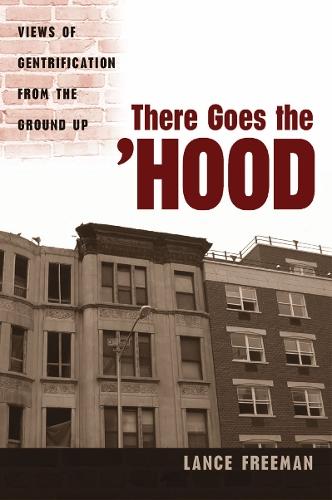
In this revealing book, Lance Freeman sets out to answer a seemingly simple question: how does gentrification actually affect residents of neighborhoods in transition? To find out, Freeman does what no scholar before him has done. He interviews the indigenous residents of two predominantly black neighborhoods that are in the process of gentrification: Harlem and Clinton Hill, Brooklyn. By listening closely to what people tell him, he creates a more nuanced picture of the impacts of gentrification on the perceptions, attitudes and behaviors of the people who stay in their neighborhoods. Freeman describes the theoretical and planning/policy implications of his findings, both for New York City and for any gentrifying urban area. There Goes the 'Hood provides a more complete, and complicated, understanding of the gentrification process, highlighting the reactions of long-term residents. It suggests new ways of limiting gentrification's negative effects and of creating more positive experiences for newcomers and natives alike.
Full Product Details
Author: Lance Freeman
Publisher: Temple University Press,U.S.
Imprint: Temple University Press,U.S.
Dimensions:
Width: 15.20cm
, Height: 2.00cm
, Length: 22.90cm
Weight: 0.340kg
ISBN: 9781592134373
ISBN 10: 1592134378
Pages: 248
Publication Date: 16 June 2006
Audience:
Professional and scholarly
,
Professional & Vocational
Format: Paperback
Publisher's Status: Active
Availability: In Print

This item will be ordered in for you from one of our suppliers. Upon receipt, we will promptly dispatch it out to you. For in store availability, please contact us.
Reviews
""Focusing on New York City neighborhoods Harlem, in Manhattan, and Brooklyn's Clinton Hill, [Freeman] asks residents about everything from widespread retail development to expensive apartments and residential developments. What he uncovers is a 'nuanced reaction toward gentrification...welcome by some and feared and loathed by others, and even dreaded and welcomed at the same time by the same people.' It's Freeman's pursuit of this duality that makes the book strong-he's willing to admit that gentrification is both a pleasure and a problem, rather than setting up camp on one side. That sense of balance, combined with the powerful voices of the folks involved, that makes this study important and informative."" Publishers Weekly ""This book will add much to the gentrification debates. We know very little about black neighborhoods and how they are changing. This is an important piece of work."" Kathe Newman, Rutgers University ""A welcome addition to the literature on gentrification in US cities."" Choice ""The book is written in clear, straightforward prose and Freeman is to be commended for his original approach, and for his mixed-methods strategy...This is a well-researched, well-written and interesting book, but deeply controversial and likely to be used by promoters of gentrification as a very solid academic endorsement"". Housing Studies ""In There Goes the 'Hood, Freeman is much more critical of the gentrification process, and it is his critique that is the substantive impact of this book. The impact is strongest where he argues against the much heralded poverty deconcentration thesis in the United States, in programmes like HOPE VI and Moving to Opportunity...[T]his book is well worth reading. It is motivated by pragmatic concerns about how planning and policy can create more just and livable cities, concerns that I and many others share. Given the way that gentrification is being promoted by urban policy makers worldwide as the solution for inner-city woes this book provides a more balanced view of the pros and cons of gentrification than most to date."" Environment and Planning A ""There Goes the 'Hood focuses on the experience of gentrification and in that regard it is an important work in the ongoing struggles over neighborhood change. By being honest about race, by focusing strongly on human beings and their stories, and by setting a strong goal of nuanced storytelling, Freeman has consciously opened more doors for future research than he has closed. For anyone interested in the subject, and especially those interested in contributing their voice to the growing literature, it is a worthwhile and important read."" The Berkeley Planning Journal ""Impressive...Perhaps his singular accomplishment is to correct academic literature's glaringly simple-minded assumption that residents of poor black gentrifying neighborhoods have uniform reactions to what is happening to their home territory. For doing this alone, he deserves applause, because, as hard as it might be to believe, this insight will come as news to many."" The Journal of Planning Education and Research ""There Goes the 'Hood represents a new complementary approach to research on gentrification...The book is well worth reading for urban geographers and planners, especially because Freeman presents a balanced view that takes both the good and the bad sides of gentrification into account and brings out the indigenous residents' perception of the process."" The Journal of Housing and the Built Environment ""I am recommending this book highly...it is a substantial contribution to the literature on gentrification and, additionally, to the literature on predominantly African American neighborhoods."" Urban Affairs Review ""[R]elevant, local, and a contribution to the great debate over gentrification."" - Inga Saffron, Philadelphia Enquirer
Focusing on New York City neighborhoods Harlem, in Manhattan, and Brooklyn's Clinton Hill, [Freeman] asks residents about everything from widespread retail development to expensive apartments and residential developments. What he uncovers is a 'nuanced reaction toward gentrification...welcome by some and feared and loathed by others, and even dreaded and welcomed at the same time by the same people.' It's Freeman's pursuit of this duality that makes the book strong-he's willing to admit that gentrification is both a pleasure and a problem, rather than setting up camp on one side. That sense of balance, combined with the powerful voices of the folks involved, that makes this study important and informative. Publishers Weekly This book will add much to the gentrification debates. We know very little about black neighborhoods and how they are changing. This is an important piece of work. Kathe Newman, Rutgers University A welcome addition to the literature on gentrification in US cities. Choice The book is written in clear, straightforward prose and Freeman is to be commended for his original approach, and for his mixed-methods strategy...This is a well-researched, well-written and interesting book, but deeply controversial and likely to be used by promoters of gentrification as a very solid academic endorsement . Housing Studies In There Goes the 'Hood, Freeman is much more critical of the gentrification process, and it is his critique that is the substantive impact of this book. The impact is strongest where he argues against the much heralded poverty deconcentration thesis in the United States, in programmes like HOPE VI and Moving to Opportunity...[T]his book is well worth reading. It is motivated by pragmatic concerns about how planning and policy can create more just and livable cities, concerns that I and many others share. Given the way that gentrification is being promoted by urban policy makers worldwide as the solution for inner-city woes this book provides a more balanced view of the pros and cons of gentrification than most to date. Environment and Planning A There Goes the 'Hood focuses on the experience of gentrification and in that regard it is an important work in the ongoing struggles over neighborhood change. By being honest about race, by focusing strongly on human beings and their stories, and by setting a strong goal of nuanced storytelling, Freeman has consciously opened more doors for future research than he has closed. For anyone interested in the subject, and especially those interested in contributing their voice to the growing literature, it is a worthwhile and important read. The Berkeley Planning Journal Impressive...Perhaps his singular accomplishment is to correct academic literature's glaringly simple-minded assumption that residents of poor black gentrifying neighborhoods have uniform reactions to what is happening to their home territory. For doing this alone, he deserves applause, because, as hard as it might be to believe, this insight will come as news to many. The Journal of Planning Education and Research There Goes the 'Hood represents a new complementary approach to research on gentrification...The book is well worth reading for urban geographers and planners, especially because Freeman presents a balanced view that takes both the good and the bad sides of gentrification into account and brings out the indigenous residents' perception of the process. The Journal of Housing and the Built Environment I am recommending this book highly...it is a substantial contribution to the literature on gentrification and, additionally, to the literature on predominantly African American neighborhoods. Urban Affairs Review
Focusing on New York City neighborhoods Harlem, in Manhattan, and Brooklyn's Clinton Hill, [Freeman] asks residents about everything from widespread retail development to expensive apartments and residential developments. What he uncovers is a 'nuanced reaction toward gentrification...welcome by some and feared and loathed by others, and even dreaded and welcomed at the same time by the same people.' It's Freeman's pursuit of this duality that makes the book strong-he's willing to admit that gentrification is both a pleasure and a problem, rather than setting up camp on one side. That sense of balance, combined with the powerful voices of the folks involved, that makes this study important and informative. Publishers Weekly This book will add much to the gentrification debates. We know very little about black neighborhoods and how they are changing. This is an important piece of work. Kathe Newman, Rutgers University A welcome addition to the literature on gentrification in US cities. Choice The book is written in clear, straightforward prose and Freeman is to be commended for his original approach, and for his mixed-methods strategy...This is a well-researched, well-written and interesting book, but deeply controversial and likely to be used by promoters of gentrification as a very solid academic endorsement . Housing Studies In There Goes the 'Hood, Freeman is much more critical of the gentrification process, and it is his critique that is the substantive impact of this book. The impact is strongest where he argues against the much heralded poverty deconcentration thesis in the United States, in programmes like HOPE VI and Moving to Opportunity...[T]his book is well worth reading. It is motivated by pragmatic concerns about how planning and policy can create more just and livable cities, concerns that I and many others share. Given the way that gentrification is being promoted by urban policy makers worldwide as the solution for inner-city woes this book provides a more balanced view of the pros and cons of gentrification than most to date. Environment and Planning A There Goes the 'Hood focuses on the experience of gentrification and in that regard it is an important work in the ongoing struggles over neighborhood change. By being honest about race, by focusing strongly on human beings and their stories, and by setting a strong goal of nuanced storytelling, Freeman has consciously opened more doors for future research than he has closed. For anyone interested in the subject, and especially those interested in contributing their voice to the growing literature, it is a worthwhile and important read. The Berkeley Planning Journal Impressive...Perhaps his singular accomplishment is to correct academic literature's glaringly simple-minded assumption that residents of poor black gentrifying neighborhoods have uniform reactions to what is happening to their home territory. For doing this alone, he deserves applause, because, as hard as it might be to believe, this insight will come as news to many. The Journal of Planning Education and Research There Goes the 'Hood represents a new complementary approach to research on gentrification...The book is well worth reading for urban geographers and planners, especially because Freeman presents a balanced view that takes both the good and the bad sides of gentrification into account and brings out the indigenous residents' perception of the process. The Journal of Housing and the Built Environment I am recommending this book highly...it is a substantial contribution to the literature on gentrification and, additionally, to the literature on predominantly African American neighborhoods. Urban Affairs Review [R]elevant, local, and a contribution to the great debate over gentrification. - Inga Saffron, Philadelphia Enquirer
Author Information
Lance Freeman is Assistant Professor, Graduate School of Architecture, Planning and Preservation, Columbia University.