Overview
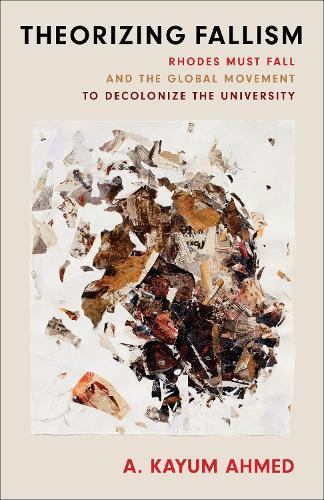
In 2015, students at the University of Cape Town ignited a movement that would reverberate across the globe by demanding the removal of a statue of the British imperialist Cecil Rhodes. What began as a protest against a single monument became Rhodes Must Fall: a confrontation with colonial legacies at South African universities that inspired a movement at Oxford and beyond. A. Kayum Ahmed tells the powerful story of Rhodes Must Fall, tracing the emergence of a new decolonial framework, Fallism, and its trajectory from Africa to empire. Drawing on archival research and interviews with activists, he interprets Fallism as both a critique of the university-rooted in patriarchy, white supremacy, and capitalism-and a broader decolonial theory. Ahmed reveals how students combined acts of defiance with deeper forms of intellectual insurgency to challenge Eurocentric curricula, linguistic hierarchies, and the silencing of Black epistemologies. In so doing, they transformed Black pain-the source of the uprising-into a collective struggle for Black liberation. By following Fallism's journey, this book demonstrates how student movements create new vocabularies of resistance that transcend geographies of power. It underscores why universities remain battlegrounds in global struggles, from conflicts over statues and curricula to pro-Palestinian protests. Both a history of a movement and a theoretical intervention, Theorizing Fallism illuminates the enduring influence of students to challenge entrenched structures of knowledge and power.
Full Product Details
Author: A. Kayum Ahmed
Publisher: Columbia University Press
Imprint: Columbia University Press
ISBN: 9780231212731
ISBN 10: 0231212739
Pages: 328
Publication Date: 05 May 2026
Audience:
Professional and scholarly
,
College/higher education
,
Professional & Vocational
,
Postgraduate, Research & Scholarly
Format: Paperback
Publisher's Status: Active
Availability: Awaiting stock

The supplier is currently out of stock of this item. It will be ordered for you and placed on backorder. Once it does come back in stock, we will ship it out for you.
Reviews
Theorizing Fallism captures the alchemy of study and struggle, following students who force universities to confront their own contradictions. By centering movements across time and place, Ahmed exposes how universities fetishize freedom while reproducing domination—and how collective refusal turns campuses, classrooms, and encampments into experiments in decolonial world-making. Essential reading for everyone who cares about the future of the university! -- Ruha Benjamin, author of <i>Imagination: A Manifesto</i> Theorizing Fallism is a vital archive of how contemporary student movements rename, occupy, and reimagine space as theory. From Azania House at the University of Cape Town, to Columbia’s The People’s University, Ahmed shows students reconfiguring the university’s physical and ideological architecture, exposing institutional complicity while advancing alternative visions of education, solidarity, and justice beyond the university’s limits. -- Simamkele Dlakavu, author of <i>Asijiki: Black Women in the Economic Freedom Fighters, Owning Space, Building a Movement</i> Rich in primary source material, including the voices of student and worker activists, Theorizing Fallism serves as an invaluable archival resource on the evolution of the Rhodes Must Fall movements at University of Cape Town and Oxford. Ahmed meticulously documents events, timelines, ideas, and debates in a manner that equips scholars to grasp the context, significance, and legacy of the movement. -- Anye-Nkwenti Nyamnjoh, Researcher, University of Capetown Ahmed treats student movements as sites of knowledge production, linking Rhodes Must Fall to pro-Palestinian encampments that reclaim colonial space through public pedagogy. Framed as deliberate political projects rather than spontaneous eruptions, these movements reveal students’ generative power to exceed colonial imaginaries in the pursuit of a more just future. -- Sueda Polat, Organizer, Columbia University Apartheid Divest (CUAD)
Rich in primary source material, including the voices of student and worker activists, Theorizing Fallism serves as an invaluable archival resource on the evolution of the Rhodes Must Fall movements at University of Cape Town and Oxford. Ahmed meticulously documents events, timelines, ideas, and debates in a manner that equips scholars to grasp the context, significance, and legacy of the movement. -- Anye-Nkwenti Nyamnjoh, Researcher, University of Capetown Theorizing Fallism is a vital archive of how contemporary student movements rename, occupy, and reimagine space as theory. From Azania House at the University of Cape Town, to Columbia’s The People’s University, Ahmed shows students reconfiguring the university’s physical and ideological architecture, exposing institutional complicity while advancing alternative visions of education, solidarity, and justice beyond the university’s limits. -- Simamkele Dlakavu, author of <i>Asijiki: Black Women in the Economic Freedom Fighters, Owning Space, Building a Movement</i> Theorizing Fallism captures the alchemy of study and struggle, following students who force universities to confront their own contradictions. By centering movements across time and place, Ahmed exposes how universities fetishize freedom while reproducing domination—and how collective refusal turns campuses, classrooms, and encampments into experiments in decolonial world-making. Essential reading for everyone who cares about the future of the university! -- Ruha Benjamin, author of <i>Imagination: A Manifesto</i>
Rich in primary source material, including the voices of student and worker activists, Theorizing Fallism serves as an invaluable archival resource on the evolution of the Rhodes Must Fall movements at University of Cape Town and Oxford. Ahmed meticulously documents events, timelines, ideas, and debates in a manner that equips scholars to grasp the context, significance, and legacy of the movement. -- Anye-Nkwenti Nyamnjoh, Researcher, University of Capetown Theorizing Fallism is a vital archive of how contemporary student movements rename, occupy, and reimagine space as theory. From Azania House at the University of Cape Town, to Columbia’s The People’s University, Ahmed shows students reconfiguring the university’s physical and ideological architecture, exposing institutional complicity while advancing alternative visions of education, solidarity, and justice beyond the university’s limits. -- Simamkele Dlakavu, author of <i>Asijiki: Black Women in the Economic Freedom Fighters, Owning Space, Building a Movement</i>
Rich in primary source material, including the voices of student and worker activists, Theorizing Fallism serves as an invaluable archival resource on the evolution of the Rhodes Must Fall movements at University of Cape Town and Oxford. Ahmed meticulously documents events, timelines, ideas, and debates in a manner that equips scholars to grasp the context, significance, and legacy of the movement. -- Anye-Nkwenti Nyamnjoh, Researcher, University of Capetown
Author Information
A. Kayum Ahmed is a South African activist-scholar and the author of a children’s book, A Is for Amandla: The ABC Guide for Young Revolutionaries (and Their Parents). He has taught at Columbia University and held visiting scholar roles at Birzeit University and Harvard University. Kayum previously served as CEO of the South African Human Rights Commission.