Overview
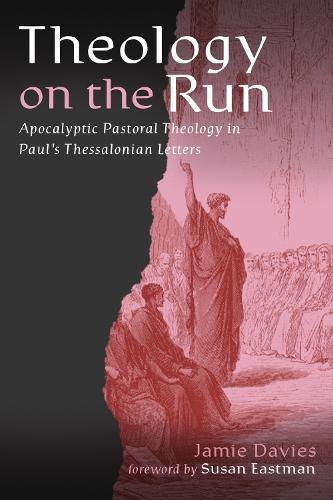
Writing a study in apocalyptic pastoral theology may sound like an exercise in ""performative self-contradiction."" But such an endeavor reminds us that the imminent expectation of the Lord's return, a pervasive hope in the first generation of the Jesus movement, is not an embarrassing, superfluous doctrine of little value to ordinary Christian life. Against the assumptions of many in the guild of New Testament studies, it was not Paul but Jesus himself who first gave Christian theology its apocalyptic urgency. From its very beginnings, then, Christian theology was ""theology on the run."" This was true for Paul, who penned his correspondence to Thessalonica while literally ""on the run"" from the city. Joining a long line of readers of these letters, Jamie Davies explores how Paul's eschatological conviction, together with convictions about epistemology and cosmology, constituted his ""apocalyptic DNA,"" shaping every aspect of his thinking and practice. Through study of these contours of Paul's apocalyptic thought, Theology on the Run brings forward Paul in pastoral mode as he addresses the challenges of life in the ""real world"" of the fledgling Thessalonian church. A consideration of what Paul's apocalyptic thought might mean for his work as a practical and pastoral theologian in first-century Macedonia, concerned with planting and sustaining faithful churches in tumultuous times, presents a compelling argument for how and why those engaged in the ministry of the church today, and those who teach them, need an appreciation of Paul's apocalyptic pastoral theology in our own efforts to do ""theology on the run."" Readers of Paul often cite Ernst Käsemann's maxim that apocalyptic eschatology was the ""mother of Christian theology."" To this Davies adds another: ""Christian ethics is lived-out eschatology."" At the center of any account of ethics, of which pastoral theology is part, is the question of metaphysics—what is the ""real world""? In the Thessalonian letters we see Paul bringing the apocalyptic reality of the new creation to bear on the pastoral situation in Thessalonica, facing challenges of grief, work, sex, truth, power, and oppression—enduring challenges for the church today. Paul meets these challenges by reframing them according to his apocalyptic gospel. As such, he demonstrates a pastoral theology that challenges us to think beyond Christian glosses on human philosophic traditions or social-psychological practices through the unbreakable relationship between this apocalyptic gospel and ministerial practice.
Full Product Details
Author: Jamie Davies ,
Susan Grove Eastman
Publisher: Baylor University Press
Imprint: Baylor University Press
ISBN: 9781481324502
ISBN 10: 1481324500
Pages: 277
Publication Date: 15 December 2025
Audience:
College/higher education
,
Postgraduate, Research & Scholarly
Format: Hardback
Publisher's Status: Active
Availability: Not yet available

This item is yet to be released. You can pre-order this item and we will dispatch it to you upon its release.
Author Information
Jamie Davies is Tutor in New Testament and Director of Postgraduate Research at Trinity College, Bristol.