Overview
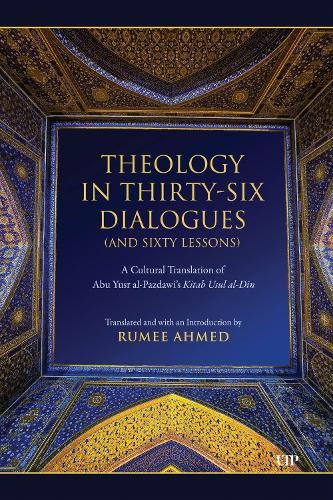
Late in the 11th century, renowned Hanafi scholar Abu Yusr al-Pazdawi wrote a theological treatise that became one of the most celebrated books in Muslim history. This book is the first English translation of that manuscript, Kitab Usul al-Din. Written in a highly accessible style, Kitab Usul al-Din introduces readers to theology through conversations on some of the most important theological issues in history: Why did God create us? Where do we go when we die? What makes someone a good person? Does God love us? Al-Pazdawi situates central issues in Islamic thought within a series of dialogues and debates, and challenges readers to draw their own conclusions. Presented here for the first time in English, Theology in Thirty-Six Dialogues (and Sixty Lessons) offers al-Pazdawi's text as a foundational introduction to Islamic theology for English speakers. Islamic studies professor Rumee Ahmed begins each dialogue with brief contextualising notes that familiarise readers with the topics under discussion. Staying true to al-Pazdawi's call-and-response style, Ahmed's translation is presented as a series of acts and Socratic dialogues that preserve the performative nature of the original and engage the reader in a dynamic way. Putting forth a reflective and unprecedented translation, this book invites readers of all backgrounds to engage with the most vital issues in Islamic thought.
Full Product Details
Author: Abu Yusr al-Pazdawi , Rumee Ahmed
Publisher: University of Toronto Press
Imprint: University of Toronto Press
Dimensions:
Width: 16.30cm
, Height: 2.70cm
, Length: 23.50cm
Weight: 0.640kg
ISBN: 9781487575618
ISBN 10: 1487575610
Pages: 378
Publication Date: 24 March 2026
Audience:
College/higher education
,
Professional and scholarly
,
Tertiary & Higher Education
,
Professional & Vocational
Format: Hardback
Publisher's Status: Active
Availability: Not yet available, will be POD 
This item is yet to be released. You can pre-order this item and we will dispatch it to you upon it's release. This is a print on demand item which is still yet to be released.
Table of Contents
Translator’s Foreword Introduction Lesson 1: On Studying, Teaching, and Writing about Theology Dialogue I: Objects and Perceptions Are Real Dialogue II: How Humans Know Things Lesson 2: How Things Are Inferred Lesson 3: The Senses Lesson 4: Verbal Reports Lesson 5: What Is Knowledge? Lesson 6: The Different Kinds of Knowledge Lesson 7: Understanding the Universe Lesson 8: On Accidental Properties Dialogue III: The Universe Materialized at Some Point Lesson 9: God Is Singular and Has No Partners Dialogue IV: God Most High Is Unlike Anything and Nothing Is Like God Dialogue V: God Most High Has No Direction Dialogue VI: God Most High Hears and Sees Dialogue VII: On the Attributes of God Most High Lesson 10: God Most High’s Will and Intent Dialogue VIII: Every Object and Act Materializes by the Will of God Most High Dialogue IX: God’s Speech Subsists Eternally with God Most High Dialogue X: On Bringing-Into-Existence and Bringing-Into-Being Dialogue XI: On Seeing God Most High Dialogue XII: Names, Naming, and the Named Dialogue XIII: On the Advent of Messengers, upon Whom Be Peace Dialogue XIV: The Messengerhood of Adam, upon Whom Be Peace Dialogue XV: Against Those Who Would Deny the Messengerhood of Particular Messengers Dialogue XVI: All Human Acts Are Created by God Most High Lesson 11: The Two Kinds of Material Acts Dialogue: XVII: Indirect Consequences Dialogue XVIII: Acts Are Not Preceded by the Power to Act Dialogue XIX: The Energy Bestowed by God for One Act Can Be Diverted to a Different Act Dialogue XX: On Being Tasked Beyond One’s Endurance Lesson 12: Corollaries to the Position That the Power to Act Comes to Be Alongside the Act Itself Dialogue XXI: Nothing Whatsoever is Compulsory for God Lesson 13: Why Did God Most High Create the Universe? Dialogue XXII: Muslims Who Commit Major Sins Will Not Enter Hell Dialogue XXIII: Does Avoiding Major Sins Expiate Minor Sins? Dialogue XXIV: Understanding Belief Lesson 14: Does One Need to Know All the Details of Belief, or Just Its General Outline? Lesson 15: Blind Followers Are Still Believers Lesson 16: On Belief Increasing and Decreasing Lesson 17: The Difference Between Belief and Islam Dialogue XXV: Is Belief Created? Lesson 18: The Resurrection Is Real Lesson 19: The Path Is a Reality Lesson 20: The Accounting on the Day of Judgment Is Real Lesson 21: The Fountain of Kawthar and Intercession Are Real Dialogue XXVI: Will People Be Punished in Their Graves? Lesson 22: The Questioning in the Grave by Munkar and Nakir Lesson 23: The Garden and the Fire Are Both Created Lesson 24: Heaven and Hell Will Never Be Destroyed Lesson 25: A Person Who Is Murdered Dies at Their Appointed Time Dialogue XXVII: On the Infallibility of Prophets and Messengers Dialogue XXVIII: Can a Damned Person Become Felicitous and a Felicitous Person Damned? Dialogue XXIX: The Caliphate after the Prophet Lesson 26: The Legitimacy of the Caliphate of ʿUmar, May God Be Pleased with Him Lesson 27: The Legitimacy of the Calpihate of ʿUthman, May God Be Pleased with Him Lesson 28: The Caliphate of ʿAli, May God Be Pleased with Him Lesson 29: Must There Always Be a Leader? Lesson 30: The Qualities of a Leader Lesson 31: When a Lesser Candidate is Named Caliph and the Best Candidate is Passed Over Lesson 32: When a Caliph Appoints a Successor at the End of Their Life (and When No Successor Is Named at All) Lesson 33: When Two Leaders Demand Allegiance Lesson 34: Should a Leader Be Deposed for Corruption or Similar Crimes? Lesson 35: How Should a Corrupt Leader Be Dealt With? Lesson 36: What If a Leader is Overthrown? Lesson 37: Did the Prophet Delegate Leadership to Anyone After Him? Dialogue XXX: The Best People after the Prophet Lesson 38: On the Dispute Between ʿAli and Muʿawiya, May God Be Pleased With Them Both Lesson 39: On Muʿawiya’s Leadership After the Death of ʿAli, May God Be Pleased with Him, and on Yazid ibn Muʿawiya Dialogue XXXI: Who is Better, Angels, upon Whom Be Peace, or Muslims? Lesson 40: Ranking Human Messengers, Angelic Messengers, and Humans Lesson 41: Reward and Punishment for Jinns Lesson 42: The Intellect Is a Tool for Cognizing Things Dialogue XXXII: Can the Intellect Make Things Compulsory? Dialogue XXXIII: The Pledge Taken from the Progeny of Adam, upon Whom Be Peace Dialogue XXXIV: On Non-Existents Dialogue XXXV: Evil Thoughts Lesson 43: On Language Lesson 44: On the Miraculousness of the Qurʾan Lesson 45: Each Part of the Qurʾan Is Equally Superlative Lesson 46: On Islam and Belief Lesson 47: The Difference between Prophets and Messengers Lesson 48: God Most High’s Regalia Lesson 49: Can Anything Be Said about the Spirit? Lesson 50: Life and the Spirit Lesson 51: What Is Air? Lesson 52: Jinns, Devils, and Their Acts Lesson 53: What Is Repentance and When Is It Accepted? Lesson 54: On Supernatural Acts Performed by Saints Lesson 55: Children’s Place in the Afterlife Lesson 56: On the Co-Presence of Atoms in a Single Space Lesson 57: Sharia and Reality Dialogue XXXVI: Can a Thing Be Known in One Sense and Unknown in Another? Lesson 58: Defining the Ahl al-Sunna wa-l Jamaʿa Lesson 59: The Ahl al-Qibla Broke into Sects Lesson 60: Enumerating the Schools and Sects of the Ahl al-Qibla Afterword
Reviews
Author Information
Rumee Ahmed is a Canada Research Chair in Theology and Ethics and professor of Islamic law at the University of British Columbia.
Tab Content 6
Author Website:
Countries Available
All regions
|