Overview
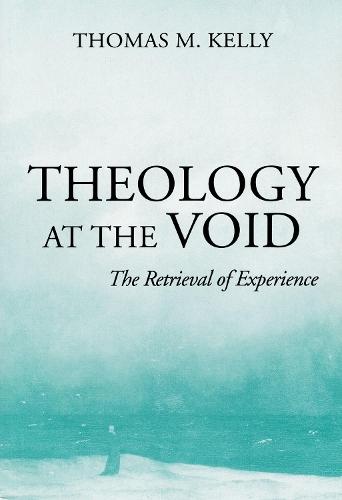
Theology at the Void explores the intersection of three central questions: What is human being? What is language? What is theology? Drawing on the writings of five major intellectuals from various religious and academic traditions, Thomas Kelly seeks to answer these questions by tracing the emergence of a problem that arises when various modes of thought disagree on the relationship between experience, language, and theological inquiry. Kelly begins the discussion with an analysis of Friedrich Schleiermacher's understanding of human experience, language, and theology to articulate the Christian faith. Twentieth-century thinkers Wayne Proudfoot and George Lindbeck are introduced early in the text as critics of Schleiermacher's approach, which, they maintain, is dependent upon a culturally limited theological anthropology. Kelly argues that contrary to Schleiermacher's ""turn to the subject"" theological methodology, postmodern thinkers assign no priority to experience but rather assert that languages and cultural systems construct experience. As one solution to the tension between these two camps, Kelly proposes two alternative approaches: George Steiner and Karl Rahner. In his book Real Presences, renowned literary critic George Steiner suggests a possibility for moving beyond the more radical anthropological elements of the postmodern critique. Karl Rahner offers a theological alternative that is sensitive both to the postmodern critique as well as to the nature of Catholic theology. Kelly demonstrates how both of these great thinkers provide a viable resolution to a major problem facing systematic theology. In the end, Kelly finds Rahner's resolution most persuasive. Theology at the Void is an engaging assessment of the problem of whether one can formulate a theology using human experience as its fundamental principle.
Full Product Details
Author: Thomas M. Kelly
Publisher: University of Notre Dame Press
Imprint: University of Notre Dame Press
ISBN: 9780268033521
ISBN 10: 0268033528
Pages: 224
Publication Date: 31 January 2002
Audience:
College/higher education
,
Professional and scholarly
,
Undergraduate
,
Postgraduate, Research & Scholarly
Format: Hardback
Publisher's Status: Active
Availability: Temporarily unavailable

The supplier advises that this item is temporarily unavailable. It will be ordered for you and placed on backorder. Once it does come back in stock, we will ship it out to you.
Reviews
In religious discourse, what are the warrants for truth-claims of statements about God or about human existence under the ordinance of God? Kelly (theology, St. Anselm Coll.) addresses this question by examining the proposals of several significant thinkers of the 19th and 20th centuries, asking whether theological conversation is moving toward something or toward nothing at all. He begins with Friedrich Schleiermacher, who claimed that we experience God and then use language to mediate this human experience. Kelly next considers Wayne Proudfoot and George Lindbeck, two postmodern critics of Schleiermacher for whom language forms experience and does not simply mediate it. Kelly then turns to literary critic George Steiner, who proposes that both language and experience move the subject beyond the limits of the self to the experience of some ""other,"" and, finally, to Karl Rahner, for whom the problems of circularity and solipsism inherent in postmodern struggles are best addressed by asserting the self-evident nature of mystery and the quotidian function of human transcendence. Because of the specialized nature of the book, it is recommended exclusively for university and seminary libraries. David I. Fulton, Coll. of St. Elizabeth, Morristown, NJ
"". . . based on sound scholarship, thoroughly documented, carefully argued, displaying sensitivity and balance in its interpretations . . ."" —The Heythrop Journal ""...Kelly's book is a commendable work that is clearly written and thorough in its presentation of the contemporary postmodern debate about the relationship between language and experience...Kelly's fine text is one theologically viable response to the void that avoids mere posturing."" —Journal of the American Academy of Religion “Recommended...” —Library Journal “[A]n evocative, thoughtful exploration of three core questions: What is human being? What is language? What is theology? Thomas Kelly absorbs the wisdom from the writings of five intellectuals to present a full-fleshed analysis of paradoxes and issues that deal with the heart of individual identity. [S]trongly recommended....” —Midwest Book Review “[T]he book nicely highlights limitations of postmodernist approaches, and it illustrates well significant differences and implications on the topics of religious experience, language, and doctrine.” —Catholic Studies: An On-Line Journal “...[I]nteresting for specialists who want to think about the theological implications relating to language and experience in the context of the post-modernist/deconstructionist debate....” —Scottish Bulletin of Evangelical Theology “...a valuable contribution to the contemporary discussion.” —Religious Studies Review “...[A] timely contribution to a central issue in contemporary fundamental theology.” —Theological Studies “…valuable in the urgent questions that it deals with and its often very lucid exposition of its main intellectuals…” —Journal of Theological Studies “Thomas Kelly clearly and precisely situates the work of Karl Rahner within the contemporary context of postmodernism and deconstruction. In so doing, he makes a significant contribution to the conversation concerning the deepest philosophical and theological issues of our times.” —Dennis Doyle, associate professor of religious studies, University of Dayton “Theology at the Void makes a discerning argument for a theological retrieval of aspects of both modern and postmodern insights to articulate a theological perspective which takes seriously both the turn to the subject and the turn to language. Its analysis pinpoints a number of the key issues which postmodernity raises for contemporary theology, engages these seriously and offers a constructive, nontrivializing response.” —Robert Masson, associate professor of theology, Marquette University and associate editor of Philosophy & Theology “Modern theology qua modern begins with Schleiermacher’s ‘turn to the subject’ in terms of experience as the ground for theological affirmations. With the contemporary ‘linguistic turn’ the modern turn has become problematic, especially with the postmodern understanding of language as constitutive of experience rather than as merely expressive. Accepting the critique of moderate postmodern thought, Kelly offers a critical retrieval of experience, as significantly conditioned without being totally constituted by language, for theological inquiry. Kelly joins other contemporary theologians in finding in Karl Rahner an anticipation of the postmodern concern with the formative power of language on experience. This book is a well-focused contribution to this contemporary discussion.” —Michael J. Scanlon, O.S.A., Josephine C. Connelly Chair in Christian Theology, Villanova University
"In religious discourse, what are the warrants for truth-claims of statements about God or about human existence under the ordinance of God? Kelly (theology, St. Anselm Coll.) addresses this question by examining the proposals of several significant thinkers of the 19th and 20th centuries, asking whether theological conversation is moving toward something or toward nothing at all. He begins with Friedrich Schleiermacher, who claimed that we experience God and then use language to mediate this human experience. Kelly next considers Wayne Proudfoot and George Lindbeck, two postmodern critics of Schleiermacher for whom language forms experience and does not simply mediate it. Kelly then turns to literary critic George Steiner, who proposes that both language and experience move the subject beyond the limits of the self to the experience of some ""other,"" and, finally, to Karl Rahner, for whom the problems of circularity and solipsism inherent in postmodern struggles are best addressed by asserting the self-evident nature of mystery and the quotidian function of human transcendence. Because of the specialized nature of the book, it is recommended exclusively for university and seminary libraries. David I. Fulton, Coll. of St. Elizabeth, Morristown, NJ"
Author Information
Thomas M. Kelly is professor of systematic theology at Creighton University and immersion coordinator for the Ignatian Colleagues Program, a national program of the Association of Jesuit Colleges and Universities.