Overview
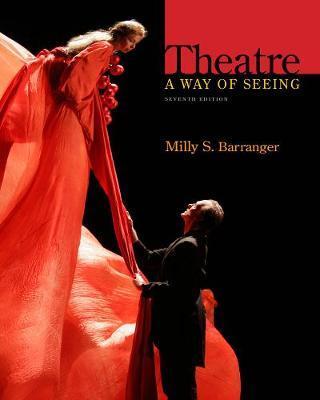
Experience theatre as 'a performing art and humanistic event.' THEATRE: A WAY OF SEEING is an exciting introduction to all aspects of theatre: who sees it, what is seen, and where and how it is seen. The author presents the theatre experience from the viewpoint of audiences exposed to a complex, living art that involves people, spaces, plays, designs, staging, forms, language, and productions.
Full Product Details
Author: Milly Barranger (University of North Carolina, Chapel Hill)
Publisher: Cengage Learning, Inc
Imprint: Wadsworth Publishing Co Inc
Edition: 7th edition
Dimensions:
Width: 19.80cm
, Height: 24.80cm
, Length: 2.20cm
Weight: 0.790kg
ISBN: 9781133309895
ISBN 10: 1133309895
Pages: 416
Publication Date: 01 January 2014
Audience:
College/higher education
,
Tertiary & Higher Education
Format: Paperback
Publisher's Status: Active
Availability: In Print 
This item will be ordered in for you from one of our suppliers. Upon receipt, we will promptly dispatch it out to you. For in store availability, please contact us.
Table of Contents
Preface. Part I: THEATRE'S SEEING PLACES. 1. Discovering Theatre. The Immediate Art. Theatre's Immediacy. Theatre's Aliveness. Reflections in the Mirror. Theatre's Fictions. Theatre's Spaces. Theatre's Audiences. 2. The Seeing Place. Ritual and Theatre. Theatrical Performance. Western Theatre. Eastern Theatre. 3. Alternative Theatrical Spaces. Environmental Theatre. Forerunners of Alternative Approaches. The Polish Laboratory Theatre. The Living Theatre. Theatre du Soleil. The Bread and Puppet Theatre. The Free Southern Theatre. Part II: PLAYWRIGHTS, PERSPECTIVES, AND FORMS. 4. Image Maker: The Playwright. The Play and the Audience. The Playwright's Beginnings. The Playwright's Role. The Playwright's Tools. The Playwright's Industry. New American Writing: Alternative Voices. 5. Theatrical Writing: Perspectives and Forms. Drama's Perspectives. Tragedy. Comedy. Tragicomedy. Melodrama. Farce. Stage Adaptations. Epic Theatre. Absurdist Theatre. 6. Structures of Seeing. The Playwright's Art. Play Structures. Recent Structures. Postmodern Texts. Visual and Audio Texts. 7. Drama's Conventions. Writing Strategies. Conventions of Time. Conventions of Metaphor. 8. Stage Language. Language for the Theatre. Types of Stage Language. Contemporary Trends in American Theatre. Part III: THEATRE'S PRACTITIONERS. 9. Image Maker: The Actor. Acting - As Imagination and Technique. The Actor's Reality. The Actor's Training. Trends in Training American Actors. Actors at Work. 10. Image Maker: The Director. Forerunners. Director as Artist. Directors at Work. Staging: Approaches and Styles. Director as Auteur. 11. Image Makers: Designers: Scenery, Costumes, Makeup, Masks, Wigs, and Puppets. The Scene Designer. The Costume Designer. Makeup, Masks, Wigs, and Puppets. 12. Image Makers: Designers: Lighting and Sound. The Lighting Designer. The Sound Designer. Computer-Aided Design for Scenery, Costumes, Lighting, Sound. Technical Production. 13. Image Makers: Producers. Producing on Broadway. Producing Off Broadway. Producing in Regional Theatres. Part IV: AMERICAN MUSICAL THEATRE. 14. The American Musical. Musical Books, Composers, Lyricists, Choreographers, and Megamusicals. Precedents. An American Musical Idiom. Post-Second World War Musical Theatre. Musical Theatre at Midcentury. Sixties Alternatives to Broadway Musicals. New Directions. British Megamusicals. Broadway's Audiences. Part V. THEATRE'S CRITICS. 15. Viewpoints. Criticism. Seeing Theatre. The Professional Critic. Glossary. Notes. Index.
Reviews
The content is absolutely 'pitch perfect' for the capabilities of the student.
Some of the greatest strengths of the text are its reading level, colorful and numerous pictures, sidebars, and the organization of content. The content is absolutely 'pitch perfect' for the capabilities of the student.
"""Some of the greatest strengths of the text are its reading level, colorful and numerous pictures, sidebars, and the organization of content."" ""The content is absolutely 'pitch perfect' for the capabilities of the student."""
Some of the greatest strengths of the text are its reading level, colorful and numerous pictures, sidebars, and the organization of content. The content is absolutely 'pitch perfect' for the capabilities of the student.
Author Information
A past president of the National Theatre Conference and the American Theatre Association and member of The College of Fellows of the American Theatre, Milly Barranger is highly regarded and a well-respected author of many books and articles on theatre and drama. She is currently Distinguished Professor Emerita of Theatre History and Theory at the University of North Carolina, Chapel Hill.
Tab Content 6
Author Website:
Countries Available
All regions
|