Awards
- Short-listed for British Society for Literature and Science Book Prize 2008
- Shortlisted for British Society for Literature and Science Book Prize 2008.
Overview
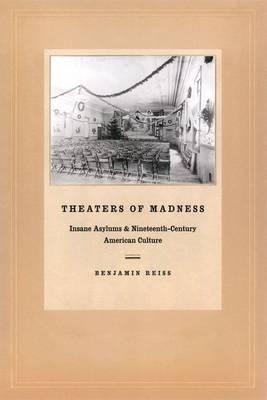
In the mid-1800s a utopian movement to rehabilitate the insane resulted in a wave of publicly funded asylums - many of which became unexpected centers of cultural activity. Housed in magnificent structures with lush grounds, patients participated in theatrical programs, debating societies, literary journals, schools, and religious services. ""Theaters of Madness"" explores both the culture these rich offerings fomented and the asylum's place in the fabric of nineteenth-century life, reanimating a time when the treatment of the insane was a central topic in debates over democracy, freedom, and modernity.Benjamin Reiss explores the creative lives of patients and the cultural demands of their doctors. Their frequently clashing views turned practically all of American culture - from blackface minstrel shows to the works of William Shakespeare - into a battlefield in the war on insanity. Reiss also shows how asylums touched the lives and shaped the writing of key figures, such as Emerson and Poe, who viewed the system alternately as the fulfillment of a democratic ideal and as a kind of medical enslavement. Without neglecting this troubling contradiction, ""Theaters of Madness"" prompts us to reflect on what our society can learn from a generation that urgently and creatively tried to solve the problem of mental illness.
Full Product Details
Author: Benjamin Reiss
Publisher: The University of Chicago Press
Imprint: University of Chicago Press
Weight: 0.476kg
ISBN: 9780226709635
ISBN 10: 0226709639
Pages: 240
Publication Date: 01 July 2008
Audience:
College/higher education
,
Undergraduate
,
Postgraduate, Research & Scholarly
Format: Hardback
Publisher's Status: Out of Stock Indefinitely
Availability: Awaiting stock

Reviews
Theaters of Madness is a fascinating read for its range of material, depth of analysis, and its theoretical clarity. . . . Reiss shows that to understand madness we need much more than the conceptual tools of psychiatry and, for that matter, of its more reactionary opponents. --Tony O'Brien Metapsychology
"Theaters of Madness is a fascinating read for its range of material, depth of analysis, and its theoretical clarity. . . . Reiss shows that to understand madness we need much more than the conceptual tools of psychiatry and, for that matter, of its more reactionary opponents.--Tony O'Brien ""Metapsychology"" ""Theaters of Madness captures the 'texture of a time' and persuasively chronicles the centrality of insanity to the era's key public debates about democracy, freedom and enslavement, and modernization. In Benjamin Reiss's hands, the asylum becomes both an arena for debating cultural assumptions and beliefs and an institution that itself changes the social order. This is a deeply engaging study of a fascinating topic.""--Priscilla Wald, Duke University --Priscilla Wald, Duke University ""Benjamin Reiss has in important and novel ways successfully linked the history of the mental hospital to crucial developments in American culture. No one before has made so many fascinating connections between the idea and practice of the asylum and the intellectual production of the antebellum era. Both students of asylums and students of culture will find Theaters of Madness provocative and illuminating.""--David J. Rothman, Columbia University --David J. Rothman, Columbia University"
Theaters of Madness captures the texture of a time and persuasively chronicles the centrality of insanity to the eras key public debates about democracy, freedom and enslavement, and modernization. In Benjamin Reisss hands, the asylum becomes both an arena for debating cultural assumptions and beliefs and an institution that itself changes the social order. This is a deeply engaging study of a fascinating topic.Priscilla Wald, Duke University -- Priscilla Wald, Duke University
Theaters of Madness captures the texture of a time' and persuasively chronicles the centrality of insanity to the era's key public debates about democracy, freedom and enslavement, and modernization. In Benjamin Reiss's hands, the asylum becomes both an arena for debating cultural assumptions and beliefs and an institution that itself changes the social order. This is a deeply engaging study of a fascinating topic. -Priscilla Wald, Duke University Theaters of Madness captures the texture of a time and persuasively chronicles the centrality of insanity to the eras key public debates about democracy, freedom and enslavement, and modernization. In Benjamin Reisss hands, the asylum becomes both an arena for debating cultural assumptions and beliefs and an institution that itself changes the social order. This is a deeply engaging study of a fascinating topic.Priscilla Wald, Duke University -- Priscilla Wald, Duke University Theaters of Madness is a fascinating read for its range of material, depth of analysis, and its theoretical clarity. . . . Reiss shows that to understand madness we need much more than the conceptual tools of psychiatry and, for that matter, of its more reactionary opponents. --Tony O'Brien Metapsychology Theaters of Madness captures the texture of a time and persuasively chronicles the centrality of insanity to the era s key public debates about democracy, freedom and enslavement, and modernization. In Benjamin Reiss s hands, the asylum becomes both an arena for debating cultural assumptions and beliefs and an institution that itself changes the social order. This is a deeply engaging study of a fascinating topic. Priscilla Wald, Duke University --Priscilla Wald, Duke University Benjamin Reiss has in important and novel ways successfully linked the history of the mental hospital to crucial developments in American culture. No one before has made so many fascinating connections between the idea and practice of the asylum and the intellectual production of the antebellum era. Both students of asylums and students of culture will find Theaters of Madness provocative and illuminating. David J. Rothman, Columbia University --David J. Rothman, Columbia University Theaters of Madness captures the 'texture of a time' and persuasively chronicles the centrality of insanity to the era's key public debates about democracy, freedom and enslavement, and modernization. In Benjamin Reiss's hands, the asylum becomes both an arena for debating cultural assumptions and beliefs and an institution that itself changes the social order. This is a deeply engaging study of a fascinating topic. --Priscilla Wald, Duke University --Priscilla Wald, Duke University Benjamin Reiss has in important and novel ways successfully linked the history of the mental hospital to crucial developments in American culture. No one before has made so many fascinating connections between the idea and practice of the asylum and the intellectual production of the antebellum era. Both students of asylums and students of culture will find Theaters of Madness provocative and illuminating. --David J. Rothman, Columbia University --David J. Rothman, Columbia University
Theaters of Madness captures the texture of a time' and persuasively chronicles the centrality of insanity to the era's key public debates about democracy, freedom and enslavement, and modernization. In Benjamin Reiss's hands, the asylum becomes both an arena for debating cultural assumptions and beliefs and an institution that itself changes the social order. This is a deeply engaging study of a fascinating topic. -Priscilla Wald, Duke University Theaters of Madness captures the texture of a time and persuasively chronicles the centrality of insanity to the eras key public debates about democracy, freedom and enslavement, and modernization. In Benjamin Reisss hands, the asylum becomes both an arena for debating cultural assumptions and beliefs and an institution that itself changes the social order. This is a deeply engaging study of a fascinating topic.Priscilla Wald, Duke University -- Priscilla Wald, Duke University Theaters of Madness is a fascinating read for its range of material, depth of analysis, and its theoretical clarity. . . . Reiss shows that to understand madness we need much more than the conceptual tools of psychiatry and, for that matter, of its more reactionary opponents. --Tony O'Brien Metapsychology Theaters of Madness captures the texture of a time and persuasively chronicles the centrality of insanity to the era s key public debates about democracy, freedom and enslavement, and modernization. In Benjamin Reiss s hands, the asylum becomes both an arena for debating cultural assumptions and beliefs and an institution that itself changes the social order. This is a deeply engaging study of a fascinating topic. Priscilla Wald, Duke University --Priscilla Wald, Duke University Benjamin Reiss has in important and novel ways successfully linked the history of the mental hospital to crucial developments in American culture. No one before has made so many fascinating connections between the idea and practice of the asylum and the intellectual production of the antebellum era. Both students of asylums and students of culture will find Theaters of Madness provocative and illuminating. David J. Rothman, Columbia University --David J. Rothman, Columbia University Theaters of Madness captures the 'texture of a time' and persuasively chronicles the centrality of insanity to the era's key public debates about democracy, freedom and enslavement, and modernization. In Benjamin Reiss's hands, the asylum becomes both an arena for debating cultural assumptions and beliefs and an institution that itself changes the social order. This is a deeply engaging study of a fascinating topic. --Priscilla Wald, Duke University--Priscilla Wald, Duke University Benjamin Reiss has in important and novel ways successfully linked the history of the mental hospital to crucial developments in American culture. No one before has made so many fascinating connections between the idea and practice of the asylum and the intellectual production of the antebellum era. Both students of asylums and students of culture will find Theaters of Madness provocative and illuminating. --David J. Rothman, Columbia University--David J. Rothman, Columbia University
Author Information
Benjamin Reiss is associate professor of English at Emory University and the author of The Showman and the Slave: Race, Death, and Memory in Barnum's America.