Overview
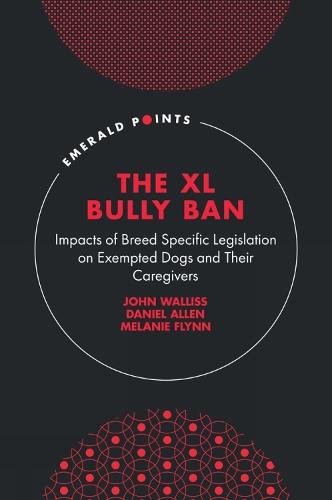
In England and Wales, the controversial decision was made to add American XL Bully-type dogs to the prohibited breeds list of the Dangerous Dogs Act 1991. The XL Bully Ban is the first book on this topic that explores the impacts on caregivers and, uniquely, their exempted dogs. Informed by a critical review of breed-specific legislation, the authors highlight the lack of consideration of the impacts of the XL Bully ‘ban’ on caregivers and exempted dogs themselves. By delving into these impacts, which include financial, emotional, practical, and quality-of-life issues, and giving voice to caregivers and companion animals, this book contributes towards building an evidence-base that can be considered in relation to future global debates. Considering alternative methods of reducing dog attacks, the authors draw out the implications of their findings for policymakers as well the wider, international debate on breed-specific legislation. The first book written on this contemporary topic, this is cutting edge reading for scholars interested in human-animal interactions, issues of species justice, sentience and victimology, breed specific legislation, and harm-reduction. It is also of interest to practitioners and advocates working with those affected by the ban, and policymakers as they consider how to respond to continued reports of dog attacks.
Full Product Details
Author: John Walliss (University of Derby, UK) ,
Daniel Allen (Keele University, UK) ,
Melanie Flynn (Liverpool Hope University, UK)
Publisher: Emerald Publishing Limited
Imprint: Emerald Publishing Limited
Dimensions:
Width: 15.20cm
, Height: 1.30cm
, Length: 22.90cm
ISBN: 9781837089338
ISBN 10: 1837089337
Pages: 176
Publication Date: 09 December 2025
Audience:
Professional and scholarly
,
Professional & Vocational
Format: Hardback
Publisher's Status: Active
Availability: In Print

This item will be ordered in for you from one of our suppliers. Upon receipt, we will promptly dispatch it out to you. For in store availability, please contact us.
Reviews
This important book highlights the hidden impacts of breed specific legislation that ‘criminalizes’ certain dogs and results in negative consequences for those caring for non-human companions that are deemed to be dangerous. The authors highlight the complexity and unfairness of dangerous dogs’ policy and the unforeseen consequences for many innocent dog owners. The authors’ original research with these canine caregivers identifies the need for a species justice approach to dangerous dogs’ policy that provides effective justice for human and non-human animal alike. This is a timely and rigorous analysis of an important aspect of the dangerous dogs debate. -- Professor Angus Nurse, Centre for Access to Justice and Inclusion (CAJI), Anglia Ruskin University
Author Information
John Walliss is a Senior Lecturer in Criminology in the College of Health & Humanities, University of Derby, UK. Daniel Allen is a Senior Lecturer in Animal Geography at Keele University, UK, and founded the evidence-based Pet Theft Reform (2018-) campaign and influenced UK policy change with the creation of the Pet Abduction Act 2024. Melanie Flynn is a Senior Lecturer in Criminology and Faculty Associate Dean for Research, Scholarship and Knowledge Exchange at Liverpool Hope University, UK.