Overview
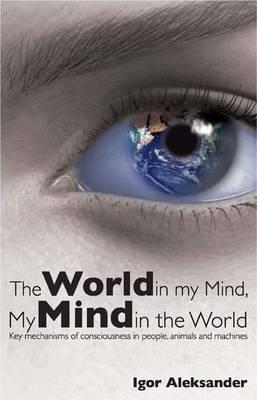
Not consciousness, but knowledge of consciousness: that is what this book communicates in a fascinating way. Consciousness is the thread that links the disappearing gorilla with the octopus suffering from a stomach ache, and the person under anaesthetic with a new born baby. How these are different, yet illustrative of consciousness, is revealed in this accessible book by one of the world's leading thinkers and neural computing engineers. Igor Aleksander addresses this enigmatic topic, by making us understand the difference between what happens to us when thinking consciously and when sort of thinking when dreaming or when not conscious at all, as when sleeping, anaesthetised or knocked out by a blow on the head. The book also tackles the larger topics of free will, choice, God, Freud (what is 'the unconscious'?), inherited traits and individuality, while exploding the myths and misinformation of many earlier mind-hijackers. He shares the journey towards building a new model of consciousness, with an invitation to understand 5 axioms or basic ideas, which we easily recognise in ourselves.
Full Product Details
Author: Igor Aleksander
Publisher: Imprint Academic
Imprint: Imprint Academic
Dimensions:
Width: 13.50cm
, Height: 1.60cm
, Length: 21.00cm
Weight: 0.300kg
ISBN: 9781845401023
ISBN 10: 1845401026
Pages: 200
Publication Date: 30 April 2007
Audience:
General/trade
,
General/trade
,
General
,
General
Format: Paperback
Publisher's Status: Active
Availability: In Print

This item will be ordered in for you from one of our suppliers. Upon receipt, we will promptly dispatch it out to you. For in store availability, please contact us.
Reviews
At last a view on consciousness from a 'computer expert' that is well written, articulate, humorous and reflective. Susan Greenfield An adventure and an inspiration for the human, if yet not the robotic, mind. Bill Clocksin, Nature This far-ranging book should interest readers at varying levels, from engineers and computer scientists to science fiction and psychology buffs. Hilary Burton Imagined philosophical confrontations put across some of the essential issues with admirable clarity. John McCrone
Aleksander's approach to understanding isn't the only one that science has developed, nor should it be. And, of course, no one expects any simple answers to appear any time soon. Nevertheless, consciousness is something that science can and should shed light on. Stephen Pincock, Financial Times Aleksander's most important contribution is in considering how a machine could be conscious and what would make it so. Susan Blackmore, Times Higher Education Supplement His book makes a welcome change from the cataloguing of neural phenomena and their experiential correlates. It demonstrates that those who advocate the possibility of machine consciousness need not be behaviourists; one need not appeal to a consciousness variant of the Turing test to claim that an artificial system is conscious. Ron Chrisley, Trends in Cognitive Sciences Aleksander's solid engineering background is evident in the straight-forward flow of this book. Keith Harris, Metapsychology
Author Information
Igor Aleksander is professor emeritus of Electrical Engineering at the Imperial College of Science and Technology, London.