Overview
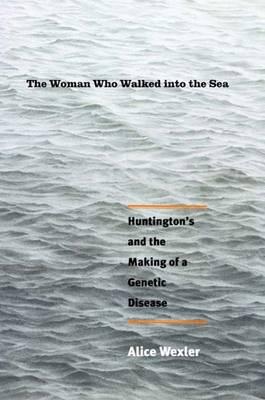
This work presents a groundbreaking medical and social history of a devastating hereditary neurological disorder once demonized as 'the witchcraft disease'. When Phebe Hedges, a woman in East Hampton, New York, walked into the sea in 1806, she made visible the historical experience of a family affected by the dreaded disorder of movement, mind, and mood her neighbours called St. Vitus' dance. Doctors later spoke of Huntington's chorea, and today it is known as Huntington's disease. This book is the first history of Huntington's in America. Starting with the life of Phebe Hedges, Alice Wexler uses Huntington's as a lens to explore the changing meanings of heredity, disability, stigma, and medical knowledge among ordinary people as well as scientists and physicians.She addresses these themes through three overlapping stories: the lives of a nineteenth-century family once said to 'belong to the disease'; the emergence of Huntington's chorea as a clinical entity; and, the early-twentieth-century transformation of this disorder into a cautionary eugenics tale. In our own era of expanding genetic technologies, this history offers insights into the social contexts of medical and scientific knowledge, as well as the legacy of eugenics in shaping both the knowledge and the lived experience of this disease.
Full Product Details
Author: Alice Wexler
Publisher: Yale University Press
Imprint: Yale University Press
Dimensions:
Width: 15.60cm
, Height: 2.80cm
, Length: 23.40cm
Weight: 0.522kg
ISBN: 9780300105025
ISBN 10: 0300105029
Pages: 272
Publication Date: 01 September 2008
Audience:
General/trade
,
College/higher education
,
General
,
Postgraduate, Research & Scholarly
Format: Hardback
Publisher's Status: Out of Print
Availability: In Print

Limited stock is available. It will be ordered for you and shipped pending supplier's limited stock.
Reviews
A brave and pioneering work. --Daniel Kevles, author of In the Name of Eugenics: Genetics and the Uses of Human Heredity <br>--Daniel Kevles
Alice Wexler has once again accomplished the near impossible by writing a fascinating academic page-turner. Filled with truth and brilliance throughout, The Woman Who Walked into the Sea is an amazing book that leaves the reader not only better informed, but materially enriched, moved by the experience, and not wanting it to end. Carole Browner, University of California, Los Angeles--Carole Browner
[A] detailed and evocative portrait. . . . Using a range of sources-including diaries, letters, business ledgers, whaling logs and local newspapers-Ms. Wexler re-creates a picture of a long-ago place where doctors lived next-door to their patients and where generation after generation of a community's most prominent members struggled with a crippling disease. -- Amy Dockser Marcus Wall Street Journal (12/18/2008)
Author Information
Alice Wexler is a research scholar at the UCLA Center for the Study of Women and the author of Mapping Fate: A Memoir of Family, Risk, and Genetic Research.